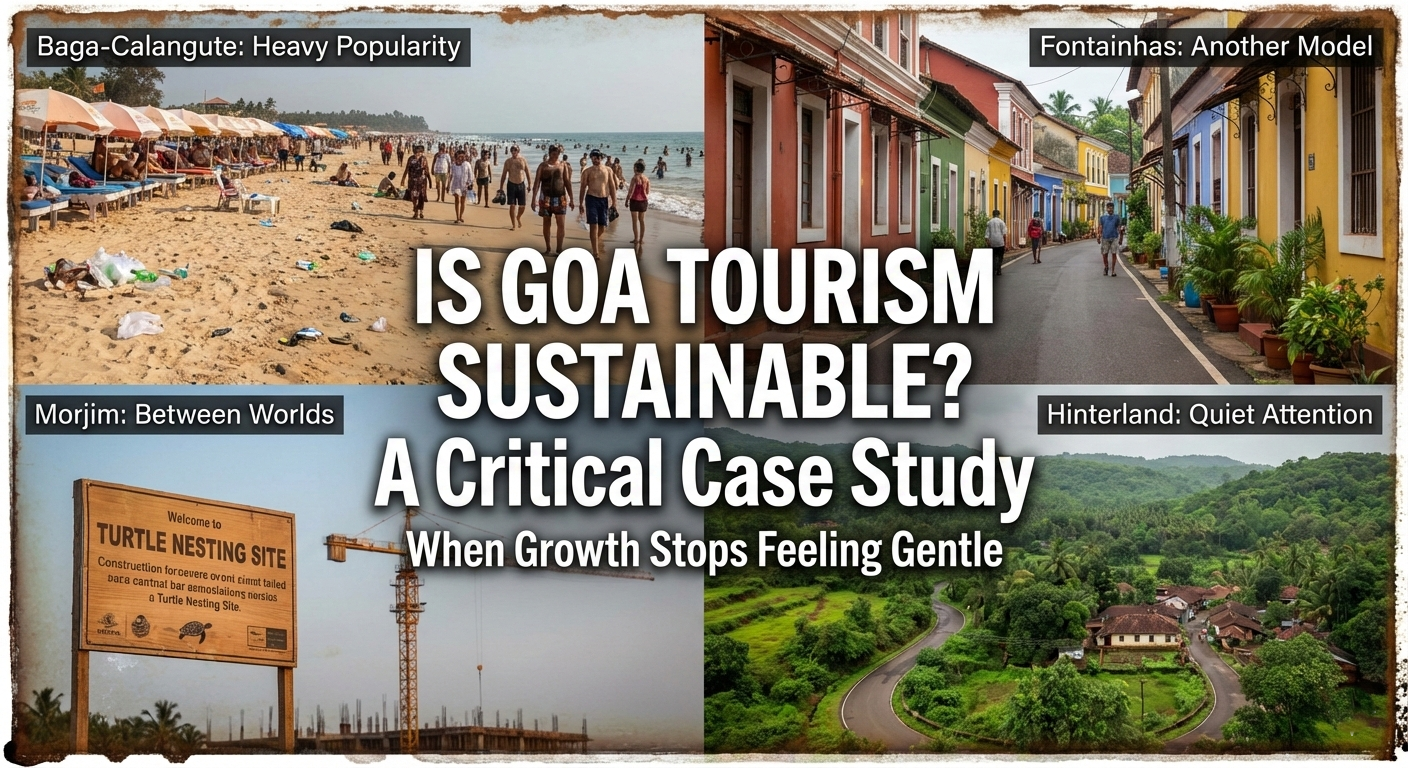
Over time, Goa tourism became not just a travel trend, but a lifestyle promise. Goa has always felt larger than life. For many Indians, it is the first taste of freedom, the first solo trip, the first beach sunset, the first night that stretches till sunrise. For international travellers, it is an easygoing tropical escape with a distinct cultural soul. For decades, people have been coming here for that exact reason.
Yet somewhere between packed beaches, endless construction, and “sold out” seasons, a quieter concern has begun to surface. Is Goa still holding up under the weight of its own popularity? Or are we slowly asking more of it than it can realistically give back?
This is not a simple yes-or-no story. It’s layered, contradictory, and deeply human, much like Goa itself.
Source:
Times of India – Report on tourist surge, infrastructure stress, and sustainability concerns in Goa
🔗 https://timesofindia.indiatimes.com/city/goa/tourism-in-goa-reaches-breaking-point-as-challenges-abound/articleshow/124169224.cms
Table of Contents
When Growth Stops Feeling Gentle
There’s no denying tourism growth in Goa has been extraordinary. What started with backpackers and beach huts has grown into a massive industry that supports hotels, restaurants, taxi networks, artists, event planners, and countless informal workers.
For many Goans, tourism is not a luxury sector, it is survival. Entire families depend on seasonal income, and the absence of tourists during the pandemic showed just how fragile that dependence can be.
At the same time, the scale of goa tourism today is very different from what the state’s towns and villages were built to handle. Roads that once served locals now carry thousands of rental vehicles. Water systems designed for small populations suddenly support peak-season crowds. Growth arrived quickly, but pauses for reflection were rare.
Source:
The Goan – Opinion on tourism expansion and ecological strain
🔗 https://www.thegoan.net/oped/%EF%BB%BFtourism-expansion-and-ecological-strain/130918.html
Development That Moved Faster Than Planning
The story of Goa tourism development is not one of neglect; it is one of momentum. Once tourism proved profitable, everything else followed: resorts, clubs, homestays, commercial spaces, and real estate investments.
But development often arrived before regulation. Environmental clearances were delayed or diluted. Zoning rules bent under economic pressure. In many coastal areas, locals began noticing subtle changes first: wells drying sooner than usual, beaches shrinking, and traffic becoming unbearable even on weekdays.
This is where the Goa tourism case study becomes interesting. The intention was never to damage the land. The damage happened because no one slowed down long enough to ask how much was too much.
Source:
Herald Goa – Report on beach erosion due to tourism and climate pressure
🔗 https://www.heraldgoa.in/review/goas-vanishing-coastline-27-of-beaches-severely-eroded-as-tourism-climate-pressures-mount/421505
Beaches That Carry Too Much Weight
Beach tourism in Goa remains its strongest magnet, but it is also where cracks show most clearly. Places like Baga and Calangute, once icons of freedom and fun, now struggle with overcrowding and waste overflow during peak months.
Walking these beaches today feels different. The charm is still there, but it competes with noise, congestion, and visible environmental stress. Fisherfolk speak about shrinking access to traditional areas. Residents talk about water shortages and rising rents.
This isn’t unique to Goa; similar patterns exist across coastal tourism in India, but the difference is that Goa’s entire identity is tied to its coastline. When the coast struggles, everything else follows.
Real Stories from Goa: Case Studies That Reveal the Reality
Morjim: A Beach Caught Between Two Worlds
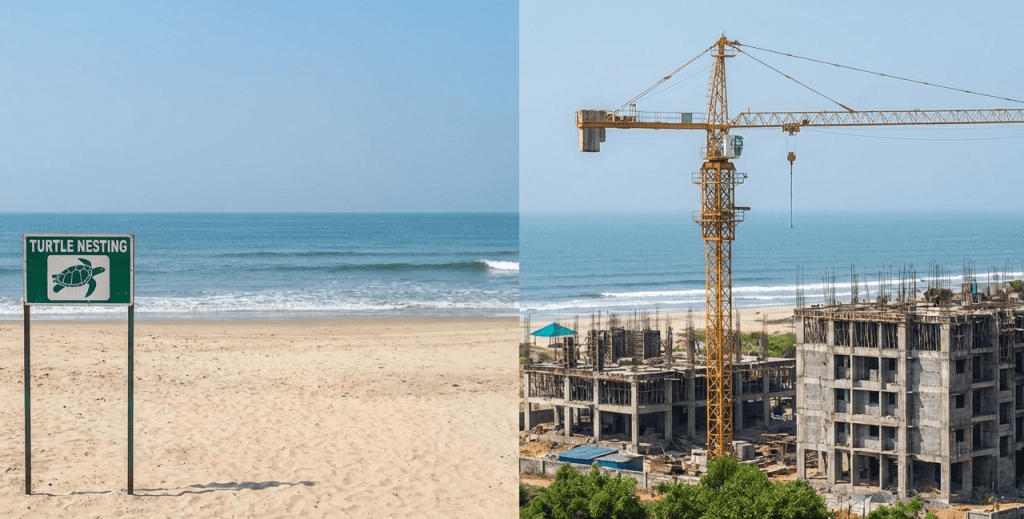
Morjim tells this story quietly. Known for its relatively calm atmosphere, it is also one of the nesting sites for Olive Ridley turtles. Conservation efforts brought awareness, signage, and seasonal restrictions.
But tourism kept growing. Shacks multiplied. Lighting increased. Night activity spilled closer to nesting zones. Locals found themselves caught between protecting wildlife and protecting livelihoods.
Morjim doesn’t represent failure, it represents compromise. And that is often where sustainability debates actually live: not in extremes, but in uncomfortable middle grounds where no choice is clean.
Sources:
Times of India – Threats to turtle nesting at Morjim due to beach shacks
🔗 https://timesofindia.indiatimes.com/city/goa/morjim-turtle-nesting-site-faced-threat-from-illegal-beach-shacks-last-season/articleshow/123081865.cms
Times of India – Turtle conservation efforts in Goa
🔗 https://timesofindia.indiatimes.com/city/goa/goas-turtle-arrivals-hit-200-mark-record-in-3-decades-of-conservation/articleshow/108010267.cms
Baga–Calangute: When Popularity Turns Heavy
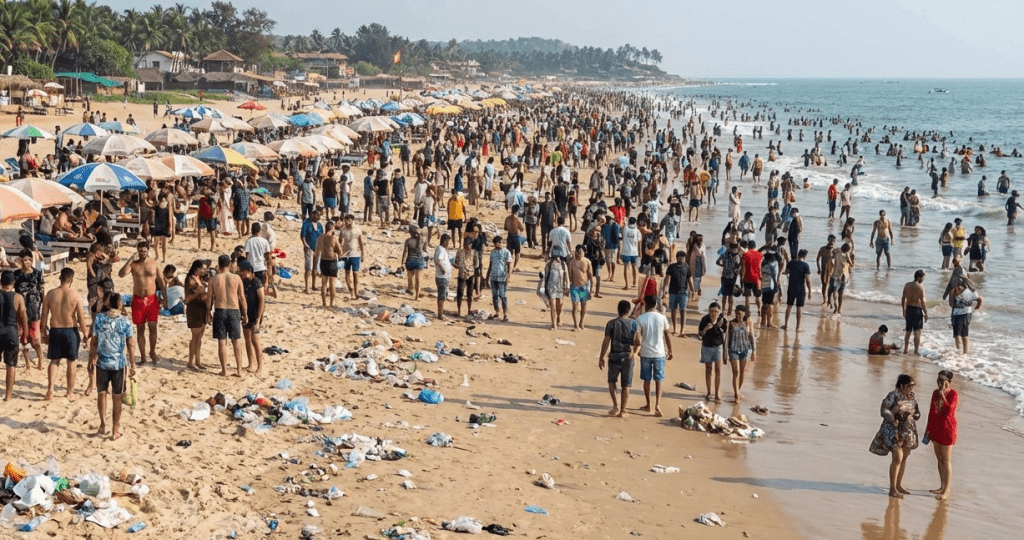
The Baga–Calangute belt is perhaps the most visible example of success turning inward on itself. It still attracts massive crowds, yet residents increasingly speak of exhaustion rather than pride.
Traffic barely moves during season. Public spaces feel permanently crowded. Complaints about wastewater discharge and garbage mismanagement surface every year. And yet, the system continues, because the economy here runs on volume.
This is Goa tourism at its loudest, profitable, energetic, but increasingly difficult to sustain without long-term consequences.
Sources:
Herald Goa – Tourism boom and persistent civic issues
🔗 https://www.heraldgoa.in/review/goas-tourism-dilemma-booming-numbers-stubborn-issues/418271
Times of India – Garbage mismanagement hurting Goa tourism image
🔗 https://timesofindia.indiatimes.com/city/goa/garbage-negligence-hurting-goa-tourism-lobo/articleshow/122116431.cms
Fontainhas: Proof That Another Model Exists
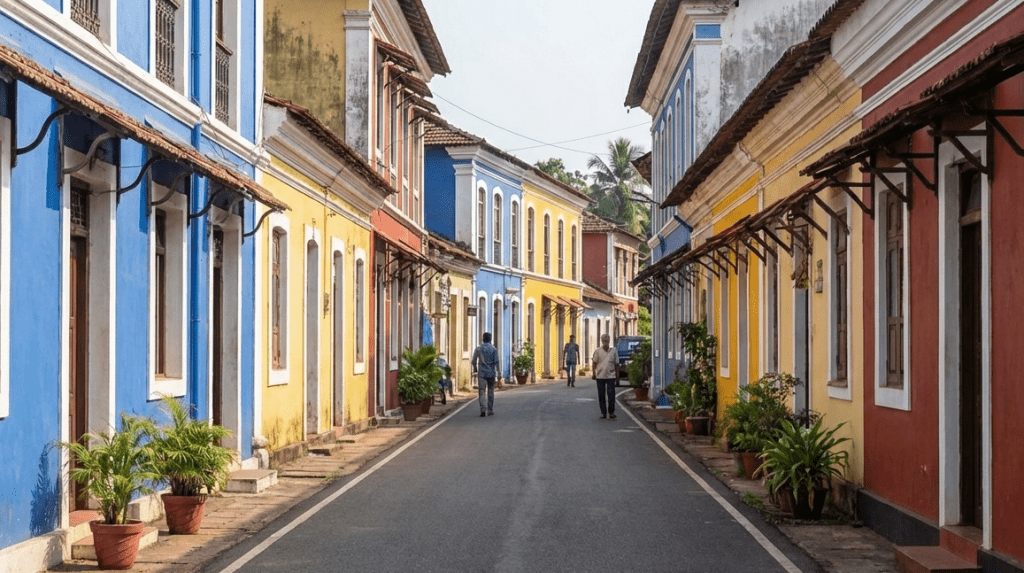
Then there is Fontainhas in Panaji, which feels like a different conversation altogether. Tourism here didn’t arrive as a wave, it crept in slowly. Heritage protection rules were enforced. Families restored old homes instead of selling them.
Tourists come to walk, observe, and listen. Money circulates locally. Culture remains lived-in, not staged. It is one of the rare examples where Goa tourism development success and challenges are addressed together, not separately.
Fontainhas doesn’t reject tourism. It simply sets boundaries and those boundaries seem to work.
Source:
Times of India – Feature on Fontainhas as Goa’s living heritage
🔗 https://timesofindia.indiatimes.com/travel/destinations/exploring-fontainhasgoas-living-heritage-and-most-photogenic-neighbourhood/articleshow/115186006.cms
The Hinterland: That Rarely Gets Attention
Beyond the beaches, villages near Netravali and Chorao quietly host eco-tourism initiatives rooted in nature and community participation. Birdwatching trails, forest walks, and small homestays create income without overwhelming ecosystems.
What’s striking is how little these experiences are promoted compared to beach tourism. With better storytelling and policy support, inland tourism could ease coastal pressure while offering visitors something deeper.
This is where goa tourism still feels unfinished full of possibility, but unevenly explored.
Source:
Goa Chronicle – Eco-tourism, wildlife sanctuaries, and sustainable tourism initiatives
🔗 https://goachronicle.com/emerging-trends-in-goas-tourism-challenges-innovations-and-the-road-ahead/
Infrastructure That’s Always Catching Up
One of the less glamorous sides of tourism is infrastructure, and tourism infrastructure in Goa has long been under quiet strain. Waste management systems work overtime in season. Sewage treatment capacity lags behind demand. Public transport remains limited, pushing dependence on private vehicles.
These aren’t dramatic problems they’re gradual ones. But over time, they shape everyday life, and they amplify Goa tourism problems more than any single policy misstep.
Source:
Times of India – Unregulated tourism venues and safety risks
🔗 https://timesofindia.indiatimes.com/city/goa/blocked-exits-bamboo-roofs-foam-walls-how-unchecked-growth-turned-goas-clubs-into-a-tinderbox/articleshow/126033270.cms
So, Is It Sustainable?
The honest answer is uncomfortable. Goa tourism is neither collapsing nor fully sustainable. It survives because it must economically, socially, politically. But survival is not the same as balance.
Tourism growth in Goa doesn’t need to stop. What it needs is redistribution, restraint, and respect for land, for people, and for limits. Sustainability here is not about fewer tourists, but about better decisions.
A Quiet Choice Ahead
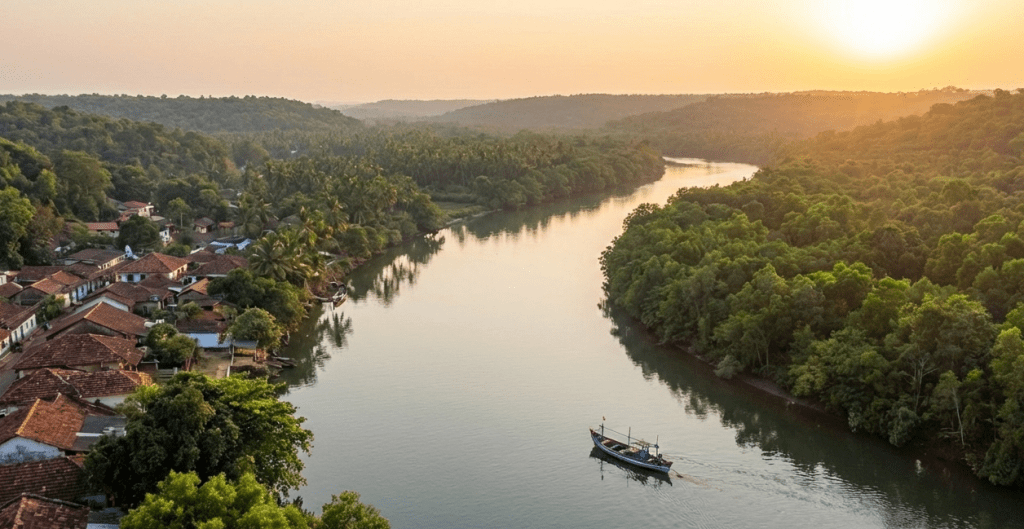
Goa still has time. That’s the hopeful part. With smarter planning, stronger community involvement, and a shift away from volume-driven success, goa tourism can evolve into something more resilient.
The bigger question is whether we tourists, businesses, and policymakers are willing to slow down long enough to let that happen.
Because once a place loses its soul, no number of visitors can bring it back.
If you’d like to understand tourism beyond surface-level information, I’ve shared detailed case studies regarding other tourist places. You can go through them by clicking here: Case Studies.


