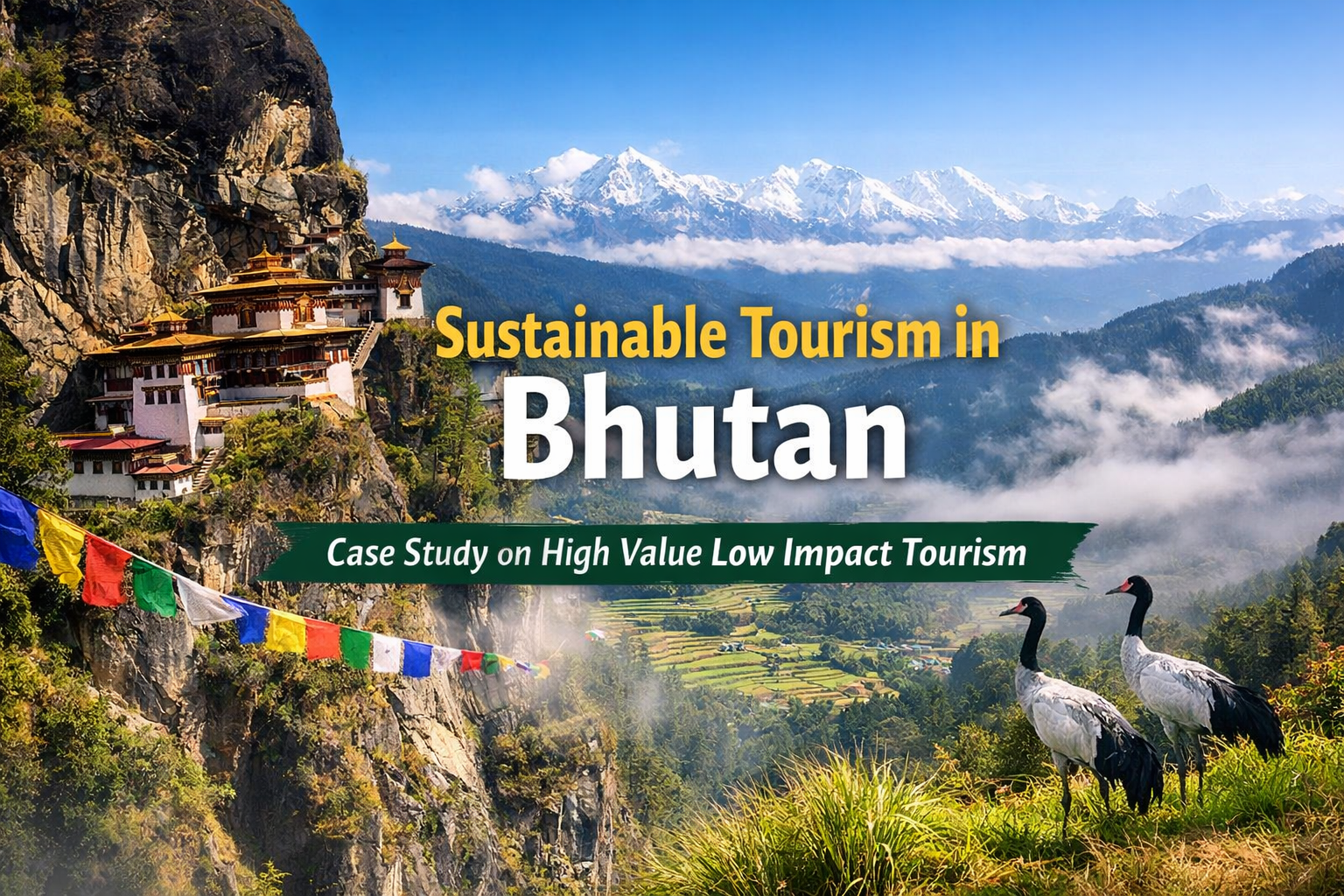
Explore sustainable tourism in Bhutan through a detailed case study. Learn about the Bhutan Tourism Model, tourism policy, High Value Low Impact Tourism, and the role of Gross National Happiness.
Introduction
Bhutan is globally known for following a unique development path that balances economic growth with cultural preservation and environmental sustainability. Unlike many mass-tourism destinations, Bhutan has adopted a carefully planned tourism model that prioritizes quality over quantity. This blog explores Sustainable Tourism in Bhutan through a detailed case study, focusing on the Bhutan Tourism Model, Bhutan tourism policy, and the globally admired concept of High Value Low Impact Tourism.

This Bhutan tourism case study highlights how tourism in Bhutan aligns with the philosophy of Gross National Happiness (GNH) while contributing to national development without harming the country’s natural and cultural heritage.
Understanding the Bhutan Tourism Model
The Bhutan Tourism Model is based on the principle of controlled tourism. Instead of encouraging mass arrivals, Bhutan focuses on attracting responsible travelers who respect local culture and nature.
Key features of the Bhutan Tourism Model include:
- Government-regulated tourism system
- Mandatory daily tourism fee
- Focus on sustainability and cultural protection
- Promotion of community-based tourism
This model ensures that tourism benefits the local population while minimizing environmental and social impact.

Bhutan Tourism Policy: A Framework for Sustainability
The Bhutan tourism policy plays a crucial role in shaping sustainable tourism development. Tourism in Bhutan is regulated by the Tourism Council of Bhutan (TCB), which ensures that tourism aligns with national goals.
Major objectives of Bhutan tourism policy include:
- Preserving Bhutanese culture and traditions
- Protecting the natural environment
- Generating employment for local communities
- Supporting balanced regional development
The policy strictly controls tourist numbers, tourism activities, and infrastructure development, ensuring long-term sustainability.
High Value Low Impact Tourism: The Core Philosophy
The concept of High Value Low Impact Tourism is the foundation of Bhutan’s tourism strategy. Under this system, tourists are required to pay a minimum daily package fee that covers accommodation, food, transport, guide services, and a sustainable development fee.
Benefits of High Value Low Impact Tourism
- Limits overcrowding and over-tourism
- Ensures high-quality visitor experiences
- Generates higher revenue with fewer tourists
- Funds education, healthcare, and conservation projects
This approach helps Bhutan avoid problems faced by mass tourism destinations such as environmental degradation and cultural dilution.
Sustainable Tourism in Bhutan: Key Practices
Sustainable tourism in Bhutan is practiced through various initiatives that balance tourism growth with environmental conservation.
1. Environmental Conservation
Bhutan is one of the few carbon-negative countries in the world. Tourism activities are designed to:
- Reduce carbon footprint
- Protect forests and wildlife
- Promote eco-friendly accommodations
2. Cultural Preservation
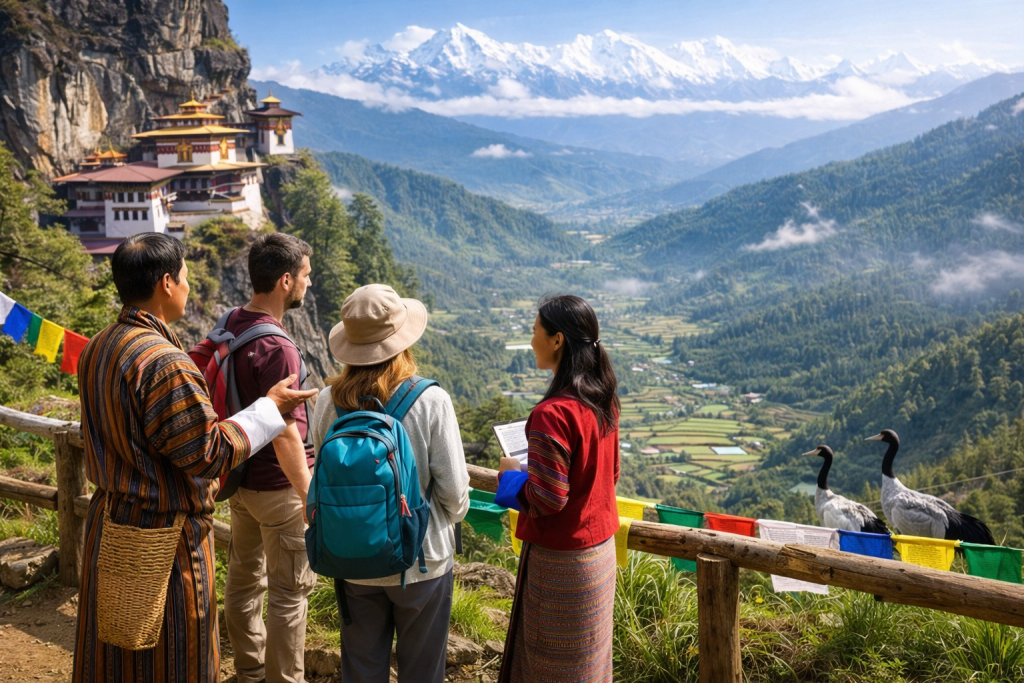
Tourism in Bhutan strongly emphasizes cultural tourism. Visitors are encouraged to experience:
- Traditional festivals (Tshechus)
- Monasteries and dzongs
- Local customs and traditional dress
3. Community Participation
Local communities actively participate in tourism through:
- Homestays
- Handicraft production
- Local guiding services
This ensures income generation at the grassroots level.
Bhutan Tourism Development Strategy
The Bhutan tourism development strategy focuses on long-term sustainability rather than short-term profits. The government promotes niche tourism segments such as:
- Cultural tourism
- Spiritual tourism
- Adventure and trekking tourism
- Eco-tourism
Infrastructure development is carefully planned to avoid environmental damage, especially in sensitive mountain and forest regions.
Gross National Happiness and Tourism
One of the most unique aspects of this Bhutan tourism case study is the integration of Gross National Happiness and tourism. Unlike GDP-focused models, Bhutan measures success based on happiness and well-being.
Tourism policies are evaluated on how they affect:
- Psychological well-being
- Community vitality
- Cultural diversity
- Environmental sustainability
This approach ensures that tourism growth does not compromise the happiness of Bhutanese citizens.
Economic Impact of Tourism in Bhutan
Tourism contributes significantly to Bhutan’s economy by:
- Generating foreign exchange
- Creating employment opportunities
- Supporting rural development
Despite limited tourist numbers, Bhutan earns substantial revenue due to its premium tourism pricing strategy.
Challenges in Bhutan Tourism Development
While Bhutan’s tourism model is highly successful, it also faces certain challenges:
- High travel costs limit tourist diversity
- Dependence on international markets
- Managing post-pandemic tourism recovery
- Balancing modernization with tradition
However, strong governance and policy frameworks help Bhutan manage these challenges effectively.
Lessons from the Sustainable Tourism in Bhutan Case Study
This Bhutan tourism case study offers valuable lessons for other destinations:
- Sustainable tourism is achievable with strong policies
- Quality tourism can generate higher value than mass tourism
- Cultural preservation enhances destination branding
- Community involvement is essential for long-term success
Countries struggling with over-tourism can learn from Bhutan’s controlled and conscious tourism approach.
Conclusion
Bhutan stands as a global example of how tourism can be developed responsibly. Through the Bhutan Tourism Model, strong Bhutan tourism policy, and the philosophy of High Value Low Impact Tourism, the country has successfully created a Sustainable Tourism in Bhutan system.
This detailed case study on Sustainable tourism in Bhutan shows that tourism can support economic growth while protecting culture, environment, and social well-being. Bhutan’s integration of Gross National Happiness and tourism makes it a truly unique and inspiring destination for the world.
Frequently Asked Questions (FAQs)
1. What is the Bhutan Tourism Model?
The Bhutan Tourism Model focuses on controlled tourism with high value and low environmental and cultural impact.
2. What is High Value Low Impact Tourism?
It is a tourism strategy where fewer tourists generate higher revenue while minimizing negative impacts.
3. How does Bhutan ensure sustainable tourism?
Through strict tourism policies, environmental conservation, community participation, and cultural preservation.
4. Why is Bhutan considered a sustainable tourism destination?
Because it prioritizes happiness, sustainability, and cultural integrity over mass tourism profits.
5. How is Gross National Happiness linked to tourism in Bhutan?
Tourism policies are designed to enhance citizens’ well-being and protect social and environmental values.


