How Kerala Became India Leading Destination for Ecotourism: A Case Study
Introductory
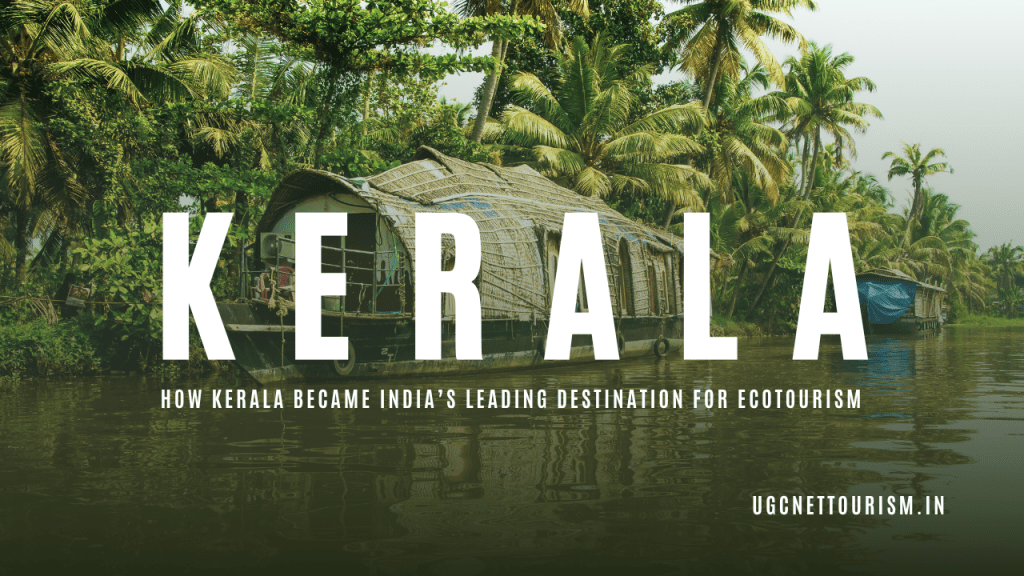
Kerala brings to mind images of foggy hills, emerald backwaters, and quiet beaches that the mind swiftly creates. Beneath this postcard beauty, though, is an astounding narrative of diligent planning, community involvement, and ecotourism. Over the past 20 years, Kerala has become India’s premier ecotourism destination not only because of its natural resources but also because of determined efforts to preserve them.
Combining local participation, conservation, and ethical tourism, Kerala’s unique approach to sustainability has transformed it into a world example of green tourism, as this case study investigates.
Kerala’s vision for eco-tourism starts here.
Kerala began its road toward ecotourism in the late 1990s as rapid commercialization threatened its delicate ecology. Recognizing the long-run hazards of over-tourism, the Kerala Tourism Department shifted its focus from mass tourism to Responsible Tourism (RT), hence trying to reconcile economic growth with environmental protection.
Unlike traditional tourism, ecotourism in Kerala was meant as a community-centered strategy wherein locals evolved from spectators to partners. That was the simple but revolutionary idea of using tourism to benefit both the surroundings and the population around it.
Formally launching the Responsible Tourism Mission in 2007, Kerala thus incorporated sustainability into its fundamental tourism strategy. Highlighting four pillars—economic responsibility, environmental responsibility, social responsibility, and cultural responsibility—this goal undergrew.
Government Programs: Preparation of groundwork
The government of Kerala was very helpful in setting up sustainable tourism systems. Among the most effective efforts are:
1. Mission of Responsible Tourism (RT Mission):
Every sustainable tourism project in Kerala is covered under this one. It aims to assure that agricultural ties, small companies, and job opportunities enable tourism to directly benefit local settlements.
Projects relating to eco-destination development:
Kerala developed chosen sites with ecotourism potential—such as Thekkady, Wayanad, Thenmala, and Periyar Tiger Reserve—following strict environmental criteria. Every place looked to maximize community involvement while also lowering carbon footprint.
3. Homestay and Advancement of Local Experiences:
Kerala promoted village tourism initiatives and homestays over huge hotels. This offered tourists real experiences while also providing local families funds.
4. Prohibition of Plastic and Green Process:
Kerala was among the first Indian states to introduce a Green Protocol, a group of guidelines designed to deter the use of plastic, Styrofoam, and other non-biodegradable materials at tourist sites. Events such weddings and parties were also included under this environmentally friendly edict.
Thenmala: First planned ecotourism destination in India
Launched in 1999 as the first designed ecotourism location in India, Thenmala (meaning “Honey Hill”) in Kollam district is a monument in India’s green tourism movement. Designed by the Kerala Forest Department, Tourism Department, and local communities, Thenmala served as India’s sustainable travel template.
Three separate areas—Culture Zone, Adventure Zone, and Leisure Zone—each geared to provide experiences linking visitors to nature without hurting it divide the destination. Trekking, bird watching, cycling, and sailing among other activities are controlled to guarantee little environmental effect.
The way Thenmala combines conservation and life sets it apart. Indigenous tribes among other local communities run amenities, direct visitors, and support eco-projects—so guaranteeing that tourism benefits remain regional.
Periyar Tiger Reserve: Where Tourism Meets Conservation
Another excellent illustration is the Periyar Tiger Reserve at Thekkady, which has deftly combined wildlife conservation with sustainable travel. Authorities developed eco-friendly pursuits like bamboo rafting, jungle patrols, and community-led nature excursions instead of commercializing the reserve.
Here, the “Eco-Development Committees” (EDCs) empower local people, especially those formerly reliant on forest resources, to make a stable living as instructors, guards, and craft vendors. This paradigm improved awareness of wildlife protection, thereby lowering poaching and deforestation.
The success of Periyar shows how travel can be a weapon for conservation instead of abuse, transforming tourists into preservation stakeholders.
Wayanad: Integrating Culture with Nature
Renowned for its waterfalls, tribal settlements, and spice farms, Wayanad has set a standard for community-based tourism in Kerala. Here the focus is on preserving native culture in addition to nature.
Projects like Uravu (a bamboo craft collective) and Thrikkaipetta Responsible Tourism Village show how eco-enterprises can offer respectable jobs. Visitors can participate in pottery, bamboo weaving, or paddy farming, therefore transforming travel into an immersive cultural interaction instead of merely passive sightseeing.
The Wayanad model emphasizes a crucial fact: ecotourism flourishes when individuals sense a bond to culture as well as to the land.
Backwaters and the Movement for “Green Alleppey”
Once representing the appeal of slow travel were the Kerala backwaters, particularly Alleppey (Alappuzha). But as houseboats became increasingly popular, pollution and waste management became urgent concerns. The government started the “Green Alleppey Project” to combat this, stressing waste separation, solar-powered boats, and responsible boating rules.
Many houseboats now come with noise control equipment, solar panels, and biological trash processing systems. Along with restoring the ecological equilibrium, the project increased the standard of life for the inhabitants.
Heart of Ecotourism, Community
Community participation lies at the very heart of Kerala’s ecotourism boom. Early on the state came to understand that local people must be empowered if sustainability is to be attained.
Women’s self-help organizations called Kudumbashree units are rather important; they oversee handicrafts sales, eco-lodges, and food booths. These projects have helped women become financially independent while keeping traditional skills alive.
Furthermore, guaranteeing that tourism-related revenue is fairly distributed, the RT Mission trains local guides and craftspeople. The people of Kerala are custodians of their surroundings as well as service providers.
Technology and Innovation in Green Tourism
Kerala has also welcomed contemporary technology to help it meet its sustainability targets. Digital projects including virtual tours, QR-based information boards, and online bookings for ecotourism events aid in controlling visitor flow and lessening overtourism.
Furthermore, the Kerala Tourism website has an “eco trails” section that highlights lesser-known green locations to spread visitor flow from busy locations.
Kerala is making sure its tourism stays both lucrative and environmentally friendly thanks data-driven planning.
Problems Throughout the Course
The path taken by Kerala has not been free of challenges. Keeping its increasing popularity while preserving its natural legacy presents the state with a double struggle.
Some locations like Munnar and Varkala experience pressure from seasonal over-tourism that stresses local infrastructure in sensitive areas.
Environmental Vulnerability Reminded by the 2018 floods. Kerala’s tourism strategy today includes learning to live in accordance with shifting weather patterns.
To prevent habitat loss, the growth of upscale hotels and road extensions must be constantly watched to strike a compromise with conservation.
Kerala still makes choices guided by the ideas of responsible tourism despite these obstacles.
World Acknowledgement and Honors
The model of ecotourism used in Kerala has received accolades worldwide as well as domestically. Recognizing its Responsible Tourism Mission as a best practice, the United Nations World Tourism Organization (UNWTO) acknowledged it.
For fostering community-driven events in 2022, Kerala’s Street Project in Kumarakom and Thekkady took home the Global Responsible Tourism Award. Kerala has regularly been among the top eco-destinations in Asia according to magazines such as National Geographic Traveler and Lonely Planet.
These accolades highlight not just the beauty of Kerala but also its philosophy of human and nature coexistence.
lessons for other nations and states
The tale of Kerala offers insightful lessons for other areas hoping to expand ecotourism:
Local people first: Sustainable tourism starts when communities directly profit.
Governments and local initiatives should be combined; policy needs local action.
Give training and awareness top priority as they are as essential as buildings.
Adopt green policies: Little actions including trash separation may have a big effect.
Encourage experiential travel: Travelers who relate emotionally to locations become supporters for their protection.
The Future of Kerala Ecotourism
Looking ahead, Kerala aims to grow its responsible tourism presence through projects including carbon-neutral locations, “Sustainable Tourism Circuit,” and artificial intelligence-based visitor management systems.
The tourism department of the state also wants to turn every important location plastic-free by 2030 and boost youth participation in conservation projects.
Kerala could soon become not just India’s but also Asia’s leader in regenerative travel, where travel purposefully cures rather than damages ecosystems, if current trends persist.
To conclude
Kerala’s emergence as India’s ecotourism mecca is not an instant success; it is the product of years of deliberate design, community work, and an unyielding faith in the interplay between wealth and conservation.
Further Reading
https://ugcnettourism.in/will-ai-replace-travel-agents/
https://www.untourism.int/sustainable-development