Local & Authentic Food
A peaceful uprising is simmering below the surface—local and true food tourism—in an age when travel is usually recorded via perfect images and current hashtags. Originally started as a search for unusual flavors, what was once has developed into something far more significant: a movement honoring culture, community, and connection via food.
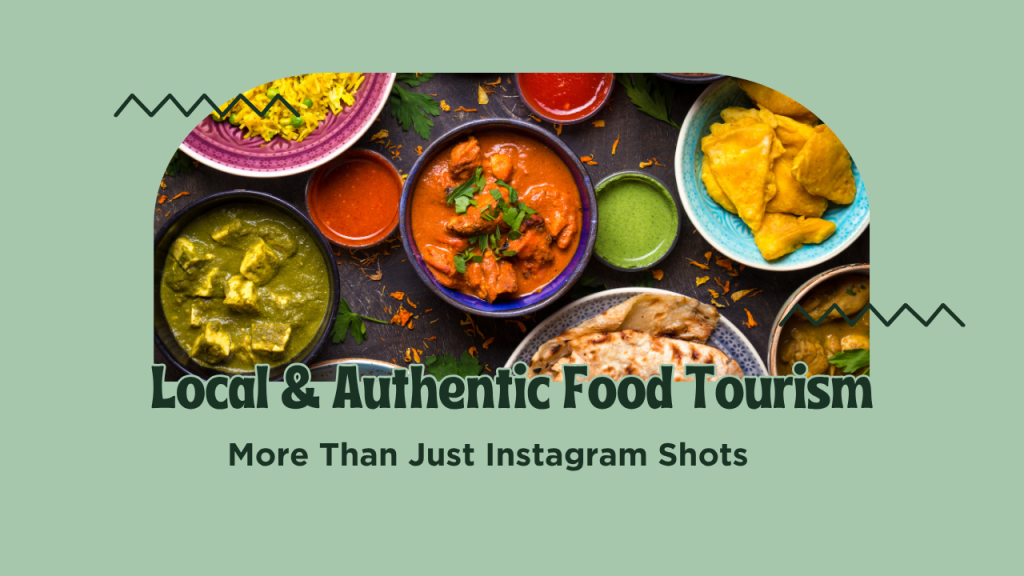
Today’s travelers are no longer content with the usual tourist-friendly restaurant or a lavish hotel buffet. They long for more; they want to learn to knead dough from a roadside outside a grandmother’s wooden table in a mountain village. baker, or to sip locally brewed tea listening to the narratives behind it. Food has become the new passport by which to know the soul of a nation.
The Development of Food-Focused Tourism
Originally a specialized idea, food tourism has become a major motivation for visitors all around. Many people reserve travel only for the cuisine rather than for shopping or sightseeing. Bangkok, Tokyo, Mexico City, and Istanbul are now whole food adventures rather than merely locations. Travelers carefully map their routes around street food markets, local cooking lessons, and traditional events.
This change is driven by authenticity need. Social media may have first exposed tourists to the idea of “Instagrammable food,” but eventually the aesthetic quest gave place to curiosity: what’s the history behind this meal? Who produces it? How it arose to be? From slurping pho on Hanoi’s streets to tasting homemade tagine in a Moroccan riad, every mouthful reveals a story of heritage, migration, and adaptation. Food tourism has evolved from pleasure into immersion.
Local & Authentic Food is More Than Food: The Cultural Exchange Behind Every Bite
Every cuisine is a narrative that mirrors geography, culture, and history. Food tourism invites travelers into a millennia-old conversation between man and his surroundings; they are not only eating. Usually reflecting its geography and culture, the ingredients employed in a particular area define it. Olive oil rules Mediterranean cooking, for example, not just for flavor but also because olive trees flourish in the arid climate of the area. Likewise from need—to conserve ingredients over long winters—and has now developed into an art form, the use of fermented foods in Korea and Japan arose.
Food turns into a cultural language devoid of translation. Eating together with locals can solve problems that words often cannot. Imagine being invited into a Sicilian home for a Sunday lunch, where stories of family, land, and love flow as freely as the homemade wine. Alternately, think about a northern Thailand tourist mastering khao soi and recognizing the impact of Burmese and Chinese traders who once visited the area. Beyond flavor, these experiences help to develop respect for diversity, understanding, and empathy.
Street food is local flavor’s heartbeat.
Street food exposes the soul of a country while fine dining uncovers its sophistication. Watching your food cooked right in front of you—the sizzle, the aroma, the pandemonium, the comfort—is deeply human. Authenticity rather than simply cheapness is what defines street food. This is the place daily customs are kept and modified.
Consider Yaowarat Road in Bangkok, a cacophony of woks, smoke, and conversation. Every stall honors centuries of recipes polished over trial and love. From al pastor’s Lebanese beginnings to the rustic simplicity of carnitas, Mexico City’s taco vendors preserve culinary customs older than the country itself. Food carts in India selling pav bhaji or golgappas provide an equally rich cultural experience—fast snacks with centuries of regional identity.
Eating street food turns into a link for tourists. You are now involved instead of just a spectator. Standing shoulder to shoulder with residents, you chuckle about spicy disasters and feel the raw beat of everyday life. But no restaurant, no matter how exquisite, can match that authenticity.
Farm-to- Table: Where sustainability and tourism come together
Food tourism has welcomed the farm-to-table movement as a strong manifestation of environmental awareness in the age of sustainability. Many tourists today look for adventures that help them to grasp the source of their food and to respect the hands that produce it. Visiting an organic tea plantation in Sri Lanka, a cheese farm in France, or a spice garden in Kerala turns food into education.
Such events connect individuals to the rhythms of nature once more. They show how seasons control food, how soil condition affects taste, and how sustainable efforts enable local communities to prosper. This kind of travel also gives farmers and small-scale producers independence. Rather of going to big companies, earnings stay local and help to support local communities and preserve traditional agricultural knowledge.
The emergence of agritourism, where visitors stay on active farms, assist harvest crops, and cook meals with freshly gathered components, is even more inspirational. Offering a true glimpse of rural life, these immersive stays blur the line between travel and participation. Visitors gather grapes for wine in Tuscany; in Japan’s rural areas, they take part in rice planting celebrations. It is tourism that feeds both body and soul and returns something.
Culinary Workshops and Cooking Courses: Hands-On Heritage
Hands-on culinary education is another strong trend inside food tourism. Travelers have a close means to interact with a country’s customs by means of cooking lessons. Such seminars transform tourists into students of culture from kneading fresh pasta in Italy to rolling sushi in Tokyo or smashing curry paste in Chiang Mai.
Cooking is among the cleanest methods of storytelling. The methods handed down across centuries contain more than just recipes; they reflect values, customs, and memories. Sharing a dish but also a piece of her identity, a grandmother in Greece teaches you how to make spanakopita.
These events also convert tourists from consumers to creators. Learning to prepare regional meals lets visitors carry forward customs, tastes, and respect for culinary variety rather than just mementos. When they next prepare that dinner in their kitchen, they relive the memory and perpetuate the cycle of cultural interchange.
Beyond Flavor: Food Memories’ Emotional Power
Food is unparalleled in its capacity to bring forth feelings. One bite can take us to a time, a place, a person. Food travel is so profoundly human thanks to this emotional tie. Though pictures fade, tastes remain. The tang of handmade kimchi in Seoul, the smell of fresh baked croissants in a Parisian bakery, or the warmth of Moroccan mint tea Every encounter stays memorized.
This emotional depth distinguishes genuine food experiences from those that have been carefully designed and marketed. In a tiny coastal community, when a fisherman asks you to sample his daily catch, you are tasting more than merely fish; you are Savor pride, custom, and the rhythm of life by the sea. Often, these encounters alter travelers’ view of luxury. True wealth rests not in a meal’s cost but in the honesty of its narrative.
The Digital Age: between intimacy and Instagram
Ironically, although social media promoted food tourism, it also runs danger of undermining its genuineness. Over actual cultural discovery, many modern tourists give Instagram-worthy appearances top priority: colorful smoothie bowls, latte art, or curated fine cuisine. The result is this: Growing numbers of experiences meant for cameras rather than connection.
Still, this triviality is drawing increasing opposition. Modern conscious travelers search for “slow food” activities that place local products, thoughtful eating, and community above showmanship. Rather than pursuing the following viral food fad, they are welcoming culinary storytelling—that is, knowing the why behind their food.
When utilized responsibly, social media may still be beneficial. It may highlight underrepresented foods, boost local companies, and motivate ethical travel. Balance is the key: catching moments without losing their meaning. Food tourism’s actual pleasure comes from imperfect, unscripted moments—like clumsily spilling sauce while laughing with locals—not from immaculate images. Or attempting (and failing) to master chopsticks.
Effects of Genuine Food Travel on Economy and Communities
Local food travel not only broadens one’s cultural horizon but also supports local companies. Travelers who eat at family-run restaurants, visit local markets, or go on community-organized food tours directly help small businesses. The money moves around the neighborhood, thereby boosting local economies and promoting the preservation of culinary customs.
In places very dependent on tourism, food has become a sustainable economic lifeline. Women-led cooking tours, for instance, have given financial freedom and cultural pride in rural Vietnam and Indonesia. Likewise, indigenous civilizations in South America welcome visitors to sample traditional meals made with wild grains, using tourism as a means of bringing back forgotten recipes and conserving biodiversity.
Genuine food travel also promotes inclusiveness. It lets little-known locations stand out through their particular gastronomic character, therefore spreading tourism advantages more equally rather of focusing them in well-known major cities.
Ethical eating: Honoring context and culture
But as visitors discover worldwide cuisines, moral duty becomes rather important. Authentic food travel is about honoring culture, not about exoticizing or consuming it. Being aware of how food is sourced, knowing dietary habits, and staying away from exploitative activities are all part of this.
Responsible eating includes, for example, encouraging eateries using sustainable seafood, lowering food waste on trips, and honoring religious or cultural limits. Approach food experiences with humility as well; taste without judgement, learn without assumption, and rejoice differences instead than compare them.
At its best, food tourism is a two-way interaction wherein the host and the visitor benefit from one another. Approached ethically, it promotes mutual respect and helps maintain cultural integrity.
Looking Ahead: The Shape of Food Tourism
The future of culinary tourism appears more deliberate and mindful as the post-pandemic travel scene changes. Travelers are becoming more quality conscious rather than simply counting famous restaurants. They are interacting with local producers and traditional chefs. Technologically also this movement is being improved. People nowadays discover cuisines even before they travel using digital storytelling sites, food-based documentaries, and immersive virtual reality experiences.
Hybrid experiences—part in-person, part digital—where tourists acquire recipes from nearby chefs virtually, then Visit to physically experience the whole context. The next chapter of food tourism will be shaped by the merging of authenticity and creativity.
In the end, what will last is the fundamental fact that food links us. Whatever sophisticated travel gets, the pleasure of eating together—of breaking bread with someone from a far-off location — Will always provide the most genuine encounter of any.
Finding the Soul of a Location Via Its Cuisine: Conclusion
Local and genuine cuisine tourism is a festival of mankind rather than just a luxury or a chance to photograph. It reminds us that despite variations in languages, terrain, and way of life, the act of consuming unifies us. Food helps us to develop empathy, patience, thanks, and community feeling.
Further Reading
https://ugcnettourism.in/virtual-reality-previews-try-before-you-travel/
https://www.mdpi.com/2071-1050/11/12/3437?utm_source=chatgpt.com