AI Itineraries Introduction: Technology as Your Travel Agent
Picture this: You want to schedule a ten-day trip but have no idea where to start. You open your computer, type “Plan me a romantic trip to Greece with beach days, food tours, and secret villages,” and within a few seconds an A comprehensive schedule displays on your screen. Day by day, everything—flights, hotels, excursions, even dining recommendations—was neatly charted. Welcome to the era of AI travel planning, when artificial intelligence promises to replace hours of browsing blogs and spreadsheets with one smart conversation.
Still, is it actually that straightforward? Can artificial intelligence really plan a trip that feels yours—personal, emotional, and spontaneous? Or does it just duplicate human competence using algorithms and data?
Let’s investigate the expanding field of artificial intelligence itineraries: how these technologies operate, which ones are driving the front, their advantages and disadvantages, and why human Still the secret ingredient in every remarkable adventure is input.
The development of artificial intelligence travel planning
From suggesting Netflix series to writing emails, artificial intelligence has stealthily penetrated almost every area of our digital existence in recent years. It is transforming the travel sector right now. Travelers are looking to AI-powered itinerary planners that use natural language processing, massive data, rather than relying only on travel agents or infinite blog study. and real-time updates for customized travels.
AI itineraries go beyond simple lists of “top 10 things to do.” Whether you are a foodie, an explorer, or a slow traveler, they can accommodate your itinerary. Often in seconds, these systems provide customized recommendations based on patterns in your preferences, spending, and travel history.
Many creative solutions, each with its own features, oddities, and learning curve, have emerged from this expanding travel technology sector.
Top AI Travel Planning Applications and What Distinguishes Them
Let’s examine some of the amazing systems that are changing how travel is planned.
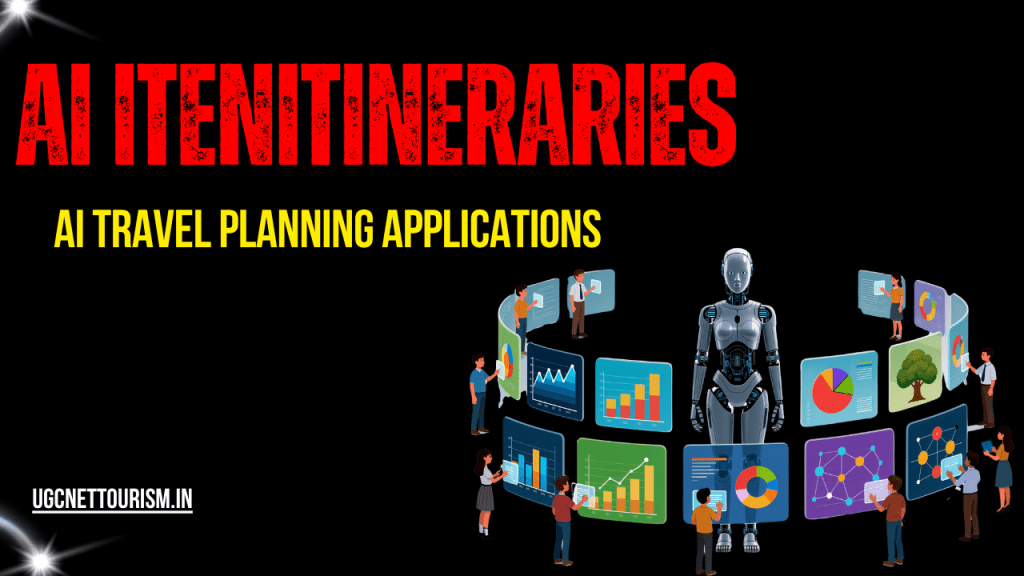
One of the more polished AI travel planners, Mindtrip combines itinerary ideas with useful integrations like flight and hotel booking. It offers quite thorough strategies and has a sleek user interface. Some tourists, though, believe its recommendations are a little too general and often prefer safe, well-known locations above local treasures.
Wonderplan uses a more straightforward approach. Perfect for fast trip drafts, it is light, open, and simple to use. You enter your destination and preferences; it produces a clear, well organized schedule that may be edited offline or downloaded. The only snag is that it occasionally has difficulty with complicated, multi-country paths or unusual requests needing more local information.
Using its enormous review and user content database, TripAdvisor’s artificial intelligence “Trips” feature draws on Based on the most highly regarded locations in a city, it may swiftly create itineraries. The advantage here is credibility; the recommendations are based on millions of true traveler experiences. Particularly if you are seeking something less touristy, the drawback is that the outcomes might seem boring or too popular.
Developed by Matador Network, GuideGeek works more like an AI concierge available to interact with on Instagram or WhatsApp. You can send real-time responses to questions such “What’s a good day trip from Rome?” Accessibility is its main appeal: no app, no sign-up. Still, it sometimes “hallucinates” suggesting locations that do not exist or misremember small facts since it is totally AI-based.
Self-marketed as an “AI travel agent,” Layla.ai You may plan even book your whole trip by chatting to it casually. Although it is still in its infancy, coverage is not worldwide; it does provide a peek of where travel planning is headed—AI that not just schedules but also carries out.
Research laboratories are developing experimental systems like Vaiage, Roamify, and IMAIA in addition to these. Using sophisticated multi-agent models and map analysis, they precisely plan routes even adjusting in real-time to weather or event changes. Although they are still in developmental phases, these reflect the next frontier: trips that change as you move.
These instruments show a clear pattern taken together: Only faster, artificial intelligence is learning how to travel-plan like a person.
Why Travelers are Turning to Artificial Intelligence for Travel Planning
What, then, makes artificial intelligence schedules so alluring? Many tourists are drawn to the speed, customizability, and simplicity they provide.
1. Results from light speed.
What once took hours of study may now be done in minutes. AI will handle a few sentences: “Five days in Thailand, beach + culture + budget below $500 per person.” You get often local events and restaurant recommendations as well as a full plan.
2. Custom recommendations.
AI does not assign the same itinerary to everyone. The more you interact, better it knows your taste. Requesting “slow mornings, coffee culture, and guided tours” could help to create a plan around just that.
3. Real-time adjustment.
Many systems provide live data including event calendars, attraction hours, and weather forecasts. Your schedule will therefore change should a museum close or a storm strike your beach day.
4. Finding of unvalued jewels.
Since artificial intelligence gathers information from many sources, it usually reveals locations locals forget to name: little coffee shops, overlooked vistas, or unique celebrations fit your tastes.
5. Cost efficiency.
Many artificial intelligence travel planners are either free or very inexpensive compared to hiring a travel designer. For budget-conscious travelers, this opens custom travel planning to everyone.
6. Help available around-the-clock
Unlike humans, artificial intelligence never rests. Midnight or mid-flight will let you modify your schedule—ideal for impulsive travelers.
7. Collaboration was made simple.
Arranging a group vacation is sometimes disorganized. Artificial intelligence instruments can gather preferences of each person and develop a fair plan that most people enjoy.
It feels almost magical when it works well, a clever, unrelenting helper who understands your style better than any stranger could.
The other side of the tale: wherein artificial intelligence still falls short
Obviously not everything is flawless. Every well-thought-out itinerary will have disappointing instances when artificial intelligence falls short.
First, accuracy is not assured.
AI may occasionally fabricate sites, recommend closed restaurants, or get distances wrong. These “hallucinations” occur because AI models depend on pattern prediction instead of live verification.
Second, local soul is lacking in artificial intelligence.
While it could provide you with a well-arranged list of places, it misses the secret shortcuts, local wit, or emotional events that define travel. AI cannot recreate the appeal of conversing with a local café owner or coming across an alley market.
Third, it keeps it simple.
Over specialty events, artificial intelligence usually favors well-liked, high-rated destinations. So your “unique” itinerary may appear eerily akin to a TripAdvisor top ten list.
Fourth, it not always knows human needs.
A long-haul flight or back-to-back hikes without rest may result in a packed schedule. AI does not feel either boredom or fatigue.
Fifth: Although places like Paris or Tokyo have a lot of data, isolated communities or developing nations frequently baffle artificial intelligence, therefore generating plans that are general or false.
Sixth: Emotional connection is lost.
A great itinerary tells a narrative: morning quiet, afternoon adventure, evening love. Artificial intelligence lacks that human feeling of rhythm, tempo, and mood.
Seventh, it cannot empathically handle abrupt changes.
Though artificial intelligence may recommend substitutes if a storm stops your trip, it cannot read your letdown or provide consolation as a human planner would.
Eighth, there is the aspect of privacy.
By sharing dates, budgets, or preferences, you’re adding personal information into third-party systems. Knowing how that information is kept and utilized is vital.
Finally, overdependence can be harmful. Blindly trusting artificial intelligence without checking some tourists causes booking errors or uncomfortable reroutes. The golden rule is still: use artificial intelligence as a help, not an authority.
Why Human Effort Continues to Matter
Though artificial intelligence becomes more and more sophisticated, we—the travelers—still need it. Human involvement offers context, mood, and ethics to schedules.
Humans can express preferences subtly: “I adore museums, but only if they have decent cafés,” or “I prefer lively nights, not late ones.” AI struggles to understand such subtleties without direction.
Cultural sensitivity also comes with us; it is knowledge of local customs, dress standards, and silent etiquette. Not knowing that time is set for prayers or that basic clothing is needed, artificial intelligence may advise you to visit a temple at noon.
Then there’s knowledge of when to forgo an attraction due to weather, numbers, or simple intuition. AI observes patterns; but, humans feel moods.
Humans can better control their tempo too. We are aware that trip is about savoring the moments, not about cramming in everything. A person will make room for rest, spontaneity, and those “let’s see where this road goes” experiences.
Emotional calibration also exists. A human travel companion might recommend a peaceful evening in lieu of another walking tour if you are tired or jet-lagged. AI just does not understand your emotions.
At last humans add storytelling and meaning. We want a narrative, a flow connecting each day emotionally; we don’t merely desire a list of locations. That’s anything algorithms can mimic but not thoroughly grasp.
The Hybrid Strategy: When Artificial Intelligence and People Design Together
The best approach to travel nowadays might be to integrate both worlds—let artificial intelligence bear most of the effort and let human judgment finish the product.
Start with artificial intelligence tools to create a basic schedule. Quickly you’ll understand logistics, possibilities, and geography. Then perfect it yourself by reviewing evaluations, confirming facts, and replacing commonplace stops with meaningful ones.
Confirm your artificial intelligence itinerary with nearby sources—travel forums, Reddit threads, or pals who have been. Many times, you’ll come across tiny treasures AI ignores.
Set apart buffer time in your schedule. AI tends to overplan. Add rest periods, flexible days, or spontaneous slots.
Most importantly, stay engaged. Maintain artistic control in your grasp. Your subordinate is the artificial intelligence, not your boss.
A Quick Example: The 10-Day Portugal Itinerary
You tell your selected artificial intelligence assistant:
Travel to Lisbon, Porto, Douro Valley, and Algarve; concentrate on cuisine, wine, and scenery; have a small budget.
It offers you a strong structure within seconds:
Day 1–3 in Lisbon, Day 4–5 in Douro, Day 6–7 in Porto, and the remaining in Algarve. It even recommends nearby vineyards, Fado performances, and scenic train tours.
Most of it appeals to you, but you see Day five involves a five-hour extended travel. You remark to the artificial intelligence, “Split this drive over two days with an overnight halt mid-way.” It updates right away.
Then you consult Portuguese tourism websites to verify that one winery is closed on Tuesdays. You fit.
You then seek indoor options from your artificial intelligence app as it rains one afternoon during the journey; it suggests nearby markets and cozy wine bars. You follow its instructions and wind up with an unexpected high.
AI travel’s sweet spot is that of effective planning with space for human spontaneity.
Future of Artificial Intelligence Travel Tech
What will AI travel planning be next? The horizon is interesting.
Multi-agent systems are being explored by developers; in these systems, many artificial intelligence “experts” work together to manage local knowledge, budgeting, and routing. Others are developing context-aware planners that change according on your real-time actions, like how much time you spend at each location.
Future models may propose locations that visually correspond to your taste by combining maps, images, and even your social media choices. Imagine uploading a picture of a small street café and the artificial intelligence discovering related locations all throughout Europe.
To increase correctness and authenticity, tourism authorities are also working with artificial intelligence experts. Some are developing ethical artificial intelligence travel solutions that take into account local population effects and sustainability when suggesting experiences.
The ultimate target is this: Almost like a human travel companion, an artificial intelligence that arranges your vacation with empathy, awareness, and regional depth.
Ultimately let artificial intelligence plan, but you lead.
Artificial intelligence schedules are revolutionizing our trips. They provide speed, personalization, and innovation that were inconceivable only a few years ago. Still, they are instruments to enable human instinct rather than substitutes for it.
Best trips result from balance: AI maps the way; humans search for significance.
Use artificial intelligence to brainstorm, arrange, and inspire, but be ready for the unanticipated with your eyes and your heart. Because the true magic of travel will always be outside the algorithm.
Further Reading
https://ugcnettourism.in/top-travel-destinations-in-2025/