Introduction
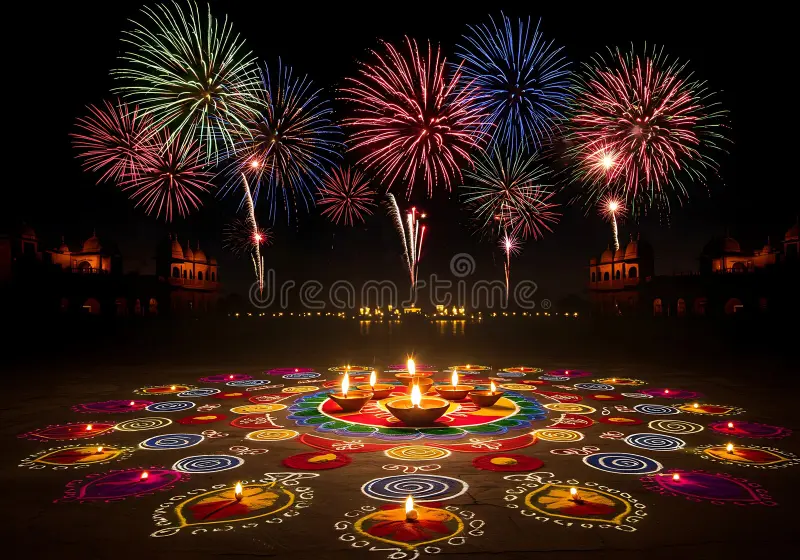
Diwali, also known as Deepavali, is one of the most celebrated festivals in India and around the world. Millions of people participate, especially Hindus, Sikhs, Jains, and Buddhists. Beyond the bright lights, fireworks, sweets, and social gatherings, Diwali holds a deeper spiritual and mythical meaning rooted in centuries-old traditions. The festival represents the victory of light over darkness, knowledge over ignorance, and good over evil.
This case study examines Diwali as a cultural phenomenon, focusing on its mythical stories from various regions of India. It looks at how these stories shape the meaning of Diwali and explores the social, religious, and psychological impact the festival has today.
Diwali: A Multi-Dimensional Festival
It is celebrated for five days in most traditions, with each day having its own significance:
Dhanteras – dedicated to prosperity and wealth.
Naraka Chaturdashi (Chhoti Diwali) – the symbolic victory of Krishna over Narakasura.
Lakshmi Puja (Main Diwali Night) – worship of Goddess Lakshmi, the goddess of wealth.
Govardhan Puja/Annakut- celebrating Krishna’s lifting of Govardhan Hill.
Bhai Dooj- honoring the bond between brothers and sisters.
Although these days may be celebrated differently in various regions, the central themes of light, renewal, and triumph over evil remain the same.
Diwali: Mythical Tales
1. The Return of Lord Rama – Victory of Dharma
One of the best-known stories linked to Diwali comes from the Ramayana. In this epic, Lord Rama, along with his wife, Sita, and brother, Lakshmana, returned to Ayodhya after 14 years in exile and defeated the demon king Ravana of Lanka. The people of Ayodhya lit rows of clay lamps (diyas) to welcome their rightful king. This tradition of lighting lamps became a symbol of driving away darkness and evil.
Cultural Impact: This story highlights the importance of dharma, sacrifice, and truth. Rama stands for the ideal king, son, and husband, while Sita represents devotion and purity.
Regional Variation: In North India, Diwali mainly marks Rama’s homecoming, and theatrical plays called Ramlila are performed in towns and villages to retell the Ramayana.
2. The Story of Narakasura- Triumph of Krishna
In South India, Diwali is more closely linked to Lord Krishna’s victory over the demon Narakasura. Narakasura was a cruel ruler who imprisoned many women and spread terror throughout the kingdoms. With the help of his consort Satyabhama, Krishna defeated Narakasura on the eve of Diwali, freeing the captives and restoring peace.
Cultural Impact: This myth signifies the defeat of arrogance, cruelty, and injustice. It shows the importance of courage and divine intervention in freeing the oppressed.
Regional Practice: In states like Tamil Nadu, Andhra Pradesh, and Karnataka, the day before Diwali (Naraka Chaturdashi) is celebrated as the main event, signifying the victory over Narakasura.
3. The Worship of Goddess Lakshmi- Wealth and Prosperity
Another important part of Diwali is Lakshmi Puja. According to the myth, Goddess Lakshmi emerged during the churning of the ocean (Samudra Manthan), bringing wealth, prosperity, and good fortune to the world. On Diwali night, people light lamps and decorate their homes to welcome her blessings.
Cultural Impact: This story emphasizes the link between prosperity and virtue. It highlights the importance of cleanliness, devotion, and hard work.
Regional Practice: Business communities nationwide observe this day as the start of a new financial year, opening new account books in a ceremony called Chopda Pujan.
4. Lord Vishnu and King Bali- Devotion Beyond Power
In another myth associated with Diwali, the festival celebrates Lord Vishnu’s intervention as Vamana, the dwarf incarnation, to control King Mahabali, a generous but overly ambitious ruler of the asuras. Vishnu sent Bali to the netherworld but granted him the boon to visit his people once a year. In Kerala, this myth is more closely tied to Onam, yet in some areas, Diwali also marks Bali’s annual return.
Cultural Impact: This story teaches humility and suggests that devotion and dharma are more important than unchecked power.
Regional Practice: In Maharashtra and parts of Karnataka, Bali Puja is celebrated during Diwali.
5. The Coronation of Vikramaditya- Historical Blend with Myth
Some traditions connect Diwali to the coronation of King Vikramaditya, known for his wisdom, justice, and prosperity. While this connection is less mythical, it adds a historical layer to the festival, showing how rulers have used the symbolism of Diwali to strengthen their legitimacy.
6. Diwali in Sikhism, Jainism, and Buddhism
Sikhism: Diwali coincides with Bandi Chhor Divas, which marks Guru Hargobind Ji’s release from Mughal imprisonment alongside 52 other kings. The Golden Temple is beautifully illuminated on this day.
Jainism: For Jains, Diwali marks the nirvana of Lord Mahavira, the last Tirthankara, in 527 BCE. Lamps are lit to signify the light of spiritual knowledge.
Buddhism (Newar Buddhists in Nepal): They celebrate Diwali as a festival of lights called Tihar, honoring not just gods but also animals like crows, cows, and dogs.
Analysis: The Symbolism of Light
The recurring theme in all Diwali myths is the idea of light overcoming darkness. Whether it is Rama defeating Ravana, Krishna killing Narakasura, or Mahavira reaching nirvana, the core idea remains:
Light as Knowledge: driving away ignorance.
Light as Hope: guiding people through difficulties.
Light as Purity: cleansing hearts and homes.
Light as Community Bonding: uniting families and societies in shared rituals.
Modern Relevance of Mythical Stories
Impacts
Psychological Impact: The myths provide moral lessons, instilling values of righteousness, courage, humility, and devotion.
Social Impact: Diwali myths promote unity by giving diverse communities a shared way to celebrate while allowing for regional differences.
Economic Impact: Diwali has become a festival of economic prosperity, with markets, businesses, and households preparing extensively. This reflects the blessings of Lakshmi.
Spiritual Impact: The myths continue to inspire faith and serve as reminders of higher ideals. Diwali as a Case of Cultural Continuity
Studying Diwali reveals how myths change across regions, faiths, and generations while keeping their core symbolism. This ability to adapt is what helps Diwali remain a living tradition rather than a relic of the past.
In rural India, the myths support storytelling traditions, folk plays, and rituals.
In urban India, the myths blend with consumer culture, showing a mix of tradition and modern life.
Globally, the diaspora celebrates Diwali as a marker of cultural identity, passing on myths to new generations abroad.
Conclusion
Diwali is not just a festival of lights; it is a tapestry of diverse mythical stories, each adding layers of meaning. Whether it is Rama’s return to Ayodhya, Krishna’s victory over Narakasura, the worship of Lakshmi, or Mahavira’s nirvana, the myths reflect a universal human desire for light, truth, and renewal.
As a case study, Diwali shows how mythology sustains cultural practices, shapes values, and adapts over time and place. The mythical stories behind Diwali remain relevant, offering timeless lessons that resonate in today’s complex world just as they did in ancient times.
https://ugcnettourism.in/category/case-studies/tourism-case-studies/#google_vignette