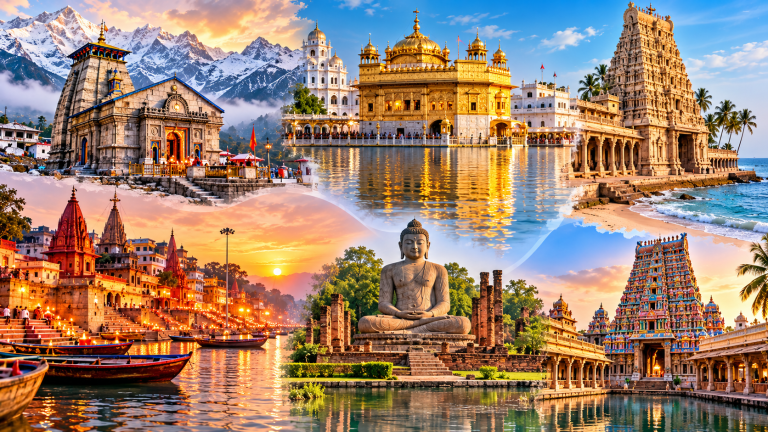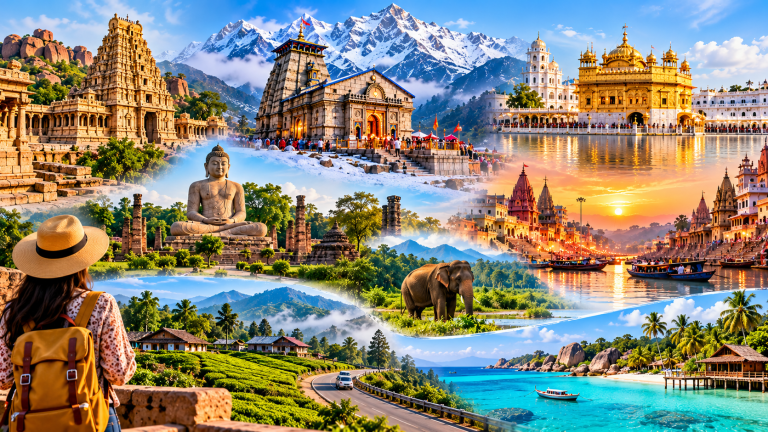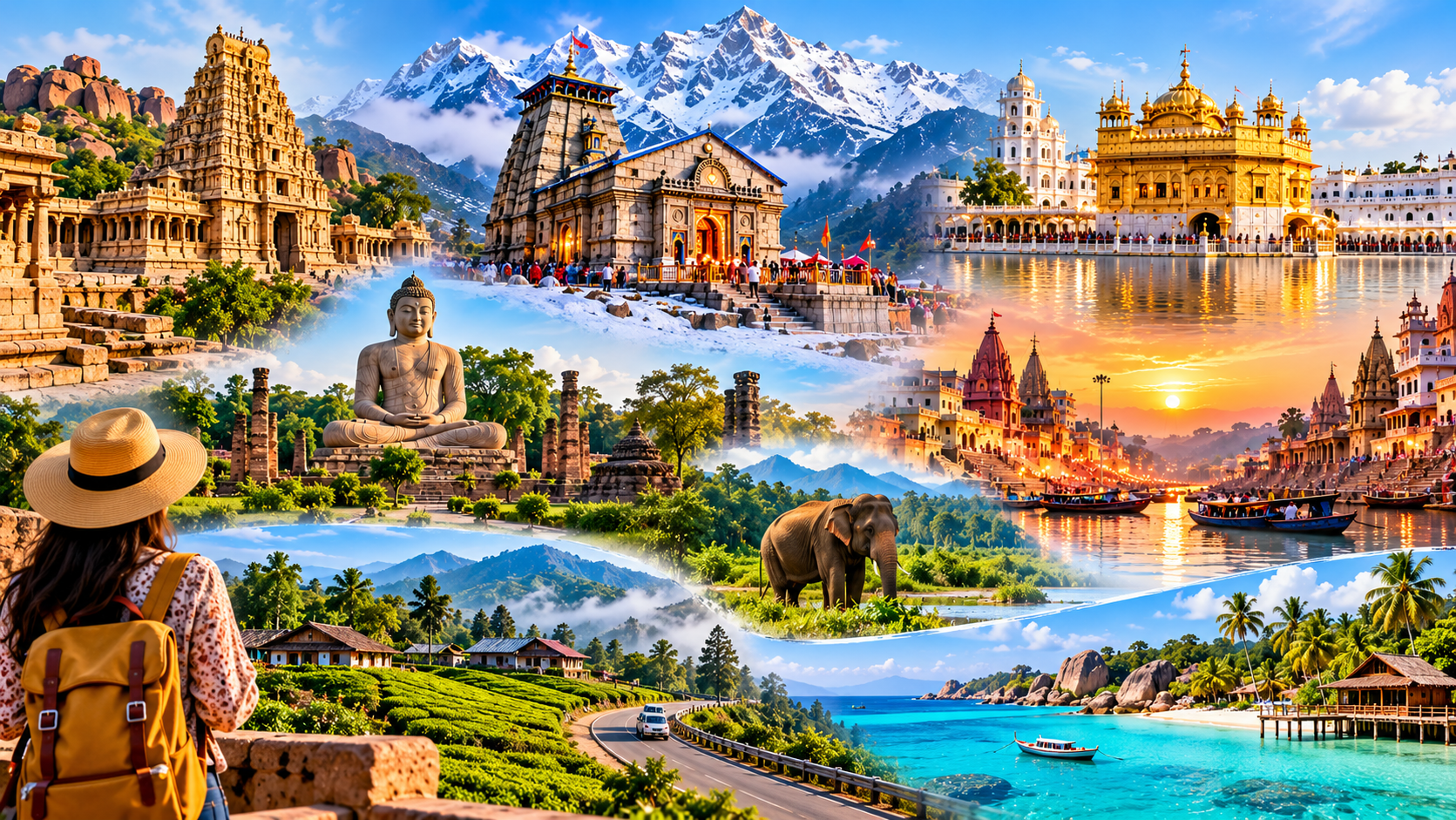
India’s tourism industry is much more than a collection of popular destinations, hotels, monuments, and travel experiences. It is an important contributor to economic development, employment generation, cultural preservation, infrastructure growth, and international relations. From the Himalayan landscapes and historic monuments to religious destinations, rural villages, wildlife reserves, and coastal regions, India’s tourism potential is closely connected with its diverse cultural and natural heritage.
Recognising this potential, the Government of India has introduced several tourism policies, schemes, and development initiatives to strengthen the country’s position as a global tourism destination. Programmes such as Swadesh Darshan 2.0, PRASHAD, Dekho Apna Desh, Travel for LiFE, and the Special Assistance to States for Capital Investment (SASCI) aim to improve tourism infrastructure, promote domestic travel, encourage sustainable practices, and generate employment.
Recent Union Budget announcements have also placed greater emphasis on developing new tourist destinations, improving hospitality skills, promoting medical tourism, strengthening digital tourism infrastructure, and expanding nature-based tourism.
Understanding India’s tourism policies is important not only for tourism professionals and business owners but also for students preparing for tourism examinations, researchers, policymakers, and anyone interested in the development of India’s travel industry.
This article explains India’s major tourism policies, government schemes, strategic priorities, important facts, and recent initiatives, along with their significance for the future of Indian tourism.
1. Understanding India’s Tourism Policy Framework
Tourism policy refers to the principles, strategies, regulations, and government programmes designed to guide the development and promotion of tourism within a country.
In India, tourism development is a shared responsibility involving the Central Government, state governments, Union Territories, private businesses, and local communities.
The Ministry of Tourism, Government of India, acts as the central agency responsible for formulating national tourism policies, coordinating tourism development, promoting India internationally, and supporting states through various schemes.
However, tourism is not governed by one single scheme. Its development is influenced by several interconnected areas:
- National tourism policies and strategic documents.
- Infrastructure development programmes.
- Heritage and pilgrimage tourism initiatives.
- Sustainable and responsible tourism strategies.
- Domestic and international tourism promotion.
- Hospitality education and skill development.
- Medical, wellness, rural, and adventure tourism.
- Digital platforms and tourism data systems.
National Tourism Policy, 2002
The National Tourism Policy, 2002, is an important milestone in India’s tourism development. It recognised tourism as an instrument of economic growth, employment generation, cultural exchange, and regional development.
The policy emphasised the need for coordinated planning, improved infrastructure, private-sector participation, and better visitor services.
In 2022, the Ministry of Tourism circulated a Draft National Tourism Policy for consultation with stakeholders. It is important to distinguish this draft from an officially adopted replacement policy. The draft itself should not be described as a formally implemented new national policy.
India’s current tourism development framework is therefore shaped by the existing policy foundation, national strategies, individual schemes, and subsequent Union Budget announcements.
2. Why Is Tourism Important for India’s Economy?
Tourism has a strong multiplier effect because visitor expenditure supports several connected industries. When a tourist visits a destination, spending does not remain limited to hotels or travel agencies. It also supports restaurants, transport operators, local guides, artisans, entertainment providers, farmers, and small businesses.
Tourism contributes to India’s economy in several ways.
Employment generation
Tourism creates employment opportunities across different skill levels. These include hotel employees, tour operators, travel consultants, drivers, guides, chefs, event managers, handicraft sellers, and adventure activity professionals.
It also creates indirect employment through suppliers, construction businesses, food producers, and other supporting industries.
Foreign exchange earnings
International visitors spend money on accommodation, transport, food, shopping, medical services, and tourism experiences. This brings foreign exchange into the country and supports India’s services economy.
Regional development
Tourism can bring investment and employment to smaller towns, rural areas, border regions, and destinations that have traditionally remained outside major industrial centres.
Cultural preservation
Tourism creates economic opportunities around monuments, traditional crafts, festivals, heritage buildings, and cultural performances. When managed responsibly, it can help communities preserve their local identity.
Contribution to GDP and employment
According to the Ministry of Tourism’s India Tourism Data Compendium 2025, tourism contributed approximately 5.22% of India’s GDP through its direct and indirect impact during 2023–24. Its direct contribution was 2.72%.
The sector also accounted for approximately 13.34% of total employment, including direct and indirect employment, while its direct employment share was 5.82%.
These figures demonstrate why tourism is considered an important contributor to India’s economic development. They refer to the 2023–24 estimates, not the tourism sector’s contribution in 2026.
3. Important Government Tourism Schemes in India
The Government of India has introduced several schemes to improve tourism infrastructure, strengthen destination management, and encourage responsible travel.
The following are among the most important initiatives.
3.1 Swadesh Darshan Scheme
<image placeholder: Indian heritage destination and tourism infrastructure>
The Swadesh Darshan Scheme was launched by the Ministry of Tourism in 2014–15 to develop theme-based tourist circuits across India.
The central idea behind the scheme was to connect destinations with similar tourism attractions or experiences and develop them through coordinated infrastructure investment.
Instead of developing individual attractions in isolation, the programme encouraged the creation of integrated tourism circuits.
Its objectives include:
- Improving tourism infrastructure and visitor facilities.
- Developing thematic tourism circuits.
- Improving accessibility and connectivity.
- Encouraging local economic development.
- Enhancing the overall tourist experience.
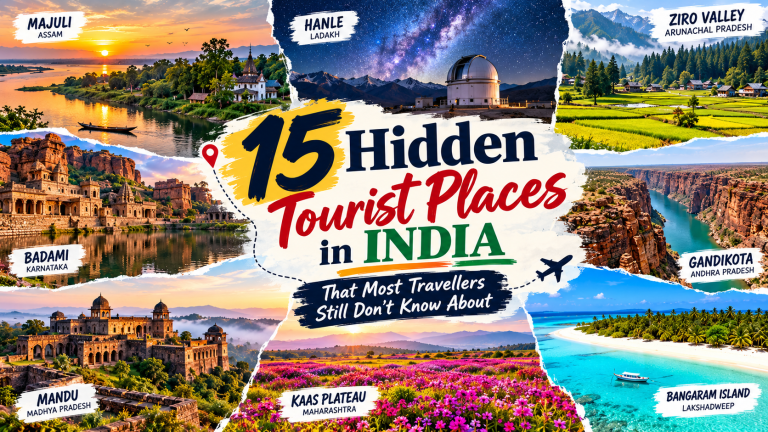
- Promoting lesser-known destinations.
The original programme included thematic circuits such as Buddhist, Coastal, Desert, Eco, Heritage, Himalayan, Krishna, Ramayana, Rural, Spiritual, and Tribal circuits.
For example, a Buddhist tourism circuit can connect destinations associated with Gautama Buddha, while a Ramayana circuit can link places associated with the epic tradition.
Swadesh Darshan 2.0
In 2022, the programme was revamped as Swadesh Darshan 2.0 (SD 2.0).
The revised programme places greater emphasis on sustainable and responsible destination development. Its focus is not limited to constructing infrastructure; it also includes destination management, local participation, conservation, and improved visitor experiences.
Important priorities include:
- Sustainable tourism development.
- Community participation.
- Local employment and livelihood opportunities.
- Better destination management.
- Conservation of natural and cultural resources.
- Improvement in the quality of tourism services.
According to the Ministry of Tourism’s published updates, 53 projects had been sanctioned under Swadesh Darshan 2.0 at a total sanctioned cost of approximately ₹2,208.27 crore.
Important: This is a sanctioned-project figure, not a statement that all 53 projects have been completed.
3.2 PRASHAD Scheme
<image placeholder: Indian pilgrimage temple and spiritual tourism destination>
PRASHAD stands for Pilgrimage Rejuvenation and Spiritual Heritage Augmentation Drive.
The scheme was launched in January 2015 by the Ministry of Tourism to improve tourism-related infrastructure at important pilgrimage and spiritual heritage destinations.
Religious tourism is a major part of India’s domestic travel market. Destinations such as Varanasi, Ayodhya, Puri, Dwarka, Amritsar, Bodh Gaya, and other sacred locations attract visitors throughout the year.
The PRASHAD scheme aims to improve the facilities available to pilgrims and visitors while supporting the preservation of religious and cultural heritage.
Its major objectives include:
- Development of pilgrimage infrastructure.
- Improvement of visitor amenities.
- Better accessibility to religious destinations.
- Development of sanitation and public facilities.
- Improvement of safety and visitor services.
- Support for heritage conservation and local livelihoods.
Difference between Swadesh Darshan 2.0 and PRASHAD:
Swadesh Darshan 2.0 focuses on sustainable tourism destination development across different tourism categories, whereas PRASHAD specifically concentrates on pilgrimage and spiritual heritage destinations.
The two schemes complement each other but have different areas of emphasis.
3.3 Special Assistance to States for Capital Investment (SASCI)
The Special Assistance to States for Capital Investment, commonly known as SASCI, is another important mechanism supporting tourism infrastructure development.
Under the tourism-related component of SASCI, states receive support through long-term, interest-free loans for developing important tourist destinations.
A government account of the 2024–25 initiative reported 40 projects across 23 states with an approved amount of approximately ₹3,295.76 crore.
The initiative aims to improve the quality and competitiveness of India’s tourist destinations by supporting infrastructure such as visitor facilities, public amenities, connectivity, and destination-related development.
Its importance lies in encouraging state governments to participate actively in tourism infrastructure development.
SASCI should not be confused with direct financial assistance to individual tourists or ordinary tourism advertising expenditure.
3.4 Dekho Apna Desh Initiative
<image placeholder: Domestic Indian tourists exploring a cultural heritage destination>
Dekho Apna Desh is an initiative introduced to encourage Indians to explore domestic tourism destinations.
The programme promotes awareness of India’s geographical, cultural, historical, and natural diversity.
Its broader objective is to motivate residents to discover destinations within the country instead of considering international travel the only attractive holiday option.
Activities associated with the initiative include:
- Tourism awareness campaigns.
- Webinars and online sessions.
- Promotional events.
- Competitions and public engagement activities.
- Information about lesser-known destinations.
- Promotion of India’s cultural and natural heritage.
The initiative is particularly relevant to domestic tourism because India has a large potential market of travellers interested in religious tourism, heritage destinations, adventure experiences, rural tourism, wildlife, and leisure holidays.
3.5 Chalo India Initiative
Chalo India is designed to encourage international visitors to discover India through the Indian diaspora.
The initiative encourages members of the Indian diaspora to act as ambassadors for Indian tourism by inviting their non-Indian friends and contacts to visit the country.
It uses the international networks of Indians living abroad to increase awareness of India’s destinations, culture, hospitality, and tourism experiences.
Difference between Dekho Apna Desh and Chalo India:
- Dekho Apna Desh focuses primarily on encouraging Indians to travel within India.
- Chalo India focuses on encouraging international visitors through diaspora networks.
Both initiatives support tourism promotion but address different visitor markets.
3.6 Travel for LiFE Initiative
<image placeholder: Eco-friendly tourism in a natural Indian destination>
Travel for LiFE is an important sustainability initiative introduced under Mission LiFE (Lifestyle for Environment).
Its objective is to encourage environmentally responsible behaviour among tourists, tourism businesses, and destination managers.
The initiative recognises that tourism development can create pressure on natural resources, biodiversity, water systems, and local communities if it is not managed carefully.
Travel for LiFE promotes practices such as:
- Reducing single-use plastic.
- Conserving water and energy.
- Supporting local products and businesses.
- Reducing waste generation.
- Respecting local culture and traditions.
- Encouraging responsible wildlife tourism.
- Promoting sustainable accommodation practices.
Travel for LiFE Certification
The initiative also includes a certification mechanism through the NIDHI+ platform.
Eligible accommodation units, tourism service providers, destinations, and attractions can apply for assessment under the programme.
Successful applicants can receive Gold, Silver, or Bronze certification according to the applicable assessment process.
This approach connects environmental awareness with practical recognition for tourism businesses adopting sustainable practices.
4. Major Tourism Strategies of India
Apart from individual schemes, the Ministry of Tourism has developed national strategies for specific tourism segments. These strategies provide direction for long-term sector development.
4.1 National Strategy for Sustainable Tourism
Sustainable tourism is one of the central priorities of India’s tourism development framework.
The National Strategy for Sustainable Tourism, 2022, recognises that tourism should generate economic benefits without damaging the environmental and cultural resources on which destinations depend.
The strategy considers three interconnected dimensions:
Environmental sustainability: Protection of natural resources, biodiversity, water, forests, and ecosystems.
Economic sustainability: Creating long-term income and employment opportunities for businesses and local communities.
Socio-cultural sustainability: Preserving local traditions, heritage, community identity, and cultural values.
For example, a hill destination may attract a large number of tourists, but uncontrolled construction, waste generation, and excessive traffic can damage its natural environment. Sustainable destination planning seeks to balance visitor demand with environmental carrying capacity and community interests.
4.2 National Strategy and Roadmap for Development of Rural Tourism
<image placeholder: Rural Indian homestay and village tourism>
Rural tourism provides opportunities to experience village life, local traditions, handicrafts, agriculture, traditional cuisine, and community-based cultural activities.
India’s National Strategy and Roadmap for Development of Rural Tourism seeks to make rural destinations an important part of the country’s tourism economy.
Its major focus areas include:
- Development of rural tourism infrastructure.
- Community participation.
- Promotion of local culture and traditional crafts.
- Digital technologies for rural tourism promotion.
- Skill development for rural tourism entrepreneurs.
- Support for homestays and local experiences.
For example, a village in Rajasthan may offer heritage walks, traditional food, folk performances, and handicraft workshops. A village in Kerala may offer farm stays, local cuisine, backwater experiences, and agricultural activities.
Such experiences can generate income for residents while encouraging visitors to explore destinations beyond major cities.
4.3 National Strategy for Promotion of Rural Homestays
Homestays allow travellers to stay with local families or in locally managed accommodation.
They provide an opportunity to experience regional food, traditions, lifestyles, and hospitality.
The National Strategy for Promotion of Rural Homestays aims to encourage rural accommodation businesses and strengthen local participation in tourism.
Homestays can benefit:
- Small property owners.
- Rural women entrepreneurs.
- Local food producers.
- Guides and activity providers.
- Artisans and handicraft businesses.
- Local transport operators.
The approach is particularly relevant for remote villages, Himalayan destinations, tribal regions, and culturally distinctive rural areas.
4.4 National Strategy and Roadmap for Medical and Wellness Tourism
<image placeholder: Indian wellness retreat and Ayurveda treatment setting>
India has significant potential in medical and wellness tourism because of its healthcare facilities, medical professionals, traditional wellness systems, and established treatment centres.
Medical tourism involves international visitors travelling to another country for healthcare services. Wellness tourism, meanwhile, includes travel for activities such as Ayurveda, yoga, meditation, rehabilitation, and preventive wellness experiences.
India’s National Strategy and Roadmap for Medical and Wellness Tourism focuses on:
- Strengthening India’s medical tourism brand.
- Improving coordination among healthcare and tourism stakeholders.
- Promoting wellness and traditional healthcare systems.
- Improving accessibility and visitor facilitation.
- Supporting digitalisation and information services.
- Encouraging private-sector participation.
Heal in India
The Heal in India initiative is associated with strengthening India’s position as a destination for medical value travel.
The idea is to connect healthcare services with international patient facilitation, wellness, and supporting travel arrangements.
Medical travellers may require more than hospital treatment. They may also need accommodation, airport transfers, language assistance, rehabilitation, and post-treatment care.
The 2025–26 Union Budget promoted medical tourism through private-sector partnerships. The 2026–27 Budget subsequently proposed the development of five regional medical hubs integrating healthcare, AYUSH services, diagnostics, rehabilitation, facilitation, and post-treatment care.
These hubs are budget proposals and should not automatically be described as five operational facilities.
4.5 Tourism Skill Development and Capacity Building
Tourism is a service-oriented industry. The quality of visitor experiences depends heavily on the skills and professionalism of the people delivering tourism services.
The Ministry of Tourism supports skill development through programmes such as:
Capacity Building for Service Providers (CBSP): This programme supports training and skill development for tourism and hospitality service providers.
Incredible India Tourist Facilitator Programme: It provides opportunities for individuals to develop tourism-related knowledge and become certified tourist facilitators.
Incredible India Tourist Guide Programme: This initiative supports the development of trained and professional tourist guides.
Skill development is important because tourism requires employees who can communicate effectively, understand local heritage, manage visitors, provide reliable information, and deliver quality services.
The 2026–27 Union Budget also proposed upgrading the National Council for Hotel Management and Catering Technology into a National Institute of Hospitality. It further proposed a pilot programme to upskill 10,000 tourist guides across 20 iconic destinations through a 12-week hybrid training programme.
These announcements connect tourism growth with professional education and service quality.
5. Digital Transformation in Indian Tourism
Technology is changing how people discover destinations, book travel services, access information, and interact with tourism businesses.
The Government of India has also recognised digitalisation as an important part of tourism development.
NIDHI: National Integrated Database of Hospitality Industry
NIDHI is a digital initiative designed to create a database of accommodation units and other tourism-related information.
Its purpose is to improve the availability of organised information about the hospitality sector.
A reliable database can support tourism planning, policy development, industry coordination, and better understanding of accommodation capacity.
NIDHI+
NIDHI+ extends the platform’s role through additional tourism-related services, including the Travel for LiFE certification process.
Tourism businesses can use the platform for relevant registration and certification activities.
National Destination Digital Knowledge Grid
The 2026–27 Union Budget proposed a National Destination Digital Knowledge Grid to digitally document places of cultural, spiritual, and heritage significance.
The proposed initiative is intended to support:
- Research and documentation.
- Tourism promotion.
- Digital visitor engagement.
- Preservation of destination knowledge.
- Better-informed tourism planning.
Digital documentation can help make information about lesser-known heritage destinations more accessible to researchers, visitors, tourism operators, and local authorities.
6. Important Tourism Announcements in Union Budgets 2025–26 and 2026–27
Recent Union Budgets demonstrate the government’s growing focus on tourism as an employment-generating and infrastructure-driven sector.
Tourism priorities in Budget 2025–26
The Union Budget 2025–26 announced several measures to encourage tourism development.
Development of 50 top tourist destinations: The government proposed developing 50 major tourist destinations in partnership with state governments through a challenge-based approach.
MUDRA loans for homestays: The Budget included support for homestays through MUDRA loans, connecting tourism development with small-business entrepreneurship.
Skill development: Tourism-related skill development was highlighted as a way to prepare young people for employment in the hospitality and tourism sectors.
Improved connectivity: The Budget also emphasised making travel to tourist destinations easier.
These announcements aimed to combine destination infrastructure with employment generation and local entrepreneurship.
Tourism priorities in Budget 2026–27
The 2026–27 Budget introduced further proposals across heritage, nature-based tourism, regional development, medical tourism, and hospitality skills.
| Policy area | Key announcement |
|---|---|
| Hospitality education | Proposal to establish a National Institute of Hospitality |
| Tourist guide training | Pilot to upskill 10,000 guides across 20 iconic destinations |
| Digital tourism | National Destination Digital Knowledge Grid |
| Archaeological heritage | Development of 15 archaeological sites as experiential cultural destinations |
| Northeast tourism | Buddhist circuit development across six northeastern states |
| Nature-based tourism | Mountain trails, turtle trails, and bird-watching trails |
| Medical tourism | Five proposed regional medical hubs |
| Eastern India | Five proposed tourism destinations across Purvodaya states |
The Budget also included proposals concerning connectivity, preservation of temples and monasteries, and development of cultural and spiritual destinations in northeastern India.
The important point is that these are budget announcements and proposals. Their implementation, funding, construction, and operational progress must be assessed separately.
7. Difference Between India’s Major Tourism Schemes
For tourism students and competitive examination candidates, understanding the differences between government schemes is particularly important.
| Scheme or initiative | Main purpose |
|---|---|
| Swadesh Darshan | Development of theme-based tourism circuits |
| Swadesh Darshan 2.0 | Sustainable and responsible tourism destination development |
| PRASHAD | Development of pilgrimage and spiritual tourism infrastructure |
| SASCI | Capital investment support to states for infrastructure |
| Dekho Apna Desh | Promotion of domestic tourism |
| Chalo India | Encouraging international visits through the Indian diaspora |
| Travel for LiFE | Sustainable and environmentally responsible travel |
| NIDHI | Digital database of hospitality establishments |
| Heal in India | Promotion of medical value travel |
| CBSP | Capacity building and training for tourism service providers |
These initiatives address different aspects of tourism development. Some focus on infrastructure, others on promotion, sustainability, entrepreneurship, or service quality.
8. Challenges in Implementing Tourism Policies in India
Although India has introduced several tourism schemes and strategic initiatives, their success depends on effective implementation.
1. Infrastructure gaps
Many destinations still require better roads, public transport, sanitation, accommodation, signage, and visitor facilities.
2. Uneven regional development
Tourism investment is concentrated in well-known destinations, while several rural, northeastern, and emerging destinations need greater infrastructure and promotional support.
3. Environmental pressure
Popular destinations face problems related to waste, traffic congestion, water shortages, pollution, and uncontrolled construction.
4. Skill shortages
The tourism sector requires trained guides, hospitality professionals, digital marketing specialists, destination managers, and customer-service employees.
5. Coordination among stakeholders
Tourism development involves multiple departments and levels of government. Coordination between the Central Government, state governments, local authorities, private businesses, and communities is essential.
6. Implementation and maintenance
Sanctioning a project is only one stage of development. Infrastructure must also be completed, maintained, managed, and made useful to visitors.
7. Limited awareness of lesser-known destinations
Many destinations with tourism potential remain under-promoted because of limited digital visibility, inadequate visitor information, and insufficient connectivity.
9. The Future of Tourism Policy in India
India’s tourism policy framework is increasingly moving towards integrated, sustainable, and experience-oriented destination development.
Several trends are likely to shape the future of the sector.
Sustainable tourism: Destinations will need to balance visitor numbers with environmental protection and local community interests.
Digital tourism: Online information, destination databases, digital maps, and technology-enabled services can improve the visitor experience.
Rural and community-based tourism: Homestays, village experiences, local cuisine, and traditional crafts can provide new income opportunities for rural communities.
Medical and wellness tourism: Healthcare, AYUSH, yoga, Ayurveda, and rehabilitation services offer opportunities to develop specialised tourism products.
Nature-based tourism: Mountain trails, bird-watching, wildlife experiences, and eco-tourism can diversify India’s tourism offerings.
Professional skill development: Hospitality education and guide training will remain important for improving service quality and international competitiveness.
Heritage-led destination development: Archaeological sites, historic towns, monuments, monasteries, and cultural landscapes can be developed as meaningful visitor experiences.
The long-term success of these priorities will depend on effective implementation, measurable outcomes, and the ability to involve local communities in tourism development.
10. Conclusion: India’s Tourism Policies as a Driver of Sustainable Economic Growth
India’s tourism policies represent a broad effort to connect economic development with cultural preservation, environmental responsibility, infrastructure improvement, and employment generation.
Schemes such as Swadesh Darshan 2.0 and PRASHAD support destination and pilgrimage infrastructure, while initiatives such as Dekho Apna Desh and Chalo India strengthen tourism promotion. Travel for LiFE encourages responsible travel practices, and medical, wellness, rural, and adventure tourism strategies create opportunities to diversify India’s tourism economy.
Recent Union Budget announcements have also highlighted the importance of hospitality education, digital destination documentation, regional medical hubs, nature-based tourism, and archaeological heritage.
However, the real success of tourism policy cannot be measured only through the number of schemes launched or projects sanctioned. It must also be evaluated through completed infrastructure, visitor satisfaction, environmental protection, employment generation, and the benefits reaching local communities.
India has the cultural diversity, natural resources, heritage, and entrepreneurial potential to become a stronger global tourism destination. The challenge is to convert these advantages into well-managed, accessible, inclusive, and sustainable tourism experiences.
Frequently Asked Questions (FAQs)
1. Which ministry is responsible for tourism in India?
The Ministry of Tourism, Government of India, is the central ministry responsible for formulating national tourism policies, promoting India as a tourism destination, and coordinating tourism development initiatives.
2. What is the National Tourism Policy of India?
The National Tourism Policy, 2002, is an important policy framework that recognises tourism as an instrument of economic development, employment generation, cultural preservation, and regional growth. A Draft National Tourism Policy was also circulated for consultation in 2022.
3. What is the Swadesh Darshan Scheme?
Swadesh Darshan was launched in 2014–15 to develop theme-based tourism circuits across India. It was revamped as Swadesh Darshan 2.0 in 2022, with a stronger focus on sustainable and responsible tourism destinations.
4. What is the PRASHAD Scheme?
PRASHAD stands for Pilgrimage Rejuvenation and Spiritual Heritage Augmentation Drive. It supports tourism-related infrastructure development at important pilgrimage and spiritual heritage destinations.
5. What is the objective of Dekho Apna Desh?
Dekho Apna Desh aims to encourage Indians to explore domestic tourism destinations and discover the country’s cultural, historical, and natural diversity.
6. What is Travel for LiFE?
Travel for LiFE is an initiative under Mission LiFE that encourages sustainable and environmentally responsible behaviour among tourists and tourism businesses.
7. What is the contribution of tourism to India’s GDP?
According to the Ministry of Tourism’s India Tourism Data Compendium 2025, tourism contributed 5.22% of India’s GDP through direct and indirect impact during 2023–24. Its direct contribution was 2.72%.
8. What is the objective of the NIDHI portal?
NIDHI, or the National Integrated Database of Hospitality Industry, is a digital platform intended to create an organised database of accommodation establishments and support tourism-sector information and services.
9. What is Heal in India?
Heal in India is associated with promoting India as a destination for medical value travel by connecting healthcare services with international patient facilitation and supporting services.
10. What are the major tourism priorities in Budget 2026–27?
Major proposals include a National Institute of Hospitality, training for 10,000 tourist guides, a National Destination Digital Knowledge Grid, development of 15 archaeological sites, five regional medical hubs, and Buddhist and nature-based tourism initiatives.
References and Official Sources
- Ministry of Tourism, Government of India – Official Website
https://tourism.gov.in/
Official information about tourism policies, schemes, government announcements, and tourism development. - Ministry of Tourism – Swadesh Darshan and PRASHAD Project Updates
https://tourism.gov.in/sites/default/files/2025-12/Press%20Release_Projects%20Under%20SDS%20and%20Prashad%20Schemes.pdf
Government update on sanctioned projects under Swadesh Darshan, Swadesh Darshan 2.0, and PRASHAD. - Ministry of Tourism – National Strategies and Guidelines
https://tourism.gov.in/guidelines-of-department/6639
Includes the National Strategy for Sustainable Tourism, rural tourism, rural homestays, and medical and wellness tourism. - NIDHI+ – Travel for LiFE
https://nidhi.tourism.gov.in/home/page/travel-for-life
Official information about the Travel for LiFE initiative and its sustainability certification process. - Union Budget 2025–26 – Government of India
https://www.indiabudget.gov.in/budget2025-26/doc/bh1.pdf
Official Budget document covering tourism for employment-led growth, 50 tourist destinations, homestays, and tourism-related skill development. - Union Budget 2026–27 – Government of India
https://www.indiabudget.gov.in/doc/bh1.pdf
Official Budget document covering tourism-related announcements, including hospitality education, guide training, digital destination documentation, and nature-based tourism. - Press Information Bureau – Tourism and the Architecture of Growth, Budget 2026–27
https://www.pib.gov.in/PressReleasePage.aspx?PRID=2232011
Government backgrounder explaining the 2026–27 tourism proposals, medical hubs, heritage destinations, and skill development. - India Tourism Data Compendium 2025 – Ministry of Tourism
https://tourism.gov.in/sites/default/files/2025-09/India%20Tourism%20Data%20Compendium%202025_0.pdf
Official statistics on tourism’s contribution to GDP and employment. - Ministry of Tourism – India Tourism Data Portal
https://data.tourism.gov.in/
Official tourism statistics, including domestic tourist visits, foreign tourist arrivals, foreign exchange earnings, GDP, and employment.