
Smart cities are rapidly evolving through AI-powered systems, transforming urban life with smarter infrastructure, predictive technology, and sustainable solutions for millions of people.
Modern cities run by smart software are altering daily life, jobs, commutes, and even how folks connect with what’s around them. Instead of old methods, roads adjust themselves while structures save power in clever ways; here, learning machines quietly guide better city living.
In this Article, we take a look at smart cities powered by AI popping up worldwide – what tech drives them, also examples proving how they boost life for countless people.
Table of Contents
Why AI-Powered Smart Cities Are Becoming a Global Trend
More people are moving to cities than ever before. Because of this trend, experts say about 7 out of 10 humans might reside in urban areas coming 2050. So now we need quicker ways to build smarter towns that don’t harm the environment.
Here’s why AI-powered smart cities are becoming essential:
1. Real-time decision-making
Old-school urban control runs on slow updates plus hands-on work. Yet smart systems now chew through info nonstop – so towns can react fast when crashes, blackouts, crowds, or disasters hit.
2. Predictive capabilities
A smart system doesn’t only fix issues – it spots trouble early. Congestion on roads, lack of clean water, and rising crime zones – these can all show up ahead of time. Pollution peaks? They’re guessable too.
3. Better resource utilisation
AI cuts down on trash while also cutting power use. It tweaks how goods move around cities instead of just adding more trucks. This means garbage pickup runs smoother without delays. Healthcare gets quicker thanks to smarter scheduling tricks.
4. Better daily living
Citizens enjoy easier trips, tidier spaces, more secure neighborhoods, also faster service delivery. All made possible by smart tech running quietly in the background.
Key Technologies Behind AI-Powered Smart Cities
To get how these places run, check out the tech behind them – like what’s actually making things happen
AI & Machine Learning
AI systems study tons of info to act on their own – say, changing stoplights, cutting power waste, or spotting risks. While they crunch numbers, cities run smoother, energy use drops, and safety improves. Instead of waiting for humans, these tools react fast. So when patterns shift, responses follow without delay.
IoT sensors
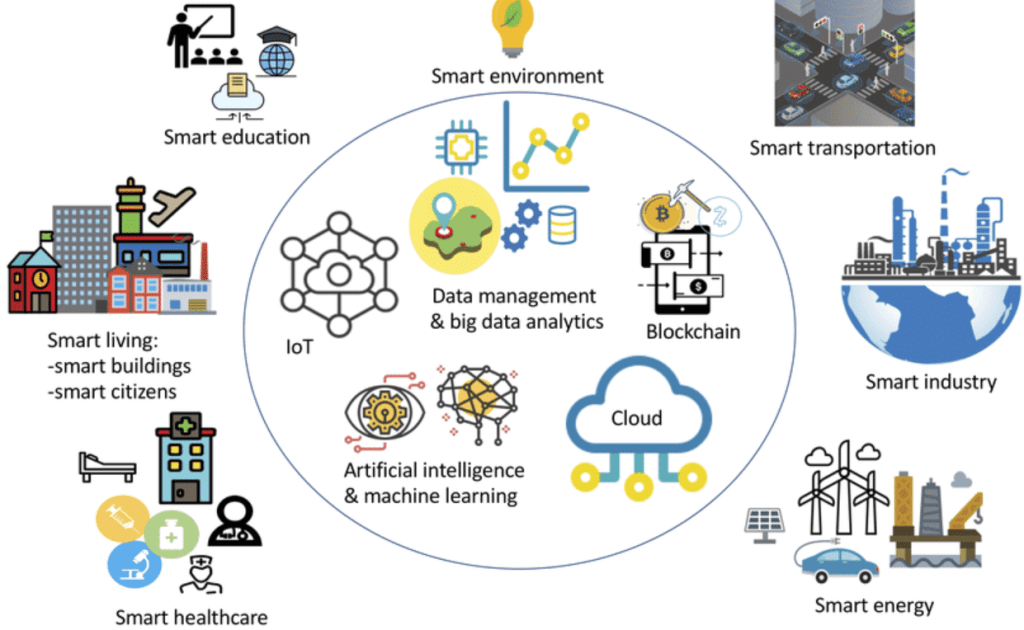
Sensors from the Internet of Things pop up all over – on roads, inside buildings, atop streetlights, around parking spots, also on buses and trains – grabbing live updates as things happen.
Big Data Analytics
Cities produce tons of data every day. Yet these details get sorted and fixed by special software before machines can make sense of them.
5G Connectivity
Faster links let every gadget or sensor share info right away.
Cloud Computing
Keeps city info safe on big storage systems that grow when needed.
These systems work hand in hand to form the core of smart cities driven by AI, helping them run without hiccups while staying sharp on their feet.
Case Studies: How Cities Around the World Are Using AI
Now let’s check out actual cases – AI’s reshaping city living in clear ways.
Case Study 1: Barcelona – Smart Infrastructure & Sustainable Living
Barcelona keeps showing up near the top when talking about smart cities that use AI, thanks to how it focuses on people and green solutions. Instead of fixed settings, lights on streets adjust automatically using motion plus daylight data from smart sensors.
What Barcelona is doing:
- Using smart tech with artificial brains helps save water by cutting down on losses.
- Predictive upkeep for city systems.
- Smart systems help control car flow to ease road jams.
- Trash cans spot when they’re full, then ping pickup crews right away.
Results?
Barcelona cut energy bills by a ton, slashed water waste quite a bit – also improved how buses and transit run.
Case Study 2: Singapore – The World’s Most Advanced Smart Nation
Singapore jumped on AI early when upgrading its urban setup. Thanks to the Smart Nation push by officials, the whole place now runs like a live tech lab.
Key AI implementations:
- Predictive traffic systems help ease congestion when roads get busy – using smart timing to keep cars moving smoothly through rush periods.
- Folks stay safer ’cause smart cameras keep watch – using tech that learns on its own.
- Keeping an eye on health with smart tools – great for older folks.
- Buses that drive themselves are under trial across town – also cabs without drivers getting checked out.
Singapore shows how tech-smart cities boost safety, get transport running smoother, yet still protect people’s private info pretty well.
Case Study 3: Dubai – AI for Public Safety and Transportation
Dubai’s also using smart tech to handle everyday tasks – take city management or law enforcement, machines help out there. Whether it’s paperwork or monitoring streets, you’ll find automated tools hard at work across the scene.
How Dubai uses AI:
- Futuristic tools help cops stop trouble before it happens.
- Smart traffic signals changing with live road movement.
- Self-flying drones keep watch over crowds. They move without a pilot, checking areas on their own.
- Using smart tech in public offices cuts down on forms plus speeds up service.
The city wants to run fully on AI, a daring move putting it ahead in worldwide progress – so it’s leading the pack through fresh ideas.
Case Study 4: New York City – AI for Urban Mobility & Sustainability
New York’s packed streets bring big pollution problems. Yet smart tech is starting to change how the city builds its roads and systems.
NYC’s AI advancements:
- Smart systems study road flow, so fewer jams pop up across Manhattan streets.
- Smart parking systems helping drivers find spots easily.
- Saving power with smart grids that learn from use – so things run smoother without wasting resources.
The city taps AI to check environmental info while forecasting pollution, turning it into a standout example among U.S. urban areas running on heavy data use.
How AI-Powered Smart Cities Improve Daily Life
Let’s break it down in a simple, human way – how AI improves everyday living.
1. Shorter travel time
You get there quicker since lights change on their own.
2. Cleaner air
A computer guesses dirty air problems, so leaders can act early.
3. Safer streets
Smart cameras spot odd actions using artificial brain tech.
4. Faster emergency response
Predictive analytics gets ambulances there quicker – also speeds up fire truck response times.
5. Reduced energy bills
Smart grids spread power smoothly, while cutting down on losses.
In short smart cities using AI runs better – traffic flows easier, people feel more secure, while energy use gets smarter.
The Future of AI-Powered Smart Cities
As tech keeps changing, smart cities powered by artificial intelligence are set to spread worldwide. You’ll notice this shift happening everywhere:-
- Fully self-driving buses and trains that run without any human help
- Structures managing their own power use
- A smart tech that guesses disasters before they happen
- Robots supporting emergency services
- Smart systems handle trash and liquids without wasting resources
The main aim is to build towns where tech helps people without getting in the way – working quietly behind the scenes.
Frequently Asked Questions About Smart Cities
1. What is an AI-powered smart city?
A smart city runs on AI, plus tons of sensors – linking them to boost how people move around, stay safe, save power, or access everyday services.
2. How do AI-powered smart cities improve traffic?
AI guesses where jams might pop up, tweaks stoplights on its own, or points drivers toward smoother paths.
3. What places are ahead in smart urban tech?
Singapore stands out – meanwhile, Barcelona brings something different. On the flip side, Dubai keeps up fast. Then again, New York plays its own game.
4. What tools help power intelligent urban areas?
AI with smart sensors, cloud systems, fast 5G links, also heavy-duty number crunching(Data Analytics).
5. What makes city life better with tech?
They deliver quicker help, along with secure spaces, less waste in the air, while making everyday tasks run more easily.
Final Thoughts
The growth of AI-run urban areas signals a big shift in how we live. Thanks to powerful algorithms combined with green solutions plus instant data tracking, towns now work smoother while focusing on people’s needs. Cities like Barcelona or Singapore along with Dubai and New York show this tech is no fantasy – it’s reshaping daily life right now.
With more people using it across the globe, one fact stands out – city life ahead is smart, linked through tech, or driven by artificial brains.
References
Artificial Intelligence for Smart Cities: A Comprehensive Review Across Six Pillars and Global Case Studies — MDPI MDPI
“Environmentally sustainable smart cities and their converging AI, IoT, and big data technologies and solutions: an integrated approach to an extensive literature review” — Energy Informatics SpringerLink
“The emerging data–driven Smart City and its innovative applied solutions for sustainability: the cases of London and Barcelona” — Energy Informatics SpringerLink
“From Data to Action: Exploring AI and IoT-driven Solutions for Smarter Cities” — arXiv arXiv
Smart City initiatives around the world – contributing to better quality of life” — Frost & Sullivan Institute blog on global smart-city projects Frost & Sullivan Institute
“Smart Cities: Urban Sustainability at the Forefront” — TheSwitch theswitch.es
“Smart City. New era of urban transforming” — Aipix blog Aipix


