Most beautiful villages in India for slow and rural tourism offer slow travel at its best—misty Himalayan hamlets, Kerala backwater settlements, desert villages, living craft traditions, and communities. Looking for a peaceful escape from crowded cities and rushed itineraries?, where nature and culture shape everyday life.
This guide covers 12 of the best villages in India for rural tourism, including what makes each one special, the best experiences, ideal travel seasons, and responsible-travel tips. Whether you want a cultural holiday, photography trip, homestay experience, or sustainable village getaway, these destinations belong on your India travel bucket list.
Why Choose Slow and Rural Tourism in India?
Slow and rural tourism is about experiencing a place deeply rather than rushing between attractions. Instead of a packed city itinerary, you stay longer, eat local food, meet artisans and farmers, explore on foot, and support community-led tourism.
Rural tourism in India is also increasingly recognised globally: Pochampally in Telangana was selected by the UN World Tourism Organization as a Best Tourism Village, while Mawlynnong in Meghalaya is celebrated as one of Asia’s cleanest villages.[tourism.gov][incredibleindia.gov]
Benefits of village tourism in India
- Authentic cultural experiences: Traditional architecture, festivals, food, music, and everyday rural life.
- Closer connection with nature: Mountains, forests, backwaters, deserts, farms, and rivers.
- Support for local communities: Homestays, local guides, craftspeople, and village enterprises.
- Lower-impact travel: Fewer crowds, slower movement, and more mindful consumption.
- Meaningful memories: Real conversations and lived traditions, not just sightseeing.
Quick Overview: Best Villages for Rural Tourism in India
| Village | State | Best For | Best Time |
|---|---|---|---|
| Mawlynnong | Meghalaya | Clean village, living root bridges, Khasi culture | October–April |
| Ziro | Arunachal Pradesh | Apatani culture, rice fields, music festival | March–October |
| Khimsar | Rajasthan | Desert life, heritage fort, Rajasthani cuisine | October–March |
| Kalpa | Himachal Pradesh | Kinner Kailash views, apple orchards | April–June; September–October |
| Kumbalangi | Kerala | Backwaters, fishing, coastal village life | October–March |
| Nako | Himachal Pradesh | Buddhist heritage, high-altitude lake, Spiti landscapes | May–September |
| Gokarna Hinterland | Karnataka | Coastal villages, quiet beaches, local food | October–March |
| Mandawa | Rajasthan | Painted havelis, Shekhawati heritage | October–March |
| Chitkul | Himachal Pradesh | Himalayan scenery, riverside walks, Kinnauri culture | May–October |
| Bishnoi Villages | Rajasthan | Crafts, wildlife values, rural Rajasthan | October–March |
| Dhordo | Gujarat | White Rann, Kutchi embroidery, desert culture | November–February |
| Pochampally | Telangana | Ikat weaving, textile heritage, craft tourism | October–March |
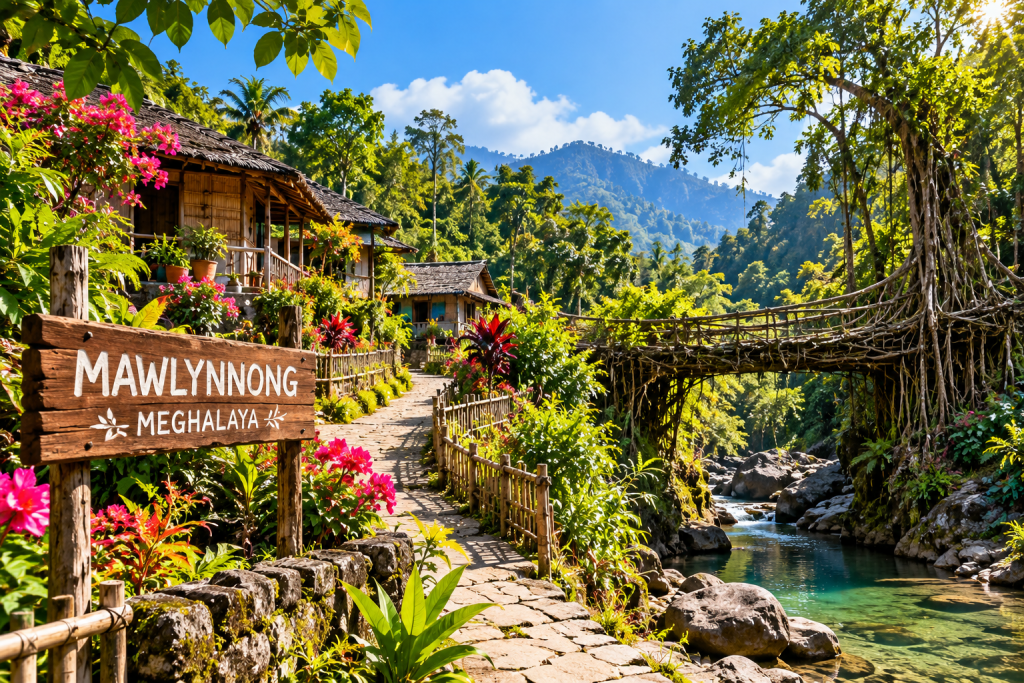
1. Mawlynnong, Meghalaya — Asia’s Famous Clean Village
Mawlynnong, in Meghalaya’s East Khasi Hills, is one of the most famous rural tourism destinations in India. Often called “God’s Own Garden,” it is known for spotless lanes, bamboo homes, tropical greenery, and a strong community-led approach to cleanliness and sustainability.[incredibleindia.gov][rural.tourism.gov]
The nearby Nohwet Living Root Bridge is the region’s biggest attraction. Built by training the roots of Ficus trees across streams over generations, these bridges are a remarkable example of Khasi ecological knowledge.[rural.tourism.gov]
Best experiences in Mawlynnong
- Walk through clean village lanes and bamboo gardens
- Visit the Nohwet Living Root Bridge
- Enjoy viewpoints toward Bangladesh
- Try local Khasi food
- Stay in a village homestay for a slower experience
Best time to visit: October to April. Official Meghalaya tourism also highlights September to December as a good season, coinciding with the Nongkrem Dance Festival.[incredibleindia.gov]
2. Ziro, Arunachal Pradesh — A Peaceful Himalayan Valley
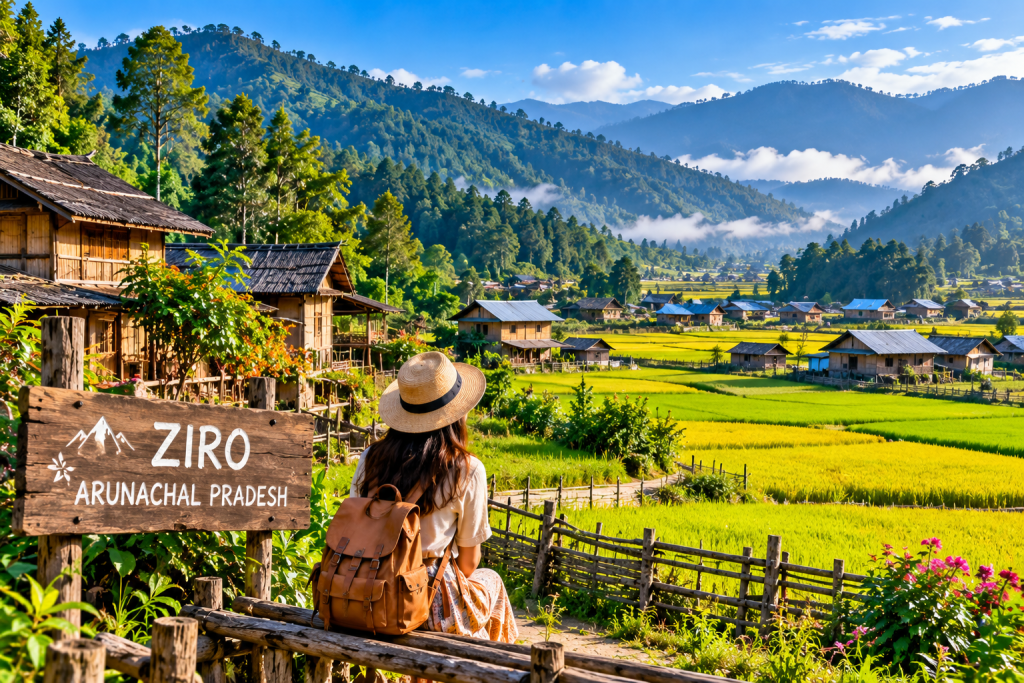
Ziro is one of India’s most beautiful valley destinations for slow travel. Located in Arunachal Pradesh, it is known for pine forests, rolling green hills, rice fields, bamboo houses, and the distinctive culture of the Apatani community.
The valley’s calm pace makes it ideal for travellers seeking nature, culture, and quiet. The annual Ziro Music Festival has also made it popular among music lovers, but the real magic lies in exploring its villages and agricultural landscape.
Best experiences in Ziro
- Explore Apatani villages such as Hong and Hari
- Photograph rice fields and pine-covered hills
- Learn about traditional farming practices
- Attend the Ziro Music Festival, if travelling in season
- Enjoy local food and village homestays
Best time to visit: March to October, depending on weather and road conditions.
3. Khimsar, Rajasthan — Desert Village Charm
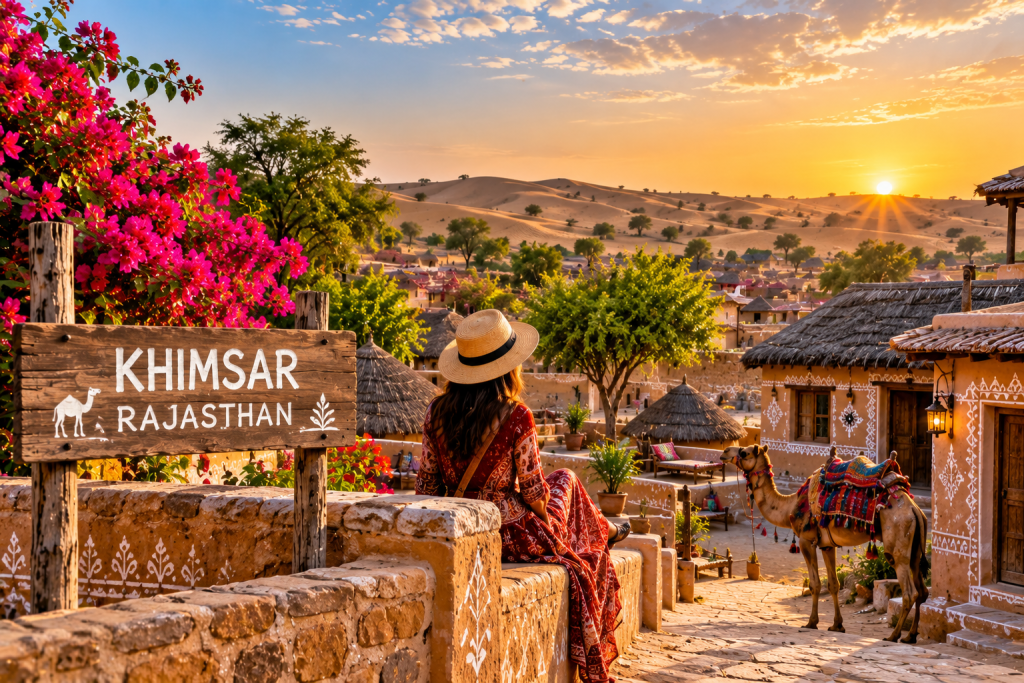
Khimsar, in Nagaur district, offers a quieter side of Rajasthan beyond Jaipur, Jodhpur, and Jaisalmer. Golden dunes, traditional Rajasthani architecture, camel country, and warm desert hospitality make it a strong choice for rural tourism in Rajasthan.
The village is also known for its historic fort, which adds a heritage dimension to a desert getaway. Sunset walks, folk food, and clear desert skies make Khimsar especially rewarding for photographers and slow travellers.
Best experiences in Khimsar
- Explore the historic Khimsar Fort
- Take a desert walk or camel experience
- Enjoy traditional Rajasthani meals
- Photograph sand dunes at sunset
- Stargaze under clear desert skies
Best time to visit: October to March, when daytime temperatures are more comfortable.
4. Kalpa, Himachal Pradesh — Village Life With Himalayan Views
Kalpa, in Kinnaur district, is a scenic Himalayan village famous for its views of the Kinner Kailash range, apple orchards, wooden architecture, and peaceful mountain atmosphere. It is ideal for travellers who want to slow down and enjoy high-altitude village life.
Mornings in Kalpa are especially beautiful, with snow peaks changing colour as the sun rises. The village’s quiet lanes, temples, orchards, and mountain trails make it perfect for a relaxed Himalayan holiday.
Best experiences in Kalpa
- Watch sunrise over Kinner Kailash
- Walk through apple orchards
- Explore traditional Kinnauri architecture
- Visit local temples
- Enjoy regional Himachali food
Best time to visit: April to June and September to October, subject to weather and road conditions.
5. Kumbalangi, Kerala — Experience Backwater Village Life
Kumbalangi, near Kochi, is one of Kerala’s best examples of backwater village tourism. Surrounded by waterways, mangroves, coconut groves, and fishing communities, it offers an authentic coastal experience close to a major city.
The village is known for community-based tourism initiatives that highlight local livelihoods, fishing traditions, and Kerala cuisine. It is an excellent choice for travellers who want rural Kerala without travelling deep into the backwaters.
Best experiences in Kumbalangi
- Explore backwater channels and mangroves
- Observe traditional fishing practices
- Enjoy freshly prepared Kerala seafood
- Take a village walk
- Learn about local coastal livelihoods
Best time to visit: October to March, when weather conditions are generally pleasant for sightseeing.
6. Nako, Himachal Pradesh — A Quiet Village in the Trans-Himalayas
Nako is a peaceful high-altitude village in the Spiti region of Himachal Pradesh. Surrounded by rugged mountains and cold-desert landscapes, it offers a rare mix of Buddhist heritage, traditional architecture, and dramatic natural beauty.
The village lake and ancient monastery give Nako a distinctive character. It is best suited to travellers who enjoy silence, walking, photography, and slow exploration of remote Himalayan communities.
Best experiences in Nako
- Visit Nako Monastery
- Walk around the village lake
- Explore traditional mud-and-stone houses
- Photograph the Trans-Himalayan landscape
- Experience the quiet rhythm of Spiti village life
Best time to visit: May to September, depending on road accessibility and weather.
7. Gokarna’s Rural Hinterland, Karnataka — Coastal Beauty Beyond the Beaches
Gokarna is famous for its beaches, but its rural hinterland offers a quieter and more authentic coastal Karnataka experience. Small settlements, coconut groves, paddy fields, traditional homes, and local food create a slower alternative to beach-focused tourism.
This is a great destination for travellers who want to combine coastal scenery with village walks and local cuisine. Always respect private property, local customs, and restricted areas when exploring lesser-known coastal communities.
Best experiences around Gokarna
- Walk through coconut groves and village lanes
- Enjoy local coastal Karnataka food
- Visit quieter beaches and viewpoints
- Explore rural settlements beyond the main tourist strip
- Take slow coastal photography walks
Best time to visit: October to March, when conditions are generally suitable for outdoor activities.
8. Mandawa, Rajasthan — A Heritage Village of Painted Havelis
Mandawa, in Rajasthan’s Shekhawati region, is one of India’s best destinations for heritage and art lovers. Though often described as a heritage town, its painted havelis, frescoes, and old merchant mansions make it a remarkable rural-heritage experience.
Walking through Mandawa feels like entering an open-air gallery. The painted façades reflect stories of trade, family pride, mythology, and the artistic traditions that made Shekhawati famous.
Best experiences in Mandawa
- Take a guided haveli walk
- Photograph intricate frescoes and painted façades
- Explore heritage mansions
- Meet local artisans where possible
- Enjoy traditional Rajasthani hospitality
Best time to visit: October to March.
9. Chitkul, Himachal Pradesh — A Scenic Himalayan Hamlet
Chitkul, in Himachal Pradesh’s Sangla Valley, is one of the most scenic villages in the Indian Himalayas. Located near the Indo-Tibetan border region, it is known for wooden houses, the Baspa River, apple orchards, meadows, and dramatic mountain views.
Chitkul is ideal for slow travellers who want crisp air, riverside walks, and a peaceful mountain base. Because it is a high-altitude destination, allow time to acclimatise and check road conditions before travelling.
Best experiences in Chitkul
- Walk along the Baspa River
- Explore traditional Kinnauri homes
- Enjoy mountain and riverside photography
- Try local Himachali food
- Take short village and valley walks
Best time to visit: May to October, subject to weather and road access.
10. Bishnoi Villages, Rajasthan — Discover Traditional Rural Living
The Bishnoi villages near Jodhpur offer one of the most meaningful rural tourism experiences in Rajasthan. The Bishnoi community is widely known for its traditional respect for nature, wildlife, and sustainable living.
A guided village visit may include potters, weavers, artisans, traditional homes, and local food, depending on the route and community participation. These experiences show how rural livelihoods and conservation values continue alongside modern life.
Best experiences in Bishnoi villages
- Meet local artisans and craftspeople
- Learn about pottery, weaving, and traditional crafts
- Understand Bishnoi conservation traditions
- Enjoy authentic Rajasthani food
- Take a guided village safari or excursion
Best time to visit: October to March.
Responsible travel tip: Choose local guides, ask permission before photographing residents, and avoid entering private homes without invitation.
11. Dhordo, Gujarat — White Desert Landscapes and Kutchi Culture
Dhordo, in Gujarat’s Kutch region, is a gateway to the spectacular White Rann of Kutch. The village is known for its salt-desert landscapes, Kutchi embroidery, handicrafts, traditional architecture, and strong community tourism culture.
Dhordo is especially popular during the winter season, when the white desert becomes a striking setting for sunrise, sunset, and cultural events. Buying handicrafts directly from artisans is one of the best ways to support local livelihoods.
Best experiences in Dhordo
- Visit the White Rann at sunrise or sunset
- Explore Kutchi embroidery and handicrafts
- Enjoy local Kutchi cuisine
- Attend cultural performances during festival periods
- Stay in traditional-style accommodation
Best time to visit: November to February. Festival dates and desert access can vary by season.
12. Pochampally, Telangana — A Village of Traditional Ikat Weaving
Pochampally, about 50 km from Hyderabad, is one of India’s most important craft villages. Known as the “Silk City of India,” it is famous for Pochampally Ikat, a hand-woven textile tradition that received Geographical Indication status in 2004.[tourism.gov]
The village was also recognised by the UN World Tourism Organization as a Best Tourism Village, making it an excellent destination for craft-based and sustainable rural tourism.[tourism.gov]
Best experiences in Pochampally
- Watch Ikat weaving demonstrations
- Visit weaving workshops where visits are welcomed
- Learn how threads become intricate patterns
- Buy authentic handmade textiles directly from weavers
- Speak with artisans about their craft traditions
Best time to visit: October to March, for comfortable sightseeing weather.
How to Plan a Rural Tourism Trip in India
Before visiting any village, research accessibility, accommodation, mobile connectivity, weather, permits, and local customs. Remote Himalayan destinations may have limited transport, medical facilities, and network coverage.
Responsible rural travel tips
- Stay local: Choose homestays, village guesthouses, or community-run stays.
- Hire local guides: They add cultural context and keep tourism income within the community.
- Travel in the right season: Mountain roads, monsoons, and desert heat can affect plans.
- Respect traditions: Ask before photographing people, homes, temples, or ceremonies.
- Buy authentic crafts: Purchase directly from artisans whenever possible.
- Reduce waste: Avoid single-use plastic and carry your rubbish back where needed.
- Plan transport early: Remote villages may require private taxis, shared jeeps, or ferry transfers.
Final Thoughts
India’s most beautiful villages reveal a side of the country that mainstream tourism often misses. From Mawlynnong’s living root bridges and Ziro’s rice fields to Khimsar’s desert charm, Mandawa’s painted havelis, and Pochampally’s Ikat looms, each destination offers a different way to experience rural India.
The best village holiday is not the one with the most attractions—it is the one that gives you time to slow down, connect with people, appreciate local traditions, and travel responsibly.
If you are planning your next peaceful escape, add one of these 12 most beautiful villages in India for slow and rural tourism to your itinerary. Travel thoughtfully, support local communities, and discover India beyond its popular tourist destinations.[tourism.gov][incredibleindia.gov][rural.tourism.gov]