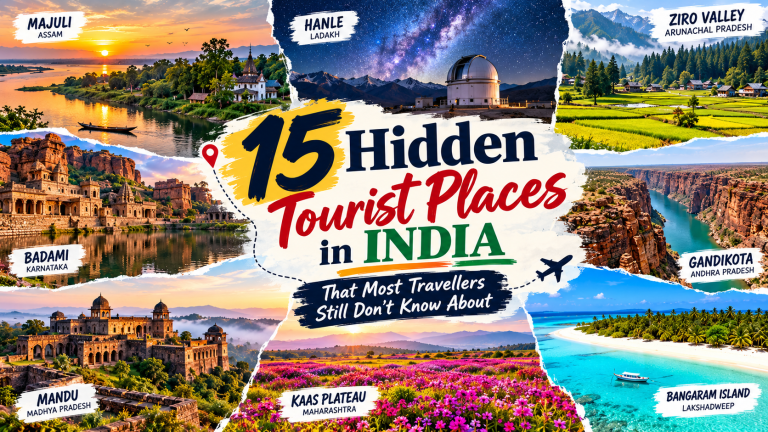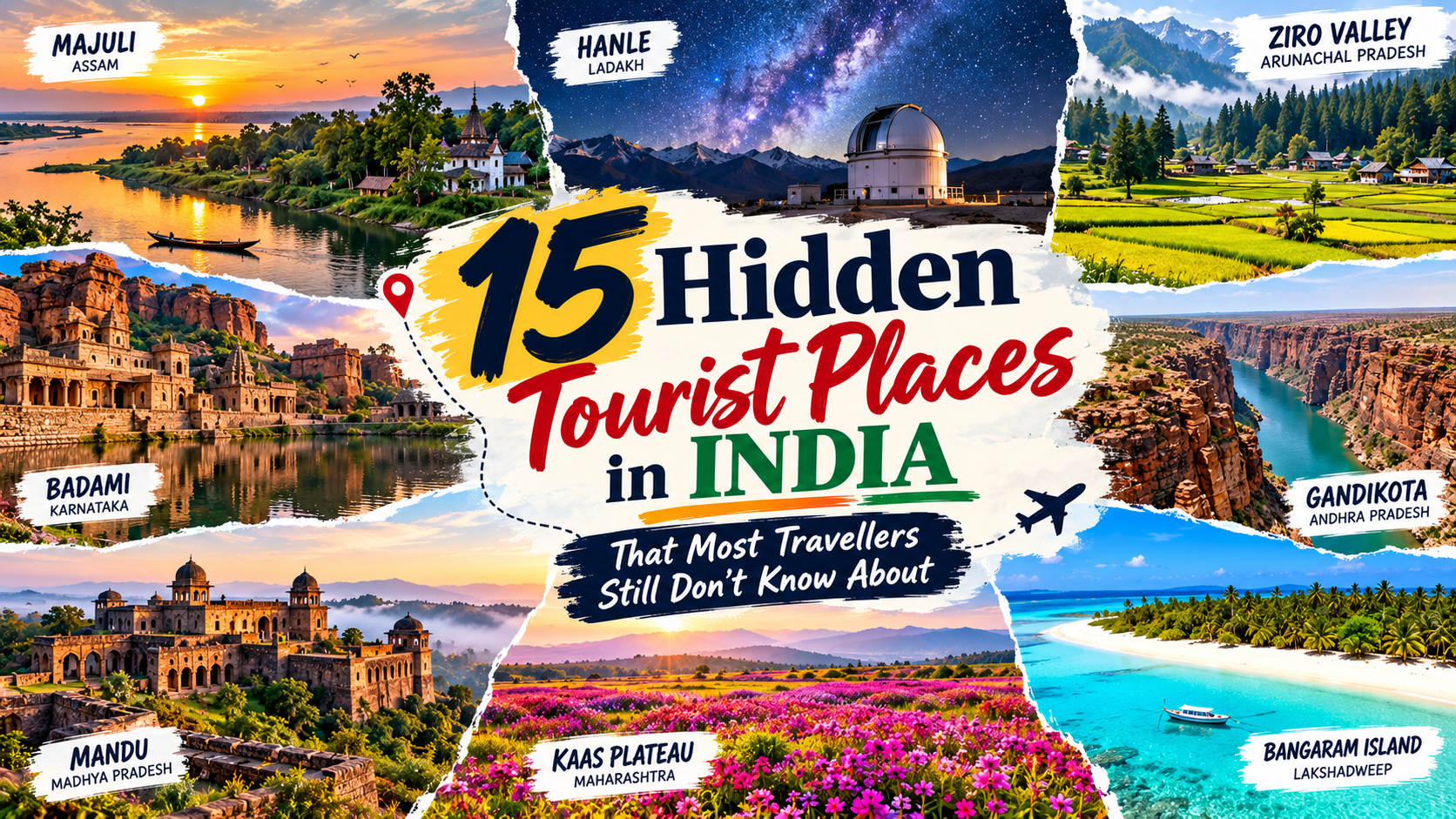
India is a country where every journey has the potential to reveal something unexpected. Beyond the famous Taj Mahal, Goa’s beaches, Rajasthan’s royal palaces, Kerala’s backwaters, and the crowded Himalayan hill stations lies another side of India waiting to be explored.
Imagine spending a morning on a river island where ancient monasteries preserve centuries-old traditions, watching the Milky Way from a remote Ladakhi village, walking through a forest where bridges are made from living tree roots, or discovering an abandoned medieval city surrounded by mist-covered hills.
These are not ordinary holiday experiences. They are journeys into India’s lesser-known landscapes, cultures, and histories.
With travellers increasingly interested in slow travel, rural tourism, cultural experiences, and destinations away from crowded tourist circuits, India’s hidden destinations offer something different. Many are still relatively untouched by mass tourism, although accessibility, accommodation, and infrastructure can vary considerably.
In this guide, we explore 15 hidden tourist places in India that deserve a place on your travel bucket list. From the remote valleys of Kashmir to the coral islands of Lakshadweep, each destination offers a distinctive experience, along with practical information to help you plan your visit.
1. Majuli, Assam – The River Island That Keeps Changing
Imagine waking up to the sound of flowing water, watching fishermen cast their nets, and seeing morning mist slowly disappear over an enormous river. This is Majuli, an extraordinary river island located in the Brahmaputra in Assam.
Majuli is famous not only for its natural surroundings but also for its remarkable cultural heritage. It is an important centre of Assam’s Neo-Vaishnavite tradition, with satras (monastic institutions) preserving religious practices, classical arts, music, dance, and traditional crafts.
One of its most fascinating attractions is Samaguri Satra, where artisans create traditional masks known as mukha. These colourful masks represent gods, demons, animals, and mythological characters and are used in Bhaona performances, a traditional form of Assamese religious theatre.
Visitors can also explore traditional Mising villages, observe handloom weaving, taste regional Assamese food, and cycle through peaceful rural landscapes.
However, Majuli has a fragile geographical identity. Riverbank erosion and flooding have affected the island’s landscape and communities over time. Its changing geography makes the destination particularly meaningful for travellers interested in environmental and cultural tourism.
Things to experience:
- Visit Samaguri Satra and watch traditional mask-making.
- Explore Auniati and Kamalabari satras.
- Experience Mising village life and traditional food.
- Enjoy a Brahmaputra riverside sunset.
- Explore wetlands and local birdlife.
Best time to visit: October to March.
How to reach: Jorhat is a convenient access point. Travellers generally take a ferry from Nimati Ghat to Majuli. Check ferry schedules and vehicle booking arrangements before travelling.
Best for: Cultural tourism, photography, village experiences, and slow travel.
Reference: Majuli District Administration – Tourism Information | Assam Tourism – Majuli Travel Guide
2. Gurez Valley, Kashmir – A Himalayan Escape Beyond the Crowds
While Srinagar, Gulmarg, and Pahalgam attract thousands of visitors, Gurez Valley remains a relatively less-explored Himalayan destination.
Located in the northern part of Kashmir near the Line of Control, Gurez is known for its dramatic mountain scenery, pine forests, wooden houses, and the beautiful Kishanganga River.
The valley is home to the Dard-Shina community, which has a distinct language, traditions, and cultural identity. For travellers interested in understanding the cultural diversity of Kashmir, Gurez offers an experience that goes beyond conventional sightseeing.
Dawar, the main settlement, is a convenient base for exploring the valley. Visitors can spend time walking through villages, photographing traditional architecture, enjoying mountain views, and learning about local lifestyles.
One of the most interesting aspects of Gurez is its seasonal character. Heavy snowfall can isolate the valley during winter, and access generally improves when roads reopen during warmer months.
Things to experience:
- Explore Dawar village and its traditional surroundings.
- Photograph the Kishanganga River.
- Discover the valley’s mountain landscapes.
- Learn about Dard-Shina culture.
- Enjoy nature walks and peaceful village stays.
Best time to visit: May to September, subject to road conditions.
How to reach: Srinagar is the usual starting point for a road journey. Check current road conditions, local travel advisories, and any applicable permissions before departure.
Best for: Mountain photography, solitude, cultural exploration, and nature lovers.
3. Hanle, Ladakh – India’s Window to the Universe
What if you could look up at the night sky and see thousands of stars without the glow of city lights?
Hanle, a remote village in Ladakh’s Changthang region, offers one of India’s most extraordinary stargazing experiences.
The village is home to the Indian Astronomical Observatory, operated by the Indian Institute of Astrophysics. Its geographical location, dry atmosphere, high altitude, and dark skies make it an important location for astronomical observation.
Hanle is also part of India’s first notified Dark Sky Reserve, established in December 2022. The initiative combines astronomy, responsible tourism, and local community participation. Trained local Astronomy Ambassadors help visitors understand the night sky and operate telescopes.
During suitable weather and moon conditions, visitors may be able to observe the Milky Way, constellations, planets, and other celestial objects.
But Hanle offers more than astronomy. The historic Hanle Monastery and the surrounding Changthang landscape provide opportunities to understand the region’s Buddhist heritage and nomadic pastoral traditions. The Changpa community is particularly associated with pashmina goat rearing.
Things to experience:
- Join a guided stargazing session.
- Learn basic astronomy through local guides.
- Photograph the Milky Way.
- Visit Hanle Monastery.
- Explore the remote landscapes of Changthang.
Best time to visit: April to October, with clear-sky conditions varying by season.
How to reach: Hanle is generally accessed by road from Leh. Because of its high altitude and remote location, travellers should acclimatize properly, check current access requirements, and plan for limited facilities.
Best for: Astronomy, astrophotography, adventure travel, and remote Himalayan experiences.
Reference: Indian Institute of Astrophysics – Hanle Dark Sky Reserve
4. Dholavira, Gujarat – Discover a City of the Ancient Indus Valley Civilisation
Thousands of years ago, a highly organized urban civilisation flourished in the dry landscape of Gujarat. Today, its remains can be explored at Dholavira, one of India’s most fascinating archaeological destinations.
Located on Khadir Island in the Rann of Kutch, Dholavira was an important urban centre of the Harappan Civilisation. The archaeological site dates back approximately 5,000 years and is recognized as a UNESCO World Heritage Site.
What makes Dholavira remarkable is the engineering knowledge demonstrated by its inhabitants. Despite living in an arid environment with limited water availability, they developed sophisticated systems of reservoirs, channels, and water storage.
Visitors can explore the remains of the fortified city, ancient streets, residential areas, ceremonial spaces, and water-management structures.
The surrounding White Rann adds another dimension to the journey. During suitable seasons, the enormous salt flats create a striking landscape, particularly during sunrise and sunset.
Dholavira is an ideal destination for travellers who enjoy archaeology, history, and unusual landscapes rather than conventional city tourism.
Things to experience:
- Explore the archaeological remains of the Harappan city.
- Understand its ancient water-management system.
- Visit the surrounding White Rann.
- Photograph the salt desert during sunset.
- Learn about the Indus Valley Civilisation.
Best time to visit: November to February.
How to reach: Bhuj is a common starting point for road travel towards Dholavira.
Best for: History enthusiasts, archaeology students, heritage tourism, and photography.
Reference: UNESCO World Heritage Centre – Dholavira
5. Mandu, Madhya Pradesh – The Forgotten City of Love and Architecture
Perched on the Vindhya plateau, Mandu is a historic city where magnificent ruins, ancient palaces, lakes, and romantic legends create an unforgettable atmosphere.
Often overlooked in favour of better-known destinations in Rajasthan and Agra, Mandu is a fascinating heritage destination in Madhya Pradesh.
Its architecture reflects the influence of medieval Afghan rulers. Visitors can explore the Jahaz Mahal, Hindola Mahal, Jami Masjid, Hoshang Shah’s Tomb, and several other historic structures.
One of Mandu’s most famous stories is the romance of Baz Bahadur and Rani Roopmati. Baz Bahadur was associated with music and poetry, while Roopmati was celebrated for her singing. Their story has become part of Mandu’s cultural identity.
Roopmati’s Pavilion, positioned on an elevated location, offers beautiful views of the surrounding landscape. According to popular legend, Roopmati would look towards the Narmada River from this pavilion.
During the monsoon, Mandu becomes particularly atmospheric. Green hills, mist, and rainwater-filled lakes create a dramatic backdrop for its ancient architecture.
Things to experience:
- Visit Jahaz Mahal and Hindola Mahal.
- Explore Roopmati’s Pavilion.
- Discover Baz Bahadur’s Palace.
- Photograph Mandu’s lakes and ruins.
- Enjoy monsoon scenery and heritage walks.
Best time to visit: October to March; July to September for monsoon landscapes, with weather precautions.
How to reach: Indore is the most convenient major city for road access to Mandu.
Best for: Heritage tourism, architecture, history, and monsoon photography.
6. Ziro Valley, Arunachal Pradesh – Where Traditional Life Meets Music
Surrounded by pine-covered hills, green rice fields, and misty mountain landscapes, Ziro Valley is one of Northeast India’s most beautiful cultural destinations.
The valley is home to the Apatani community, known for its traditional agricultural practices and distinctive cultural heritage.
One of its most interesting features is the Apatani system of wet-rice cultivation combined with fish farming. Fish are raised in the same agricultural landscape used for paddy cultivation, reflecting generations of ecological knowledge.
Visitors can explore traditional villages, walk through terraced fields, interact with local communities, and experience regional food and handicrafts.
Ziro is also known internationally for the Ziro Music Festival, which brings independent musicians, music enthusiasts, and travellers together in a scenic outdoor setting.
However, the valley’s charm is not limited to the festival. Visiting outside the event period offers a quieter opportunity to experience its villages and natural surroundings.
Things to experience:
- Explore Hong and other Apatani villages.
- Walk through traditional rice fields.
- Experience local food and handicrafts.
- Visit nearby forest landscapes.
- Attend the Ziro Music Festival when scheduled.
Best time to visit: March to October, depending on weather and activities. September is popular for the music festival when it is scheduled.
How to reach: Itanagar and Naharlagun are possible starting points for road journeys. Travellers should check current transport and entry-permit requirements for Arunachal Pradesh.
Best for: Tribal culture, music tourism, rural experiences, and nature photography.
Reference: Incredible India – Ziro Valley
7. Mawlynnong, Meghalaya – A Village That Teaches Sustainable Living
Can a village become a tourist attraction because of how its residents maintain their surroundings?
Mawlynnong in Meghalaya provides an interesting answer.
Often described as Asia’s cleanest village, Mawlynnong is known for its well-maintained pathways, bamboo dustbins, gardens, and community participation in keeping public spaces clean.
But the village offers much more than cleanliness. Its surroundings include beautiful greenery, traditional Khasi homes, and the remarkable living root bridges found in Meghalaya.
These bridges are created by guiding the aerial roots of rubber fig trees across streams and gaps. Over many years, the roots grow and develop into functional structures. They represent an extraordinary example of traditional ecological engineering.
Visitors can explore the village, visit the living root bridge at nearby Nohwet, enjoy views from the bamboo Sky Viewpoint, and learn about Khasi traditions.
The destination also offers an important lesson for tourism: a clean and attractive environment depends not only on government facilities but also on community participation.
Things to experience:
- Walk through Mawlynnong village.
- Visit the Nohwet Living Root Bridge.
- Explore the Sky Viewpoint.
- Learn about Khasi culture and local traditions.
- Discover nearby waterfalls and countryside.
Best time to visit: October to April.
How to reach: Shillong is a convenient starting point. Mawlynnong is approximately 76 km from Shillong according to Meghalaya Tourism.
Best for: Eco-tourism, village tourism, photography, and cultural experiences.
Reference: Meghalaya Tourism – Mawlynnong
8. Badami, Karnataka – Ancient Temples Carved Into Red Sandstone
Badami is a destination where history and natural landscapes come together dramatically.
Once the capital of the early Chalukya dynasty, Badami is famous for its rock-cut cave temples carved into reddish sandstone cliffs.
The cave temples contain impressive sculptures, pillars, and representations of Hindu and Jain traditions. Some of the structures date back to the sixth century.
The town’s natural setting makes the experience even more memorable. A large lake lies below the sandstone cliffs, while historic temples and cave complexes rise above the water.
Visitors can climb the stone steps, explore the caves, photograph the surrounding hills, and discover the architectural achievements of early medieval India.
Badami is also a useful starting point for exploring nearby Aihole and Pattadakal, making it an excellent destination for a multi-day heritage circuit.
Things to experience:
- Explore the four famous Badami cave temples.
- Visit Agastya Lake.
- Discover the Bhutanatha temples.
- Explore nearby Aihole and Pattadakal.
- Photograph the sandstone cliffs at sunset.
Best time to visit: November to February.
How to reach: Hubballi and Belagavi are possible access points, while Badami also has rail connectivity.
Best for: Archaeology, ancient architecture, heritage walks, and photography.
9. Gandikota, Andhra Pradesh – India’s Grand Canyon
Imagine standing on a rocky cliff overlooking a massive gorge carved by a river over thousands of years. This is Gandikota, one of Andhra Pradesh’s most spectacular natural landscapes.
Often called the Grand Canyon of India, Gandikota is situated along the Penna River, which has carved a deep gorge through the Erramala hills.
The destination combines natural beauty with historical heritage. Within the fort complex, visitors can explore ancient gateways, a mosque, a temple, granaries, and other structures.
The fort’s history dates back to the medieval period, and the area was governed by several dynasties.
Sunrise and sunset are particularly beautiful times to photograph the gorge. The changing light transforms the rocky landscape into shades of orange, brown, and gold.
For adventure enthusiasts, the region also offers opportunities for camping and exploring the surrounding landscapes, subject to local rules and conditions.
Things to experience:
- Visit Gandikota Fort.
- Enjoy panoramic views of the Penna River gorge.
- Photograph the canyon during sunrise or sunset.
- Explore the historic mosque and temple.
- Experience permitted camping and outdoor activities.
Best time to visit: October to February.
How to reach: Kadapa is a convenient regional access point, followed by a road journey.
Best for: Adventure travel, landscape photography, history, and camping.
Reference: Kadapa District Administration – Gandikota
10. Kaas Plateau, Maharashtra – A Natural Carpet of Wildflowers
Not every beautiful destination in India is defined by mountains, beaches, or historic buildings. Some are extraordinary because of a natural event that lasts only a few weeks.
Kaas Plateau, near Satara in Maharashtra, is one such place.
Following the monsoon, usually between August and October, the laterite plateau can transform into a colourful landscape filled with seasonal wildflowers.
The plateau is known for its remarkable plant diversity, including endemic species that bloom during specific periods. Depending on rainfall and local conditions, visitors may see orchids, bladderworts, and other seasonal flowers.
The experience is particularly appealing to botanists, nature photographers, and travellers interested in biodiversity.
Unlike a permanent monument, Kaas changes dramatically throughout the year. Visiting at the right time is therefore essential.
However, the fragile ecosystem requires careful protection. Visitors should remain on designated paths, avoid picking flowers, and follow local entry and photography regulations.
Things to experience:
- Walk through designated flower-viewing areas.
- Observe seasonal wildflowers.
- Explore nearby viewpoints and landscapes.
- Visit Kaas Lake.
- Enjoy nature photography and biodiversity walks.
Best time to visit: August to early October, depending on monsoon rainfall and flowering conditions.
How to reach: Satara is the nearest major town, from where Kaas Plateau can be reached by road.
Best for: Nature photography, botanical tourism, and seasonal travel.
11. Chaukori, Uttarakhand – A Peaceful Balcony of the Himalayas
If you want to experience the Himalayas without the busy streets of popular hill stations, Chaukori deserves your attention.
Located in Uttarakhand’s Kumaon region, Chaukori is a small hill destination known for its panoramic mountain views, tea gardens, pine forests, and traditional villages.
On clear mornings, visitors can enjoy views of prominent Himalayan peaks, including Nanda Devi and Panchachuli.
The destination is especially suitable for slow travel. Instead of filling the day with sightseeing, visitors can enjoy mountain walks, explore local villages, photograph the changing landscape, or simply relax with a cup of tea.
Chaukori is also a good base for exploring nearby cultural and natural attractions in the Kumaon region.
Things to experience:
- Watch sunrise over the Himalayan peaks.
- Visit local tea gardens.
- Explore traditional Kumaoni villages.
- Enjoy forest walks and photography.
- Experience peaceful mountain accommodation.
Best time to visit: March to June and September to November.
How to reach: Kathgodam is a common rail access point, followed by a long road journey through Kumaon.
Best for: Mountain views, peaceful holidays, photography, and slow travel.
12. Lepchajagat, West Bengal – A Hidden Forest Village Near Darjeeling
Darjeeling is famous for its tea gardens, toy train, and Himalayan views. But a short distance away lies Lepchajagat, a quieter forest destination that offers a very different experience.
Surrounded by pine, oak, and rhododendron forests, this small village is particularly attractive to travellers who enjoy nature and peaceful surroundings.
On clear days, visitors may enjoy spectacular views of Kanchenjunga. The area is also suitable for birdwatching, forest walks, and photography.
Unlike busy hill stations, Lepchajagat has limited commercial development. This gives it a quieter character, although accommodation and facilities are more limited than in Darjeeling.
It is an excellent destination for a short retreat, particularly for travellers who prefer forest surroundings over crowded markets and tourist attractions.
Things to experience:
- Enjoy Kanchenjunga views on clear mornings.
- Explore forest trails.
- Experience birdwatching.
- Photograph mist-covered landscapes.
- Enjoy a quiet homestay experience.
Best time to visit: October to December and March to May.
How to reach: New Jalpaiguri and Bagdogra are common access points, followed by road travel through Darjeeling.
Best for: Nature lovers, birdwatchers, couples, and slow travellers.
13. Yousmarg, Jammu and Kashmir – The Meadow Beyond the Usual Tourist Circuit
Kashmir is often associated with Gulmarg, Pahalgam, and Dal Lake. Yet Yousmarg, in Budgam district, offers another beautiful landscape for visitors seeking quieter mountain experiences.
Surrounded by pine forests and snow-covered peaks, Yousmarg features open meadows, streams, and pastoral scenery.
During warmer months, shepherds bring their livestock to the grasslands, continuing seasonal practices that have been part of mountain life for generations.
The destination is particularly attractive for picnics, gentle walks, photography, and short nature excursions.
A local tradition connects the name Yousmarg with the meaning “Meadow of Jesus.” This is a local legend rather than an established historical fact, but it adds an intriguing element to the destination’s identity.
Things to experience:
- Explore the open meadows.
- Enjoy gentle nature walks.
- Photograph pine forests and mountain scenery.
- Experience local pastoral landscapes.
- Enjoy a peaceful picnic.
Best time to visit: April to October, subject to weather and road conditions.
How to reach: Srinagar is the usual starting point for a road journey to Yousmarg.
Best for: Nature photography, family outings, peaceful holidays, and gentle trekking.
14. Tarkarli, Maharashtra – A Coastal Escape Beyond Goa
Goa attracts millions of visitors with its beaches, nightlife, and coastal resorts. But Maharashtra’s Konkan coastline offers equally beautiful alternatives, including Tarkarli.
Located in Sindhudurg district, Tarkarli is known for its long sandy beach, clear coastal waters, marine activities, and traditional Malvani cuisine.
One of the major attractions nearby is Sindhudurg Fort, built during the reign of Chhatrapati Shivaji Maharaj in the seventeenth century. The fort stands on an island and reflects the importance of maritime defence in Maratha history.
Visitors can enjoy beach walks, permitted water sports, boat excursions, and regional seafood dishes.
Tarkarli is particularly appealing to travellers who want a combination of beach relaxation, local culture, and historical exploration without choosing a conventional Goa holiday.
Things to experience:
- Relax at Tarkarli Beach.
- Explore Sindhudurg Fort.
- Try locally prepared Malvani cuisine.
- Enjoy permitted snorkelling and scuba-diving activities.
- Explore nearby coastal villages.
Best time to visit: October to March.
How to reach: Sindhudurg and Kudal are useful rail access points. Road travel is also possible from Goa and other parts of Maharashtra.
Best for: Beach holidays, marine activities, regional food, and heritage tourism.
15. Bangaram Island, Lakshadweep – A Tropical Paradise Away from Crowds
For travellers dreaming of turquoise lagoons, white sandy beaches, and peaceful island surroundings, Bangaram Island offers an extraordinary experience.
Located in Lakshadweep, Bangaram is a small uninhabited coral island surrounded by a shallow lagoon and coral reef.
The island’s natural beauty makes it particularly attractive to visitors interested in snorkelling, swimming, kayaking, and marine exploration.
Unlike heavily commercialized beach destinations, Bangaram offers a more secluded atmosphere. Its surrounding waters are home to colourful marine life, and the island’s coral environment is a major part of its appeal.
One of its fascinating natural features is the occasional appearance of bioluminescent plankton, which can create a bluish glow along the shoreline at night under suitable conditions. This phenomenon is natural and cannot be guaranteed on every visit.
Because Lakshadweep’s marine ecosystems are fragile, responsible tourism is especially important. Visitors should avoid touching coral, disturbing marine life, or leaving waste behind.
Things to experience:
- Explore the turquoise lagoon.
- Enjoy permitted snorkelling and scuba-diving activities.
- Try kayaking and other water activities.
- Experience the island’s quiet beaches.
- Observe marine life responsibly.
Best time to visit: October to May, subject to weather and transport conditions.
How to reach: Agatti Island is the main air gateway for Bangaram. Boat or other authorized transfers are arranged depending on current services.
Important travel requirement: Lakshadweep requires an entry permit for visitors who are not native to the islands. Check the official permit portal and current travel rules before booking.
Best for: Honeymooners, island holidays, snorkelling, and marine tourism.
References: Lakshadweep Administration – Bangaram Island | Official Lakshadweep E-Permit Portal
How to Choose the Right Hidden Destination in India
Not every lesser-known destination is suitable for every traveller. Some require long road journeys, high-altitude acclimatization, seasonal planning, or advance permissions.
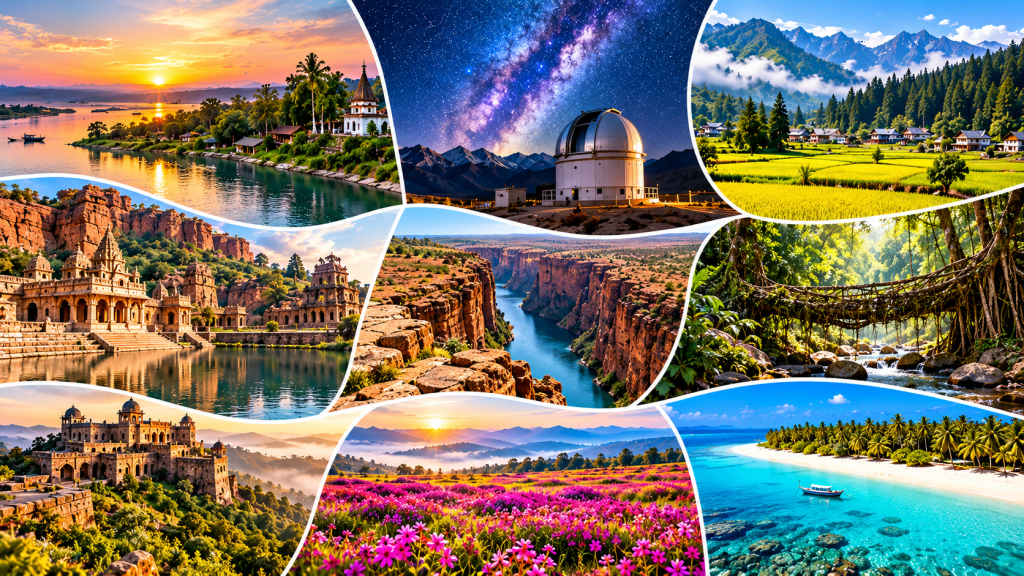
Here is a quick comparison to help you decide.
| Destination | Best experience | Ideal travel season |
|---|---|---|
| Majuli | Cultural and river-island tourism | October–March |
| Gurez Valley | Remote mountain landscapes | May–September |
| Hanle | Stargazing and astronomy | April–October |
| Dholavira | Archaeology and desert heritage | November–February |
| Mandu | Medieval architecture | October–March |
| Ziro Valley | Tribal culture and music | March–October |
| Mawlynnong | Village and eco-tourism | October–April |
| Badami | Rock-cut temples | November–February |
| Gandikota | Canyon views and adventure | October–February |
| Kaas Plateau | Seasonal wildflowers | August–October |
| Chaukori | Himalayan views | March–June, September–November |
| Lepchajagat | Forest walks and birdwatching | October–December, March–May |
| Yousmarg | Meadows and mountain scenery | April–October |
| Tarkarli | Beaches and marine activities | October–March |
| Bangaram Island | Coral lagoons and island experiences | October–May |
Seasons are indicative, not guarantees of access or suitable weather. Check local conditions before travel.
Why You Should Explore India’s Lesser-Known Destinations
India’s hidden destinations offer more than an alternative to crowded tourist attractions. They provide opportunities to understand the country’s geographical, cultural, and ecological diversity.
1. More Meaningful Cultural Experiences
Places such as Majuli and Ziro allow visitors to learn about traditional communities, crafts, food, and local ways of life.
2. Opportunities for Slow Travel
Destinations such as Chaukori and Lepchajagat are ideal for travellers who prefer peaceful surroundings and longer stays rather than rushed sightseeing.
3. Unique Natural Landscapes
From Hanle’s dark skies to Gandikota’s dramatic gorge and Kaas Plateau’s seasonal flowers, these places offer natural experiences that cannot easily be replicated elsewhere.
4. Support for Local Tourism Businesses
Staying in locally managed accommodation, hiring local guides, and purchasing regional products can help distribute tourism income within communities.
5. Discovering Different Sides of India
A trip to Dholavira is very different from a beach holiday in Tarkarli. Similarly, Hanle offers a completely different experience from a traditional Himalayan hill station.
These differences are what make India’s lesser-known destinations worth exploring.
How to Travel Responsibly to Hidden Places in India
A destination becomes popular when more people discover it. However, increased tourism can also place pressure on small communities, natural environments, and local infrastructure.
Responsible travel is therefore essential when visiting lesser-known places.
1. Choose local accommodation: Prefer locally managed homestays, guesthouses, and responsible accommodation providers wherever suitable.
2. Hire local guides: Local guides can provide cultural context, improve visitor safety, and help travellers understand the destination.
3. Respect local traditions: Ask before photographing residents, dress appropriately at religious sites, and follow community guidelines.
4. Protect fragile ecosystems: Avoid littering, picking flowers, disturbing wildlife, or touching coral reefs.
5. Check seasonal access: Gurez, Hanle, and other remote destinations may have road restrictions, weather-related closures, or special entry requirements.
6. Spend thoughtfully: Purchase local handicrafts, eat regional food, and support small businesses rather than relying entirely on outside service providers.
7. Avoid turning homes into attractions: A hidden destination is still someone’s home. Travel with curiosity and respect rather than treating communities as photo opportunities.
Frequently Asked Questions About Hidden Tourist Places in India
1. Which are the best hidden tourist places in India?
Some interesting lesser-known destinations include Majuli in Assam, Gurez Valley in Kashmir, Hanle in Ladakh, Dholavira in Gujarat, Ziro Valley in Arunachal Pradesh, Gandikota in Andhra Pradesh, and Bangaram Island in Lakshadweep.
2. Which hidden places in India are best for couples?
Bangaram Island, Chaukori, Lepchajagat, and Gurez Valley can offer peaceful surroundings and scenic experiences for couples. The most suitable destination depends on budget, accessibility, and season.
3. Which lesser-known destinations in India are best for adventure travel?
Gandikota offers dramatic canyon landscapes and outdoor activities, Hanle offers high-altitude experiences and stargazing, while Gurez and Ziro are suitable for travellers interested in mountain landscapes and nature exploration.
4. Which hidden tourist places in India are suitable for family holidays?
Mandu, Badami, Majuli, Chaukori, and Tarkarli offer different combinations of history, culture, nature, and relaxation. Families should consider journey duration, road conditions, accommodation, and children’s travel needs.
5. What is the best time to explore hidden destinations in India?
There is no single best season. October to March is suitable for many heritage and coastal destinations, while August to October is particularly interesting for Kaas Plateau. Himalayan destinations such as Gurez and Hanle require careful seasonal planning.
6. Do hidden tourist places in India require special permits?
Some destinations have specific entry requirements. Arunachal Pradesh has applicable permit requirements for different categories of visitors, and Lakshadweep requires entry permits for non-native visitors. Certain border and protected areas may also have additional restrictions. Check official government information before departure.
Conclusion: Discover the India That Exists Beyond the Tourist Map
India’s most memorable journeys are not always found in the most popular travel destinations.
Sometimes, they begin on a ferry crossing the Brahmaputra towards Majuli. Sometimes, they take you to Hanle, where the night sky reveals an extraordinary view of the universe. They may lead you through the ancient ruins of Dholavira, into the green rice fields of Ziro, or towards the quiet turquoise waters surrounding Bangaram Island.
These 15 destinations reveal a different side of India—one shaped by history, local traditions, natural landscapes, and communities that have maintained their distinctive identities over generations.
For travellers seeking something beyond conventional sightseeing, these places offer opportunities to slow down, learn, photograph, explore, and connect with local culture.
The next time you plan a holiday, consider going beyond the usual tourist circuit. You may discover that India’s greatest travel experiences are waiting in places you have never heard of.
eferences and authoritative travel resources
For stronger content credibility and reader trust, use these official sources as references:
- UNESCO – Dholavira: A Harappan City – Archaeological history and ancient water-management systems. UNESCO World Heritage Centre
- Indian Institute of Astrophysics – Hanle Dark Sky Reserve – Astronomy, dark-sky conservation, and community-led astro-tourism. Indian Institute of Astrophysics
- Incredible India – Ziro Valley – Apatani culture and traditional agricultural practices. Incredible india
- Assam Tourism – Majuli – Satras, mask-making, village experiences, and suggested itinerary. assamtourism.gov.in
- Meghalaya Tourism – Mawlynnong – Village tourism and living root bridges. Meghalaya Tourism
- Andhra Pradesh Government – Gandikota – Fort history and geographical information. India
- Lakshadweep Administration – Bangaram Island – Island geography and marine experiences. India
- Lakshadweep Official E-Permit Portal – Entry permit requirements. Lakshadweep
- Ladakh Tourism – Destination information and travel planning.