Search engine marketing has quickly become the go-to approach for businesses that want to show up right when people are searching for something they need. Instead of waiting for customers to discover a brand on their own, SEM helps you step in at the perfect moment—when interest and intent are the highest. In this article, we’ll break down how Google Ads works, what makes search, display, and video networks so effective, and how channels like email, affiliate partnerships, and content marketing all come together to strengthen your brand in today’s competitive digital world.
Table of Contents
What Is Search Engine Marketing & Why Does It Matter?
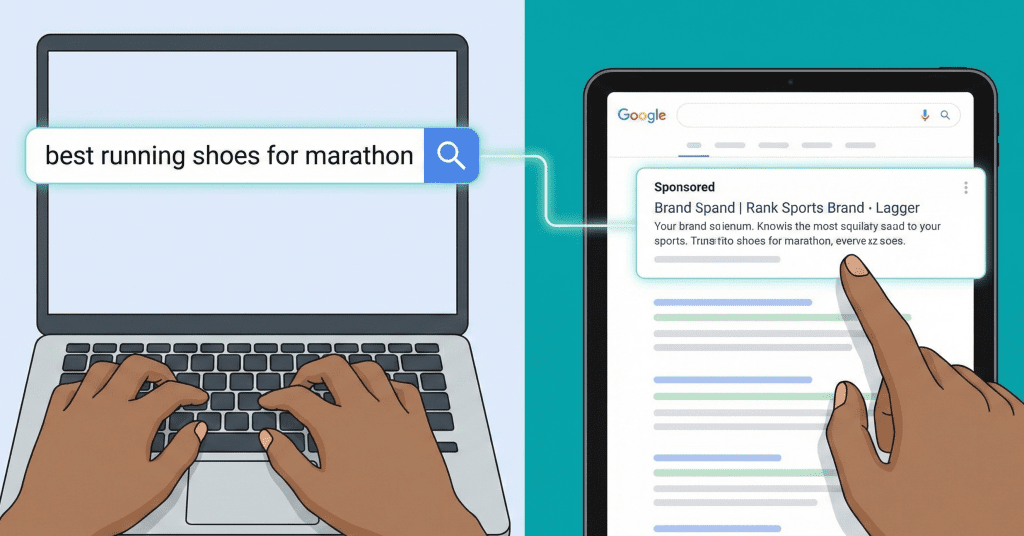
Search Engine Marketing (SEM) is the paid side of online visibility. While SEO takes time to kick in, SEM gives you instant spotlight. You bid on keywords, create ads, and appear on search results when someone looks for something you offer. SEM allows brands to appear right in front of people actively looking for solutions—within seconds. Unlike traditional marketing, there’s no guesswork. You get real-time visibility, measurable results, and the ability to adjust your campaigns based on what’s actually working.
The beauty of SEM is intent.
You’re not interrupting people with ads they didn’t ask for.
You’re showing up when they’re searching for you.
That’s why well-built search engine marketing strategies matter more than ever. With competition rising and customers becoming more selective, brands need smarter setups—not just bigger budgets.
Intro to Google Ads
Google Ads is the center of modern SEM. It’s where businesses set up campaigns, select keywords, write ad copy, and choose locations and audiences.
A good Google Ads setup includes:
- Tight campaign structure
- Relevant keywords
- Strong ad copy
- Landing pages that actually solve the user’s intent
Businesses that handle Google Ads strategically consistently end up paying less per click and getting more conversions. And that’s a big part of why so many brands rely heavily on search engine marketing strategies to stay ahead.
What Are Search Network Ads?
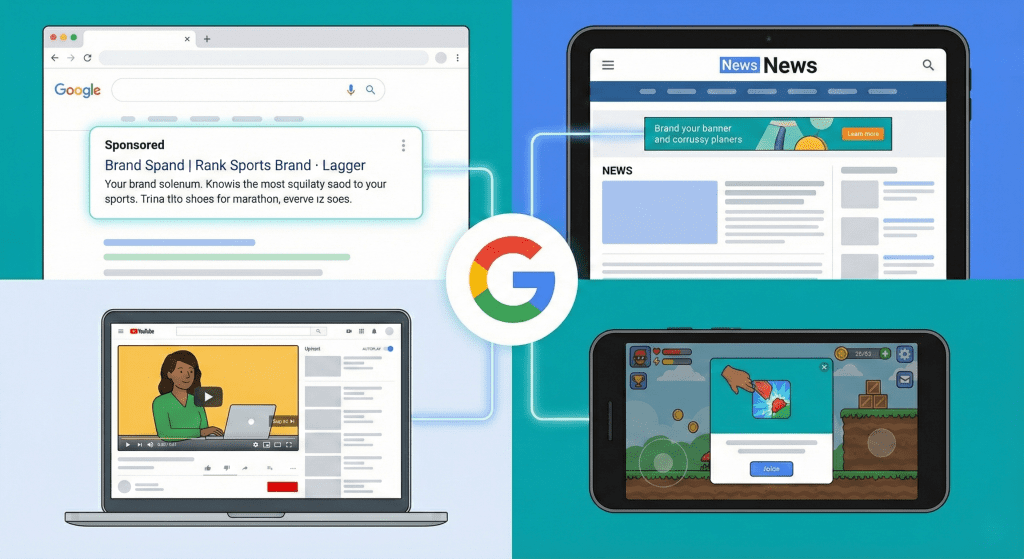
Search Network Ads are the text-based ads that appear at the top of Google search results. They’re simple, direct, and extremely powerful.
Here’s why:
Search ads are perfect for:
When someone searches “best digital marketing course in Canada” or “emergency plumber near me,” their intent is already high. They are actively looking. Showing up at that exact moment often leads to the quickest conversions.
- Lead generation
- Local businesses
- High-intent keywords
- Urgent service-based industries
If you’re aiming for fast results, Search Network Ads are a core part of any successful search engine marketing strategies playbook.
What Are Display Network Ads?
Display ads don’t wait for people to search. Instead, they appear on websites, apps, blogs, and news portals your audience visits.
They’re visual—usually banners or image ads.
Where Search Ads focus on intent, Display Ads focus on visibility and branding.
Think of them as gentle reminders:
“You might not need us right this second, but keep us in mind.”
Display ads are great for:
- Retargeting website visitors
- Brand awareness
- Broad reach campaigns
For example, someone visits your site but doesn’t buy. A week later, they see your banner on a news website in the UK. That simple reminder often drives them back to complete the purchase.
What Are Video Network Ads?
Video ads—especially those on YouTube—have become one of the most engaging marketing formats.
People love visual content. They trust what they can see and hear. Video ads help you show your product, share your story, or explain your service in seconds.
Here’s where video shines:
- Product demonstrations
- Service explanations
- Testimonials
- Brand storytelling
YouTube is huge in countries like Canada, Australia, Mexico, and the Netherlands. Brands in those regions use video ads as a major part of their search engine marketing strategies, because they build trust faster than images or text.
What Are Mobile App Ads?
Mobile App Ads are perfect for brands with a mobile-first strategy. These ads appear inside other apps or mobile websites and encourage users to:
- Download your app
- Complete an in-app action
- Re-engage with your app
With mobile usage skyrocketing globally, app ads make sure your product is visible where customers spend most of their time—their phones.
If your target audience uses mobile heavily (like in UK, Australia, Canada), these ads are crucial for a complete SEM plan.
What Is Email Marketing?
Email marketing remains one of the most reliable digital channels.
Here’s why brands still love it:
- You control your audience
- No algorithm changes
- Almost zero cost to send emails
- High personalization
Email works beautifully with SEM.
For example:
- SEM brings new visitors
- Email nurtures them
- You turn them into customers
It’s one of the most balanced combinations inside modern search engine marketing strategies.
What Is Affiliate Marketing?
Affiliate marketing is simple: other people promote your product. You pay them only when they generate a sale or lead.
This lets you:
- Reach new audiences
- Reduce upfront costs
- Build trust instantly through influencers or niche creators
It works great for:
- E-commerce brands
- Software companies
- Lifestyle products
- Fitness and beauty niches
Companies in Tier 1 countries rely heavily on affiliates because audiences trust real reviews and recommendations.
How Content Marketing Helps in Branding
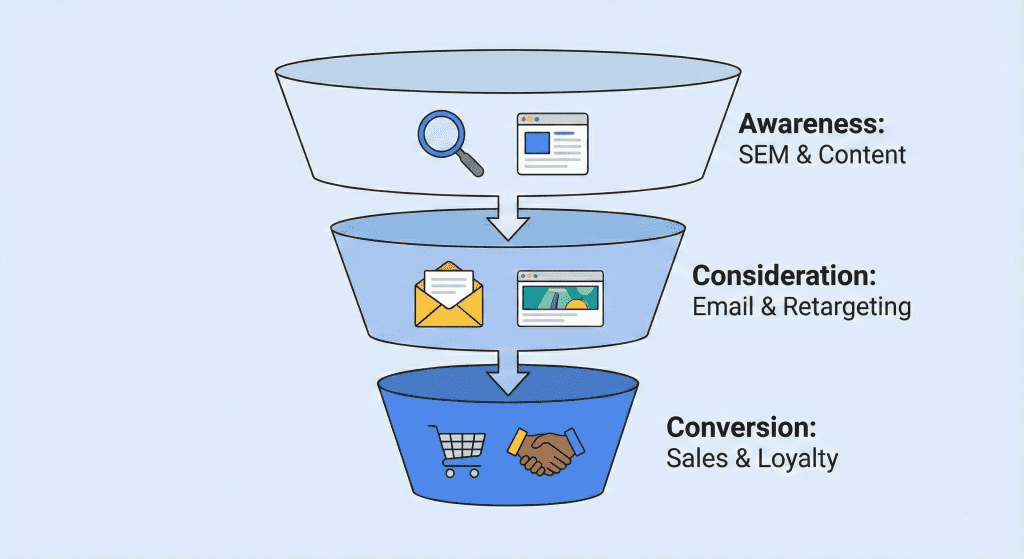
Content marketing is the long-term heartbeat of branding.
Here’s how it helps:
- Builds trust
- Educates the audience
- Improves SEO
- Supports email marketing
- Enhances conversions
- Strengthens your Google Ads Quality Score
When your website has valuable content, your ads perform better because Google sees your site as useful and relevant. This lowers your CPC and improves ad ranking.
Content is the “silent hero” inside modern search engine marketing strategies.
Real Case-Style Examples From Tier-1 Countries
1. UK – Eco-Friendly Home Brand Using Search + Display
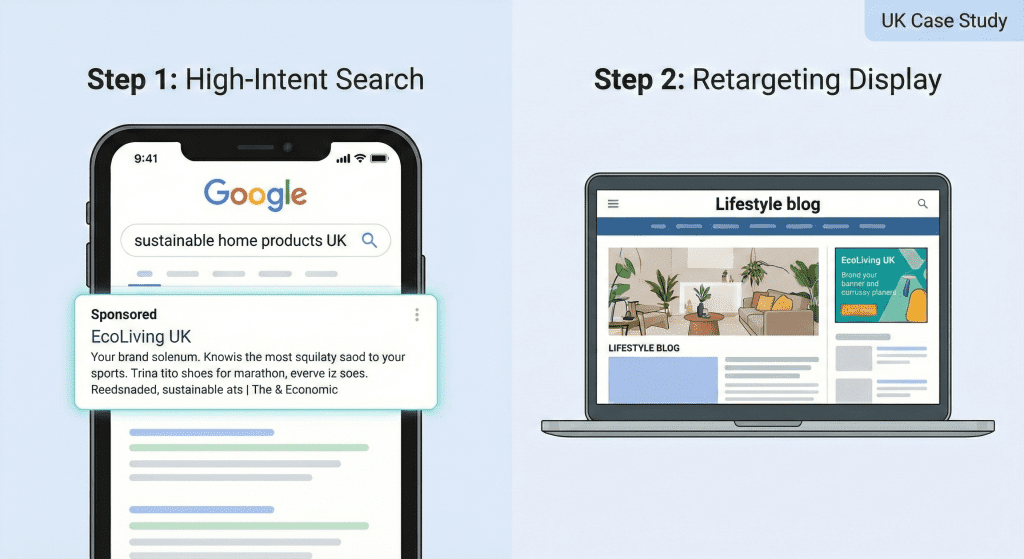
A UK-based eco-home products brand launched its online store and started with Search Network Ads targeting “sustainable home products UK.”
Intent was strong, and sales began immediately.
They added Display Ads across lifestyle blogs to boost awareness.
Within two months, website traffic doubled, and repeat visitors increased due to remarketing.
This blend of search + display is a textbook SEM approach.
2. Canada – SaaS Tool Using Video Ads + Email Marketing
A Canadian SaaS brand used YouTube video ads showcasing how their tool simplifies remote work.
Users who watched the ad were retargeted with Display Ads.
Those who visited the site were offered a free trial in exchange for email signup.
Email sequences nurtured those leads into paid users.
This funnel-type strategy is extremely effective in search engine marketing strategies.
3. Australia – Fitness App Using Mobile App Ads + Content Marketing
A fitness startup in Australia rolled out Mobile App Ads to drive installations.
People downloaded the app after seeing ads inside health-related apps.
Along with that, they published fitness blogs weekly.
Their content began ranking on Google and brought organic traffic.
Their SEM cost reduced naturally because their content was doing half the acquisition work for free.
A hybrid SEM + content approach is always powerful.
4. Netherlands – Fashion Brand Using Affiliates + Search Ads
A clothing brand in the Netherlands partnered with fashion bloggers and gave them unique affiliate links.
At the same time, they ran Search Ads around “sustainable fashion Netherlands” and “trendy clothing NL.”
People who found the brand via search often saw the same brand reviewed by local bloggers—building instant trust.
This “dual visibility” accelerated their growth.
Why SEM Works Best With a Mixed Approach
One channel alone cannot build a business sustainably.
Search Ads bring intent.
Display brings awareness.
Video builds trust.
Email nurtures leads.
Content creates authority.
Affiliates boost reach.
Put together, they form powerful search engine marketing strategies that outperform any single tactic.
1. What is Search Engine Marketing (SEM) and how does it work?
SEM is a paid marketing strategy that helps your business appear at the top of Google when customers search for your products or services. You bid on keywords, run targeted ads, and get instant visibility.
2. Why is SEM important for businesses?
Customers search before they buy. SEM puts your brand directly in front of high-intent buyers, delivering faster results, more qualified leads, and better control over your marketing budget.
3. How much budget do I need to start SEM?
There’s no fixed amount. You can start with a small daily budget and scale as results improve. Costs depend on keyword competition, your industry, and how well your ads are optimized.
4. What’s the difference between SEM and SEO?
SEO builds long-term organic traffic, while SEM delivers immediate visibility through paid ads. SEO takes time; SEM works instantly. Most successful brands use both together.
5. How do I know if my SEM campaigns are working?
Track key metrics like clicks, conversions, cost-per-click, and return on ad spend (ROAS). If you’re getting more leads or sales at a lower cost, your SEM strategy is performing well.
Final Thoughts
SEM isn’t just about running ads—it’s about creating a system that brings people in, educates them, convinces them, and keeps them coming back. That’s where the best search engine marketing strategies truly work.
If you combine:
- Search ads
- Display ads
- Video ads
- App ads
- Email marketing
- Affiliate marketing
- And consistent content
you build a long-lasting brand presence, not just quick traffic.
References
Google Ads – Official Help Center
https://support.google.com/google-ads/
Google Ads Search Network Overview
https://support.google.com/google-ads/answer/2472725
Google Display Network – How It Works
https://support.google.com/google-ads/answer/2404191
YouTube Advertising – Official Guide
https://www.youtube.com/intl/en_us/ads/
Google App Campaigns – Official Documentation
https://support.google.com/google-ads/answer/9028765
Think With Google – Consumer Insights & Marketing Trends
https://www.thinkwithgoogle.com/
HubSpot – Email Marketing Statistics & Best Practices
https://blog.hubspot.com/marketing/email-marketing-stats
Statista – Global Digital Advertising Data & Reports
https://www.statista.com/topics/1164/online-advertising/
SEMrush – Affiliate Marketing Insights
https://www.semrush.com/blog/affiliate-marketing/
Content Marketing Institute – Content Strategy Research
https://contentmarketinginstitute.com/
MarketingCharts – Insights on Global Consumer Behavior
https://www.marketingcharts.com/
Search Engine Journal – SEM Updates & Industry News
https://www.searchenginejournal.com/category/paid-search/