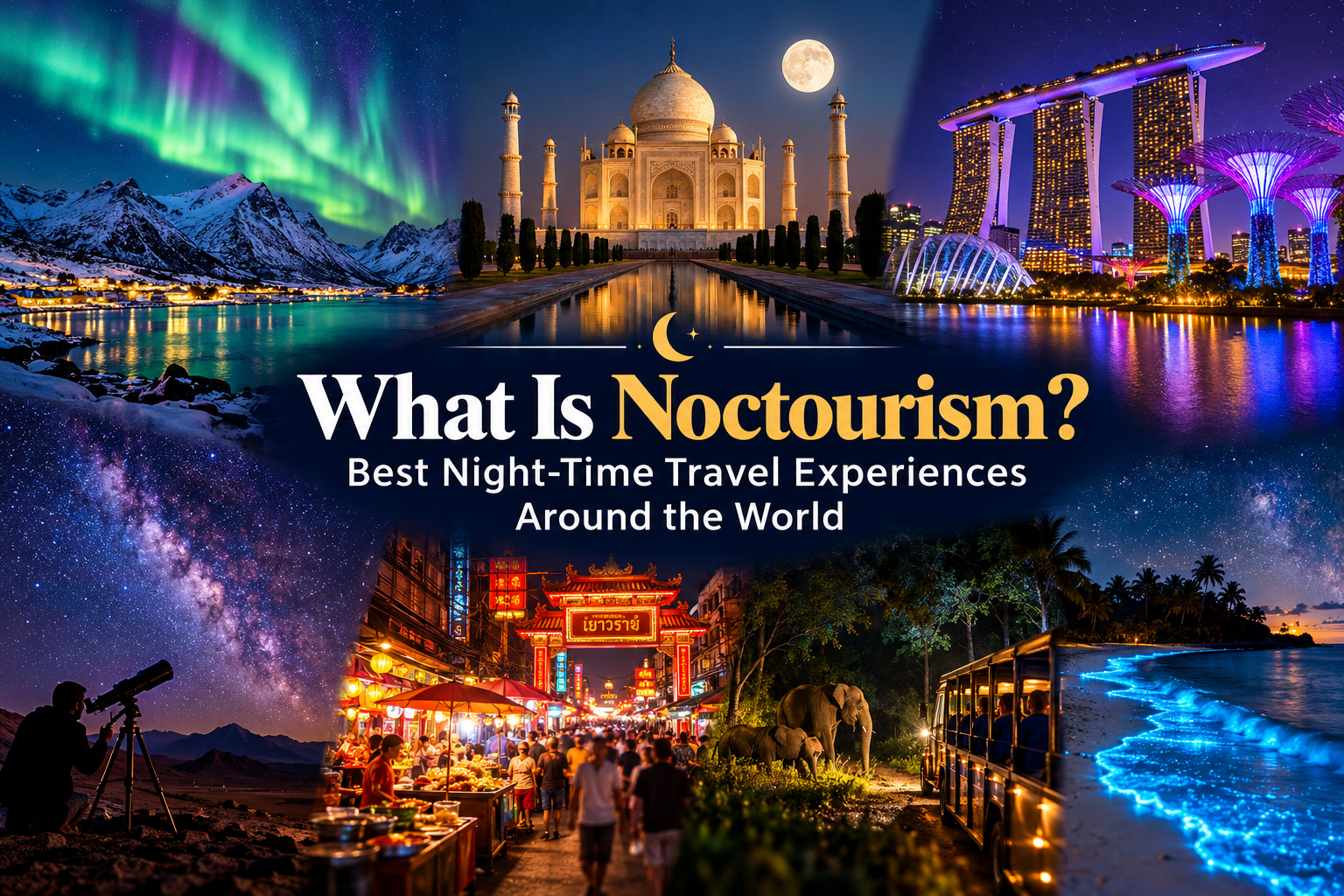
There is a particular kind of magic that begins after sunset. The sky darkens, city lights come alive, food stalls start sizzling, and landscapes that looked familiar in daylight take on a completely different character.
This is the idea behind noctourism—a travel trend focused on exploring destinations at night. Instead of ending the day when the sun goes down, travellers are now planning entire experiences around darkness: chasing the Northern Lights, joining night safaris, stargazing in remote deserts, wandering through night markets, and seeing iconic monuments under moonlight.
Noctourism is not simply about nightlife, clubs, or late dinners. It can be peaceful, adventurous, cultural, romantic, or deeply connected to nature. For many travellers, it offers something daytime sightseeing often cannot: a quieter, more atmospheric and more memorable way to experience a place.
What Does Noctourism Mean?
Noctourism combines the words nocturnal and tourism. It refers to travel experiences that take place after sunset or during the night.
These experiences can include:
- Stargazing and astronomy tours
- Northern Lights or aurora hunting
- Night safaris and wildlife spotting
- Illuminated landmarks and evening heritage walks
- Night markets and street-food tours
- Bioluminescent beaches
- Night photography
- Cultural performances and evening festivals
- Desert camps and moonlit landscapes
The appeal is simple: destinations do not stop being interesting when daylight ends. In fact, some places become more special after dark. A desert can turn into a natural planetarium, a city skyline becomes a canvas of lights, and a wildlife reserve reveals animals that are rarely active during the day.
Noctourism has gained attention as a broader travel trend. National Geographic describes it as the rise of after-dark activities, from stargazing and safari sleep-outs to after-hours city tours, while a Booking.com survey cited by the publication found that nearly two-thirds of respondents across 33 countries were considering holidays with night-time experiences.
Why Is Noctourism Becoming Popular?
Night travel is not entirely new, but it is becoming more intentional. Travellers are no longer treating the evening as downtime between sightseeing; they are planning specific after-dark experiences.
1. Cooler Temperatures
In hot destinations, evenings can be far more comfortable than afternoons. Cities such as Dubai, Bangkok and Singapore become more enjoyable after sunset, when outdoor dining, waterfront walks and illuminated attractions feel less exhausting.
2. More Memorable Experiences
Many travellers now want experiences that feel unique rather than simply ticking off famous landmarks. Watching the aurora dance above snowy mountains or hearing nocturnal animals in a dark forest creates memories that are difficult to replicate.
3. Incredible Photography
Night offers dramatic visual opportunities: glowing cityscapes, reflections on water, colourful markets, star-filled skies and moonlit monuments. Even familiar destinations can look completely different through a night-photography lens.
4. Cultural Discovery
Night markets, street food, local performances and evening walks often reveal a destination’s everyday rhythm. In many Asian cities, for example, the most authentic food experiences begin after sunset.
5. Better Use of Travel Time
Noctourism works well alongside daytime sightseeing. You can visit museums and historic sites during the day, then enjoy a light show, night market, stargazing session or evening cruise after dark.
10 Best Night-Time Travel Experiences Around the World
Here are some of the world’s most rewarding noctourism experiences, from Arctic skies to glowing beaches and moonlit monuments.
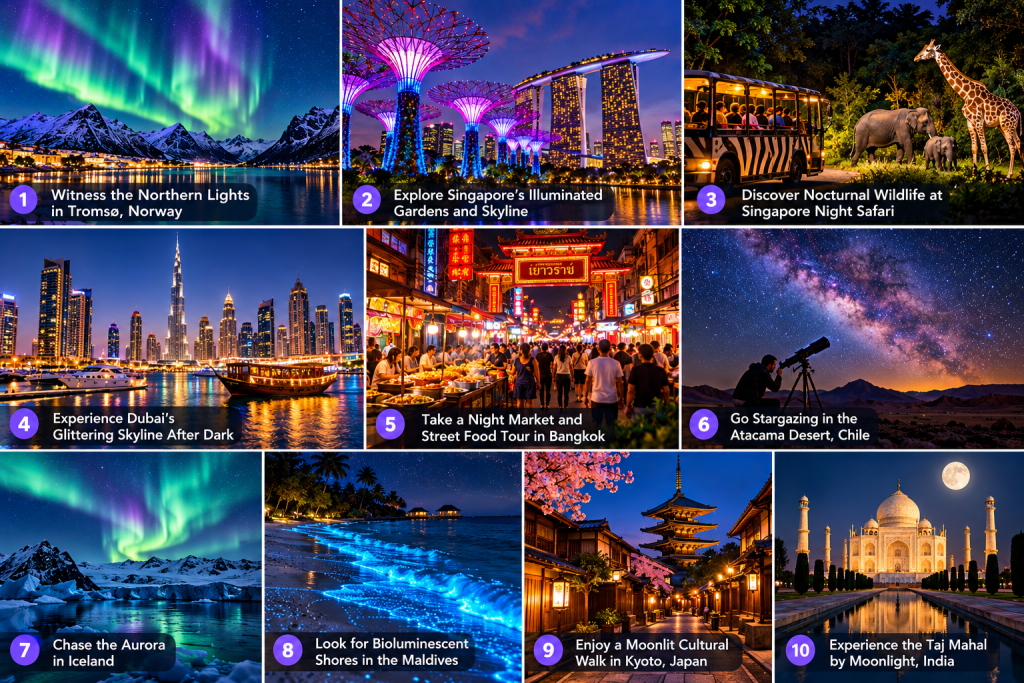
1. See the Northern Lights in Tromsø, Norway
Best for: Nature lovers, couples and photographers
Tromsø, located well above the Arctic Circle in Norway, is one of the most popular bases for Northern Lights trips. During the darker months, guided aurora tours take visitors away from city lights in search of the aurora borealis—the natural light display caused by charged solar particles interacting with Earth’s atmosphere.
The experience can be unforgettable when green, pink or violet lights move across a snow-covered landscape. Many travellers combine aurora hunting with Arctic wildlife tours, husky sledding or stays in remote cabins.
Travel tip: The Northern Lights are never guaranteed. Stay for several nights, check cloud forecasts, and choose a reputable operator that is flexible about location and timing.
2. Explore Singapore’s Illuminated Gardens and Skyline
Best for: Families, couples and first-time visitors
Singapore is one of the easiest places to enjoy noctourism. After dark, Gardens by the Bay becomes a futuristic landscape of illuminated Supertrees, especially during the Garden Rhapsody light-and-music show.
Nearby, Marina Bay offers waterfront walks, skyline views and the Spectra light-and-water show. A night cruise along the Singapore River adds another perspective, with illuminated bridges, modern towers and heritage buildings lining the water.
Travel tip: Check the current show timings before visiting. Even after sunset, Singapore can be warm and humid, so carry water and wear comfortable shoes.
3. Visit Singapore Night Safari
Best for: Families and wildlife enthusiasts
The Night Safari at Mandai Wildlife Reserve is one of the world’s best-known nocturnal wildlife attractions. It was designed specifically to be experienced after dark, allowing visitors to observe animals that are most active at night.
Visitors can explore walking trails and take a tram ride through themed habitats. The park features more than 900 nocturnal animals across over 100 species, according to Singapore’s official tourism site. Unlike a traditional daytime zoo visit, the darkness changes the experience: animals behave more naturally, and the atmosphere feels closer to a real nighttime wilderness.
Travel tip: Book entry slots in advance, follow photography rules, and avoid using flash near animals.
4. Admire Dubai After Sunset
Best for: Luxury travellers, couples and city explorers
Dubai takes on a different personality after dark. Downtown Dubai, Burj Khalifa, Dubai Marina and the waterfront promenades are especially striking when illuminated against the night sky.
For a more adventurous evening, an evening desert safari can include sunset views, traditional entertainment, dinner and desert activities, depending on the operator. Evening cruises and city tours are also popular ways to see the skyline from the water.
Travel tip: October to April is generally more comfortable for outdoor activities than the peak summer months. Always confirm what is included in a desert safari, including transport, dinner and activities.
5. Eat Your Way Through Bangkok’s Night Markets
Best for: Food lovers and budget travellers
Bangkok is a dream destination for culinary noctourism. After sunset, areas such as Yaowarat in Chinatown come alive with street-food stalls, neon signs, aromatic spices, grilled seafood, noodles, desserts and busy local crowds.
A night food tour is one of the best ways to understand the city. Beyond the food, the atmosphere itself is part of the experience—bustling streets, sizzling woks, vendors calling out orders and locals gathering for late-night meals.
Travel tip: Choose busy stalls with high turnover, carry cash, and ask before photographing vendors. Opening days and hours can vary, so check before you go.
6. Go Stargazing in Chile’s Atacama Desert
Best for: Astronomy enthusiasts and photographers
The Atacama Desert in northern Chile is one of the world’s most famous stargazing destinations. Its dry air, high altitude and minimal light pollution create exceptionally clear conditions for viewing the Milky Way, constellations, planets and deep-sky objects.
Guided astronomy tours often include naked-eye sky interpretation and telescope viewing. For photographers, the desert landscape itself—rock formations, salt flats and distant mountains—makes a dramatic foreground for night-sky images.
Travel tip: Check the moon phase before booking. A full moon can wash out fainter stars, while clouds can affect visibility even in famously dry regions.
7. Chase the Aurora in Iceland
Best for: Adventure travellers and landscape photographers
Iceland offers a powerful combination of volcanic landscapes, waterfalls, glaciers and dark winter skies. During aurora season, travellers can join guided Northern Lights tours away from Reykjavik’s city lights or stay in countryside accommodation with better sky visibility.
The experience becomes even more dramatic when the aurora appears above a glacier lagoon, black-sand beach or snow-covered mountain. Still, aurora viewing depends on solar activity, darkness and clear weather.
Travel tip: Winter driving in Iceland can be difficult. If you are not confident driving in ice and snow, choose a guided tour, monitor weather warnings and never stop in unsafe roadside spots for photographs.
8. Look for Bioluminescent Shores in the Maldives
Best for: Couples, beach lovers and nature enthusiasts
In parts of the Maldives, certain marine organisms can create a natural blue glow in the water under the right conditions. When bioluminescence is visible, waves and disturbed water may appear to sparkle in the darkness.
It is a beautiful phenomenon, but also an unpredictable one. A glowing beach should be treated as a possible bonus rather than a guaranteed attraction. Local conditions, season, tides and marine activity all play a role.
Travel tip: Do not disturb marine life or collect organisms. Avoid bright torches and flash photography, which can reduce the effect and disturb the environment.
9. Take a Moonlit Cultural Walk in Kyoto, Japan
Best for: Culture lovers and slow travellers
Kyoto offers a calmer, more reflective form of noctourism. Its historic streets, wooden machiya houses, temples and traditional districts feel especially atmospheric in the evening.
During certain seasons, selected temples and gardens host special night illuminations. Visitors can also explore areas such as Gion, take a guided cultural walk, or simply enjoy the quiet beauty of Kyoto’s old streets after the daytime crowds thin out.
Travel tip: Always check evening opening hours, as nighttime access varies by venue and season. Keep noise low in residential areas and never photograph geiko or maiko without permission.
10. See the Taj Mahal by Moonlight in Agra, India
Best for: Heritage travellers and romantic getaways
The Taj Mahal is extraordinary at any time of day, but moonlight gives it a quieter, more ethereal quality. India’s official Taj Mahal website states that night viewing is available on five nights each month: the full-moon night and the two nights before and after it.
The official viewing window is from 8:00 pm to 11:59 pm, with visitors admitted in batches of up to 50 people for 30-minute visits. Tickets must be purchased in advance, and the schedule can be affected by security requirements and official restrictions.
Travel tip: Check the latest rules and booking details through the official Taj Mahal website before planning your Agra trip.
Best Noctourism Experiences in India
India has plenty to offer travellers who want to explore after dark.
- Rann of Kutch, Gujarat: The white salt desert becomes especially atmospheric under moonlight, particularly during the Rann Utsav season.
- Ladakh: High-altitude landscapes and low light pollution make it a strong choice for stargazing, though acclimatisation and road conditions matter.
- Jaisalmer, Rajasthan: Desert camps offer sunset views, cultural performances, local food and starry skies.
- Agra, Uttar Pradesh: The Taj Mahal’s official moonlight-viewing sessions are among India’s most iconic night-travel experiences.
- Goa: Evening food walks, beachside dining and local cultural experiences offer a relaxed introduction to night tourism.
These destinations show that noctourism is not only for international holidays. Weekend trips, domestic breaks and longer adventures can all include memorable after-dark experiences.
How to Plan a Noctourism Trip
Night travel can be incredibly rewarding, but it needs a little extra preparation.
- Choose the right season. Northern Lights, stargazing, wildlife sightings and bioluminescence all depend on timing and natural conditions.
- Check timings and bookings. Many night attractions have limited slots, seasonal schedules or advance-ticket requirements.
- Prioritise safety. Use licensed guides for remote excursions, arrange trusted transport and share your plans with someone.
- Pack smart. Bring warm layers for cold destinations, comfortable shoes, a charged phone and a small torch if your guide recommends one.
- Travel responsibly. Avoid shining lights at wildlife, disturbing marine habitats or making noise in residential neighbourhoods.
- Leave room to rest. Do not schedule an early-morning tour immediately after a late-night excursion.
Is Noctourism Worth Trying?
Yes—especially if you enjoy photography, nature, food, culture or experiences that feel a little out of the ordinary.
Noctourism shifts the focus away from crowded daytime attractions and towards atmospheric landscapes, local life, wildlife and the night sky. It can be budget-friendly, too: walking through illuminated public spaces, browsing night markets or stargazing from a quiet spot can cost very little.
That said, not every night activity is automatically cheaper, less crowded or more sustainable. The value depends on the destination, season, operator and local conditions.
The best approach is simple: add one or two well-planned after-dark experiences to your itinerary. Whether it is the Northern Lights in Norway, a night safari in Singapore, street food in Bangkok or the Taj Mahal under moonlight, some of travel’s most unforgettable moments begin when the sun goes down.
References
- National Geographic — What is noctourism and why it’s on the rise: https://www.nationalgeographic.com/travel/article/what-is-noctourism-rise-of-after-dark-activities
- Official Taj Mahal Website, Government of Uttar Pradesh — Night viewing of Taj Mahal: https://tajmahal.gov.in/?v=1.0.24
- Official Taj Mahal Website — FAQs on Taj Mahal night viewing: https://tajmahal.gov.in/faqs.aspx
- Singapore Night Safari — Mandai Wildlife Reserve: https://www.mandai.com/en/night-safari.html
- Mandai Wildlife Reserve — Night Safari animals and trails: https://www.mandai.com/en/night-safari/animals-and-zones.html
- Visit Singapore — Night Safari: https://www.visitsingapore.com/th_th/see-do-singapore/nature-wildlife/fun-with-animals/night-safari/
- CNBC — ‘Forest Bathing’, ‘Noctourism’: 10 alternative travel trends 2025: https://www.cnbc.com/2025/08/29/travel-trends-2025.html