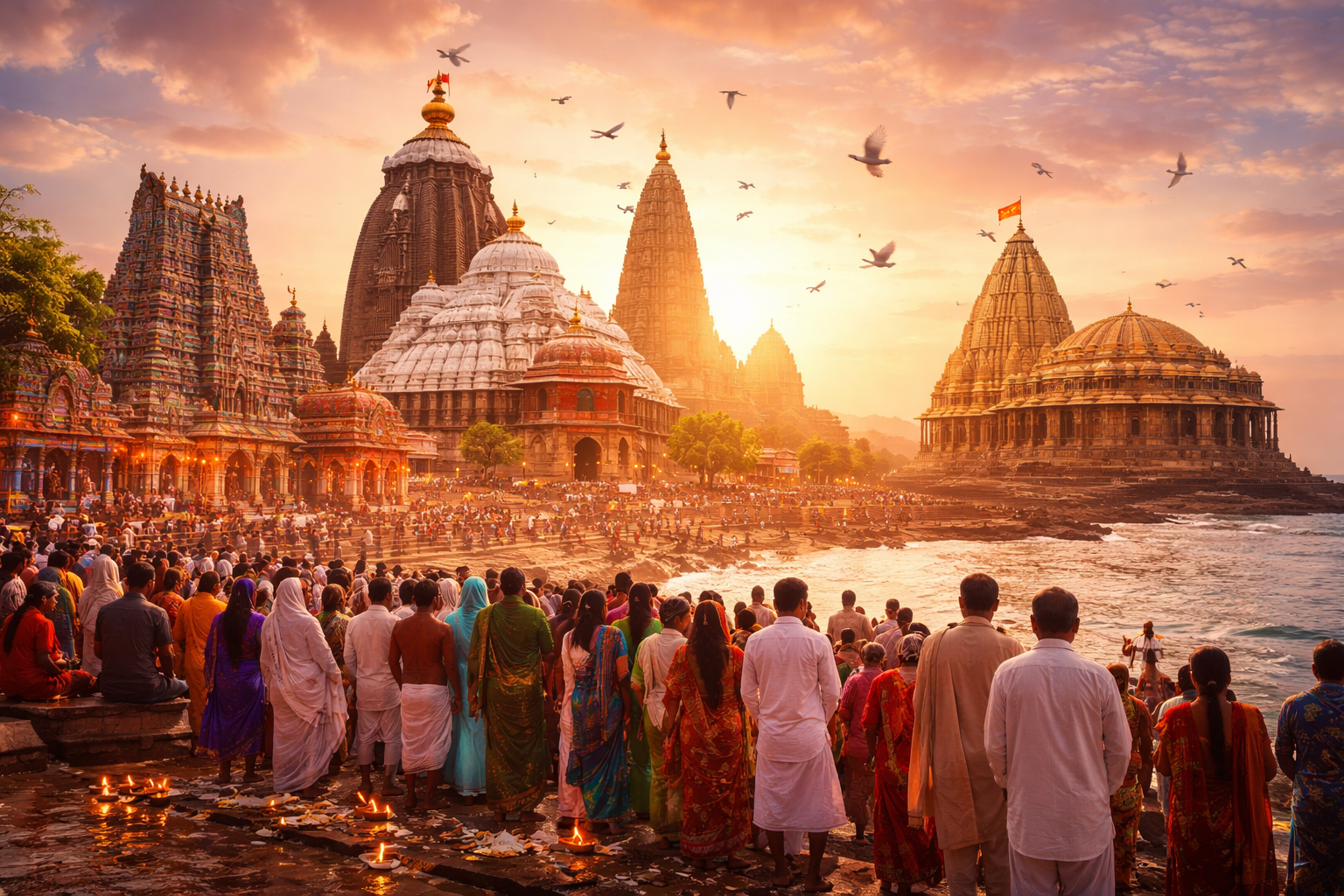
Discover the most meaningful sacred sites in India offers. Explore ancient temples, spiritual destinations, architecture, legends, and top religious destinations India for peaceful travel.
Why Sacred Sites Hold a Special Place in India
These sacred sites in India are not only places of worship but living spaces where history, devotion, and culture continue to shape everyday life.
India’s spiritual identity is woven through its temples, rituals, stories, and centuries of devotion. When you visit sacred sites India, you don’t just enter a monument — you enter a space where millions have prayed, believed, cried, and hoped over centuries. These places hold emotions, memories, and traditions that continue to live even today.
Whether you are exploring temple tours India for cultural understanding, spiritual curiosity, or historical interest, each destination has something powerful to offer. Some temples amaze you with architecture, some with silence, some with stories, and some with mysteries no science has been able to decode.
This guide takes you across India’s most important religious destinations India — expanded with deeper background, legends, cultural meaning, and what each place feels like when you actually stand there.
1. Varanasi – The Ancient Spiritual Heart of India
Varanasi is often described as the soul of India. It is believed to be one of the world’s oldest continuously lived cities. Every corner holds something sacred — a ghat, a temple, a shrine, a story or a prayer.
Among the many sacred sites in India, Varanasi stands apart for its uninterrupted spiritual traditions and deep connection to life and death.
What Makes Varanasi One of the Most Powerful Sacred Sites India
• City believed to be created by Lord Shiva
• A centre of Hindu philosophy and learning
• Thousands of temples inside narrow lanes
• The holy Ganga flowing through the city
Visiting Varanasi is an emotional experience. You hear bells ringing early morning. You see priests preparing for aarti. You watch people praying silently at sunrise. Everything feels alive with devotion.
Must-Experience Places in Varanasi
Kashi Vishwanath Temple
One of India’s most important religious destinations India dedicated to Lord Shiva. The temple has been rebuilt multiple times yet continues to stand as the spiritual centre of Shiva worship.
Dashashwamedh Ghat
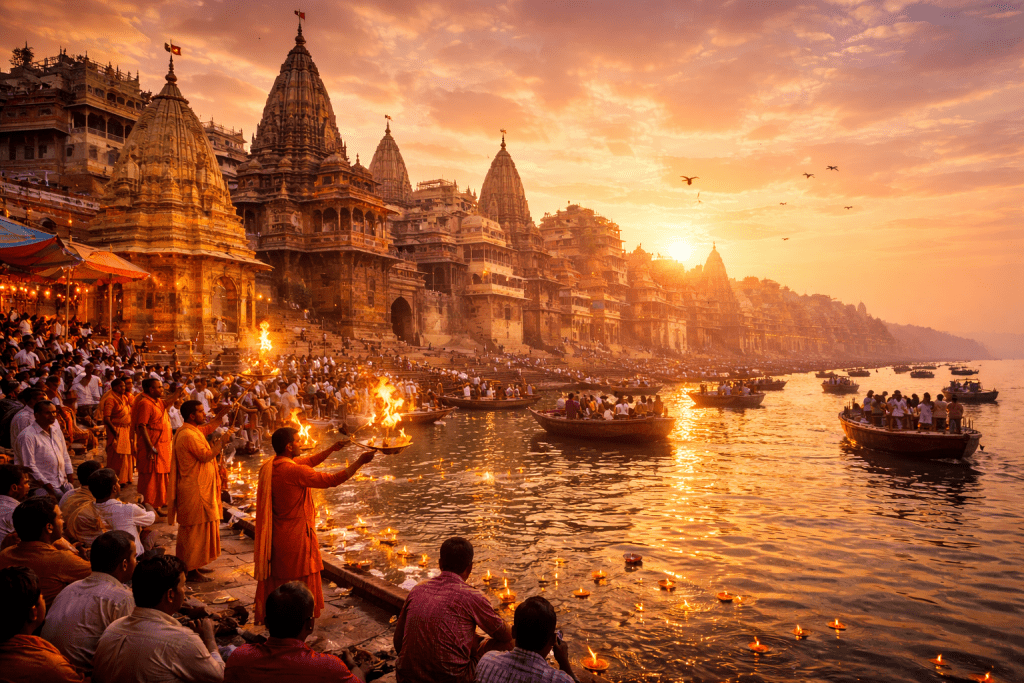
Known for the grand Ganga Aarti, where hundreds gather to watch priests perform synchronized rituals. The atmosphere becomes electric with chants, fire lamps, and river breeze.
Boat Ride on the Ganga
At sunrise, the entire river turns golden. You can see temples and ghats waking up slowly — a peaceful moment that stays with you long after you leave.
2. Tirupati Balaji – Devotion, Discipline, and Miracles
As one of the most visited sacred sites in India, Tirupati reflects how devotion here continues without pause.
Tirupati Balaji is not just a temple — it is an entire universe of faith. Lakhs of devotees visit every single day, making it one of the busiest sacred sites India.
Why Tirupati Is a Major Part of Temple Tours India• Dedicated to Lord Venkateswara
• Known for fulfilling wishes
• One of India’s richest temples
• Devotees offer hair as a symbol of surrender
The journey to the temple involves patience, devotion, and discipline. People wait in long queues, chant continuously, and walk with deep gratitude. The moment you step inside the sanctum, the energy is overwhelming — many travelers describe it as a life-changing spiritual moment.
3. Kedarnath – Spirituality in the Lap of the Himalayas
Kedarnath is one of the most powerful sacred sites in India, where faith feels inseparable from nature itself.
Kedarnath sits quietly among snow-covered mountains, making it one of the most visually stunning sacred sites India. It is a part of the Char Dham Yatra and one of the 12 Jyotirlingas.
Why Kedarnath Feels Different
• Remote mountain location
• Temple believed to be built by the Pandavas
• Survived natural calamities
• Trek adds a spiritual depth to the experience
The journey to Kedarnath tests your body but strengthens your belief. The cold wind, the sound of bells, the sight of the temple between mountains — everything feels surreal. Many visitors say the moment they see the temple after the long trek, they feel a sense of peace impossible to explain.
4. Golden Temple, Amritsar – Peace, Equality, and Humanity
The Golden Temple represents a different dimension of sacred sites in India, where service and equality stand at the center of faith.
Golden Temple (Harmandir Sahib) is one of the most peaceful religious destinations India. The moment you walk barefoot on the marble path and see the golden structure shining in the water, you feel calm.
What Makes This Temple Unique
• Open to people of every religion
• The holy sarovar (lake) surrounds the temple
• Langar serves free meals to all
• Atmosphere of silence, devotion, and equality
Inside, the sound of continuous Gurbani creates a soothing environment. Even if you stay for just a few minutes, the serenity stays with you for hours.
5.Jagannath Puri – Temple of Mysteries and Faith
Jagannath Temple is famous for both devotion and scientific mysteries. The more you read about it, the more curious it becomes.
Jagannath Puri reflects how sacred sites in India continue to thrive through shared faith, ritual continuity, and collective devotion.
Mysteries That Amaze Visitors
• The temple’s flag always flies in the opposite direction of wind
• No birds fly above the temple
• The temple casts no shadow
• Prasadam never gets wasted, even though daily visitors vary hugely
Why It’s Among the Top Sacred Sites India
Puri connects mythology, science, architecture, and mass devotion. The Rath Yatra festival is a grand event where millions gather, making it one of the most celebrated religious destinations India.
6. Meenakshi Temple – A Palace of Sculptures
Meenakshi Temple reflects how sacred sites in India continue to evolve through living traditions, artistic expression, and daily devotion.
Why It Attracts Temple Lovers
• Over 33,000 statues
• Large corridors with carved pillars
• Bright, colourful architecture
• Deep cultural significance
Walking inside Meenakshi Temple feels like stepping into an ancient kingdom. Every wall, every pillar, and every sculpture holds a piece of history.
7. Somnath – The Temple That Rose Again and Again
Somnath Temple stands on the shore of the Arabian Sea. It has been destroyed and rebuilt many times, symbolising strength and devotion.
Somnath reflects how sacred sites in India endure through resilience, faith, and the power of spiritual renewal despite repeated destruction.
Why Somnath Matters
• First among the 12 Jyotirlingas
• A historical symbol of resilience
• Sea-facing location adds to its beauty
The sound of waves hitting the rocks, combined with temple bells, creates a deeply calming atmosphere.
8. Shirdi – The Land of Sai Baba
Shirdi reflects how sacred sites in India become centers of unity, compassion, and faith that transcend religious boundaries.
Millions visit Shirdi every year seeking peace and blessings.
What Makes Shirdi One of the Top Religious Destinations India
• Devotion to Sai Baba
• Simple architecture but powerful energy
• Peaceful environment ideal for reflection
• Organized darshan system
Shirdi teaches simplicity, kindness, and humanity — the values Sai Baba lived by.
9. Rameswaram – The Temple of Mythology
Rameswaram reflects how sacred sites in India are shaped by mythology, geography, and centuries-old pilgrimage traditions.
Rameswaram holds a deeply symbolic place among the most respected sacred sites in India. Located on Pamban Island, the Ramanathaswamy Temple is closely connected to the Ramayana, where Lord Rama is believed to have worshipped Lord Shiva before crossing to Lanka. What makes this site unique is the blend of mythological belief and ritual practice, especially the sacred water tanks used for purification. Among many sacred sites in India, Rameswaram stands out for turning ancient stories into lived spiritual experiences that continue to guide devotees today.
Highlights
• Ramanathaswamy Temple with long corridors
• 22 theerthams for ritual baths
• Mythology linked to Lord Rama
• Sea and temple combination creates a serene atmosphere
It is one of the most sacred sites India for those interested in mythological temple tours India.
10. Bodh Gaya – Where Enlightenment Happened
Bodh Gaya reflects how sacred sites in India hold universal significance, offering spiritual insight that goes beyond religious boundaries.
Bodh Gaya is one of the most spiritually important sacred sites in India, known as the place where Lord Buddha attained enlightenment under the Bodhi Tree. Located in Bihar, this destination attracts pilgrims from across the world, especially from Buddhist traditions. Among all sacred sites in India, Bodh Gaya stands apart for its atmosphere of stillness and reflection, reminding visitors that spiritual awakening is often found in simplicity rather than grandeur.
Key Attractions
• Mahabodhi Temple
• Bodhi Tree
• Meditation lawns
• International monasteries
Whether you believe in Buddhism or not, the calm energy of Bodh Gaya is undeniable.
Best Time to Visit Sacred Sites in India (Expanded)
Choosing the right season makes temple tours India more comfortable.
Winter (October to February)
Best for: Varanasi, Somnath, Rameswaram, Golden Temple
Why: Cool weather, clear skies, festival season, easier walking and exploring.
Summer (March to June)
Best for: Kedarnath, Badrinath, Bodh Gaya
Why: Mountain routes open, pilgrimage season begins, better visibility in Himalayan regions.
Monsoon (July to September)
Best for: Puri, Jagannath Temple, South Indian temples
Why: Green landscapes, temple festivals like Rath Yatra, comfortable temperatures in coastal cities.
Where Devotion Becomes a Shared Experience
Sacred sites India represent centuries of belief, tradition, and cultural heritage. These temples are not just places to pray — they are experiences, stories, and journeys that shape the identity of the country. Whether you stand before the ancient ghats of Varanasi, gaze at the Golden Temple shimmering in the water, climb the mountains to reach Kedarnath, or explore the mysteries of Puri, each destination leaves a lasting emotional mark.
Exploring religious destinations India allows you to understand faith beyond religion — as history, architecture, community, and energy. Temple tours India remind you that spirituality is not just found in rituals; it is found in the stories people keep alive through devotion.
References
- Archaeological Survey of India (ASI)
- State Tourism Departments
- Incredible India Official Website
- Verified Pilgrimage Travel Journals and Cultural Studies
Related Blogs on UGCNETTourism.in
If you are interested in exploring India through different travel perspectives, you may also find these blogs helpful:
- A Solo Traveler’s Guide to India: Safe, Fun & Unforgettable Places to Explore
- India’s Most Instagrammable Destinations: A Complete Aesthetic Travel Guide for 2025
- Ecofriendly Travel in India: Top Sustainable Destinations for 2025
These related blogs offer deeper insights into solo travel, aesthetic destinations, and responsible tourism across India, helping readers understand the country’s travel landscape more holistically.