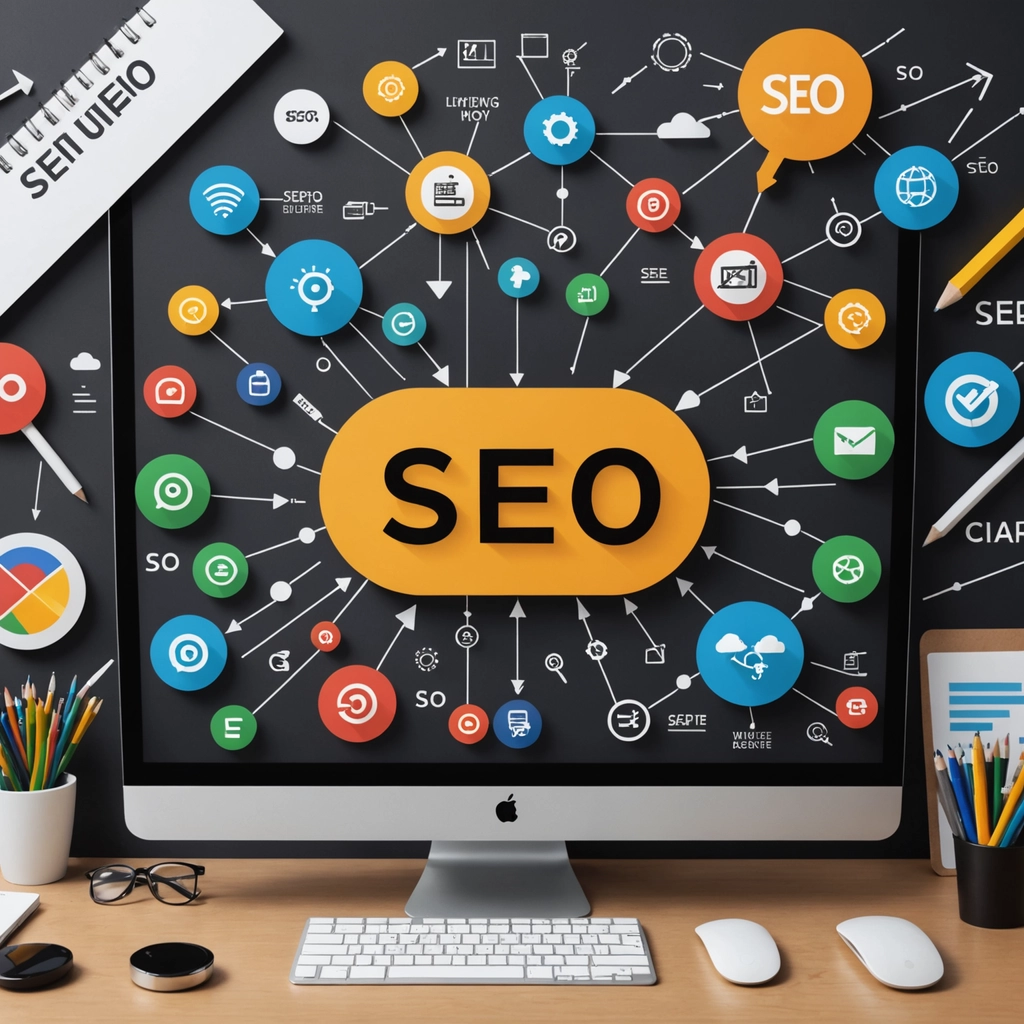
A complete beginner-friendly guide to SEO (Search Engine Optimization) for 2025. Learn what is SEO, why it matters, types of SEO, Google and Bing guidelines, keyword research, user intent, and the full On-Page, Off-Page, and Technical SEO checklist to improve your website ranking.
Search Engine Optimization is one of the most powerful techniques in digital marketing. If you have a website, blog, portfolio, or online business, SEO helps your site appear on search engines when users search for related topics. This increases your visibility and brings organic traffic without running paid ads.
This guide explains SEO in simple, clear, and practical language suitable for beginners.
What is SEO
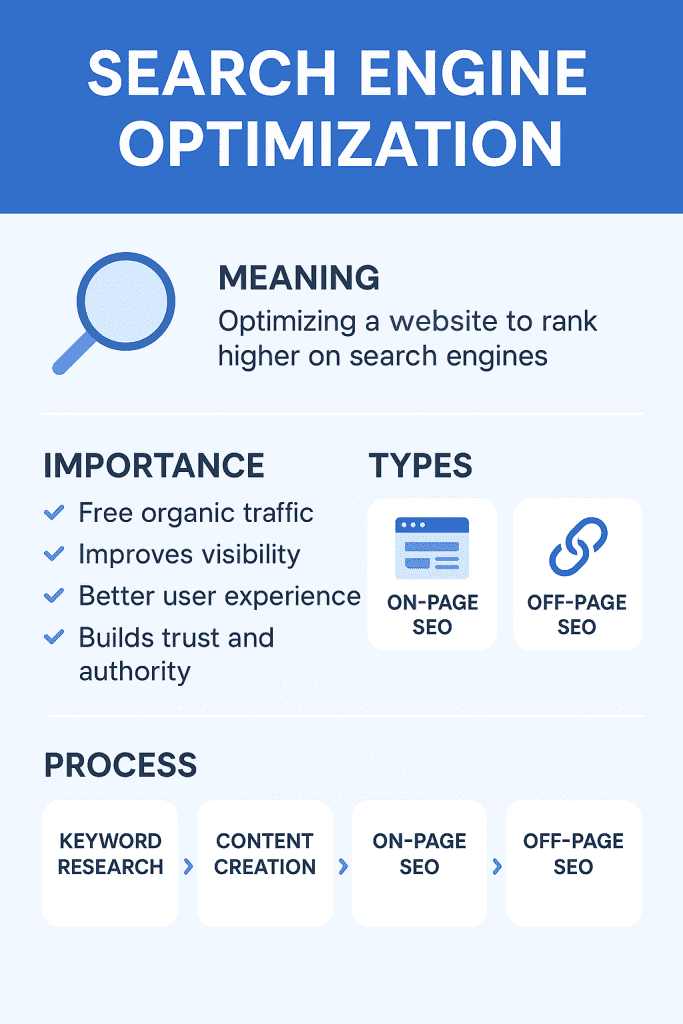
SEO(Search Engine Optimization) means optimizing your website so that it ranks higher on search engines like Google and Bing. When your website appears on the first page, more people visit it, which increases organic traffic and improves your online presence.
Main goals of SEO:
- Increase search visibility
- Get free organic traffic
- Improve user experience
- Build authority and trust
- Support sales and conversions
Why SEO (Search Engine Optimization) is Important
- It brings consistent organic traffic without spending on ads
- Users trust websites that appear at the top of search results
- SEO improves website speed, structure, and readability
- It offers long-term results and sustainable growth
- It helps businesses and creators get more leads and customers
Types of SEO(Search Engine Optimization)
On-Page SEO
On-Page SEO focuses on optimizing elements within your website. This includes:
- Keyword placement
- SEO-friendly titles
- Headings and subheadings
- Meta descriptions
- Internal linking
- URL structure
- Image alt text
- High-quality, original content
Off-Page SEO
Off-Page SEO(Search Engine Optimization) refers to activities performed outside your website to improve reputation and authority. This includes:
- Backlinks
- Guest posts
- Social media promotion
- Brand mentions
- Online reviews
- Directory submissions
Technical SEO
Technical SEO (Search Engine Optimization) focuses on the technical structure of your website. This includes:
- Fast loading speed
- Mobile-friendly design
- XML sitemap
- Robots.txt
- SSL certificate
- Structured data
- Fixing broken links
White Hat SEO vs Black Hat SEO
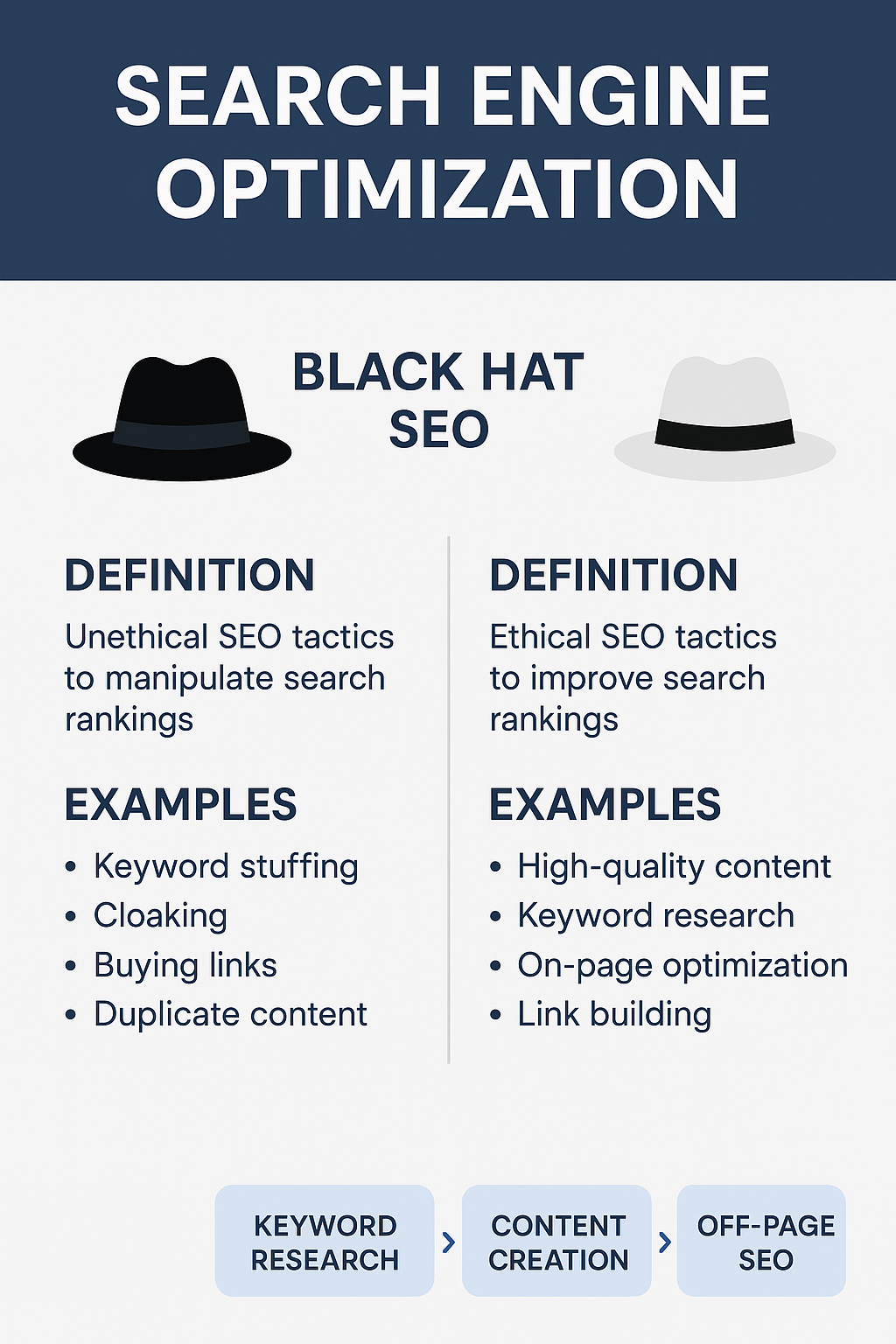
White Hat SEO
Ethical, search-engine optimization approved techniques.
- High-quality content
- Natural backlinks
- Clean website structure
- Optimized keywords
- Mobile responsiveness
- Fast performance
Black Hat SEO
Unethical and risky techniques.
- Keyword stuffing
- Spam backlinks
- Duplicate content
- Hidden text
- Buying links
Black Hat SEO can lead to penalties and loss of rankings.
Google Webmaster Guidelines
Google provides clear rules for building search-friendly websites. Key guidelines include:
- Create original, high-quality content
- Avoid misleading or manipulative techniques
- Ensure mobile-friendly design
- Improve website loading speed
- Maintain a logical site structure
- Use HTTPS for security
These guidelines help Google understand, crawl, and rank your website effectively.
Bing Webmaster Guidelines
Bing also offers important guidelines for website optimization. Key points include:
- Fresh and helpful content
- Clear navigation
- Clean and readable URLs
- Accurate meta tags
- Quality backlinks
- Use of schema markup
Guidelines for Local Business Representation on Google
For local businesses, Google Business Profile helps improve local search visibility. Follow these guidelines:
- Use the real business name
- Add accurate address and contact details
- Provide correct business hours
- Upload original images
- Select the appropriate business category
- Avoid unnecessary keywords in the business name
These steps improve your chances of appearing in Google Maps and local search results.
Fulfilling User Intent
User intent means understanding what the user is searching for and providing the most accurate information. It is one of the most important ranking factors.
Types of user intent:
- Informational: users want information
- Navigational: users want a specific website
- Commercial: users are comparing options
- Transactional: users are ready to purchase
If your content matches user intent, it ranks higher.
Keyword Research
Keyword research helps you find the words people search on Google. This ensures you create content that matches user needs.
Steps of keyword research:
- Use keyword tools
- Check search volume
- Analyse competition
- Select long-tail keywords
- Place keywords naturally
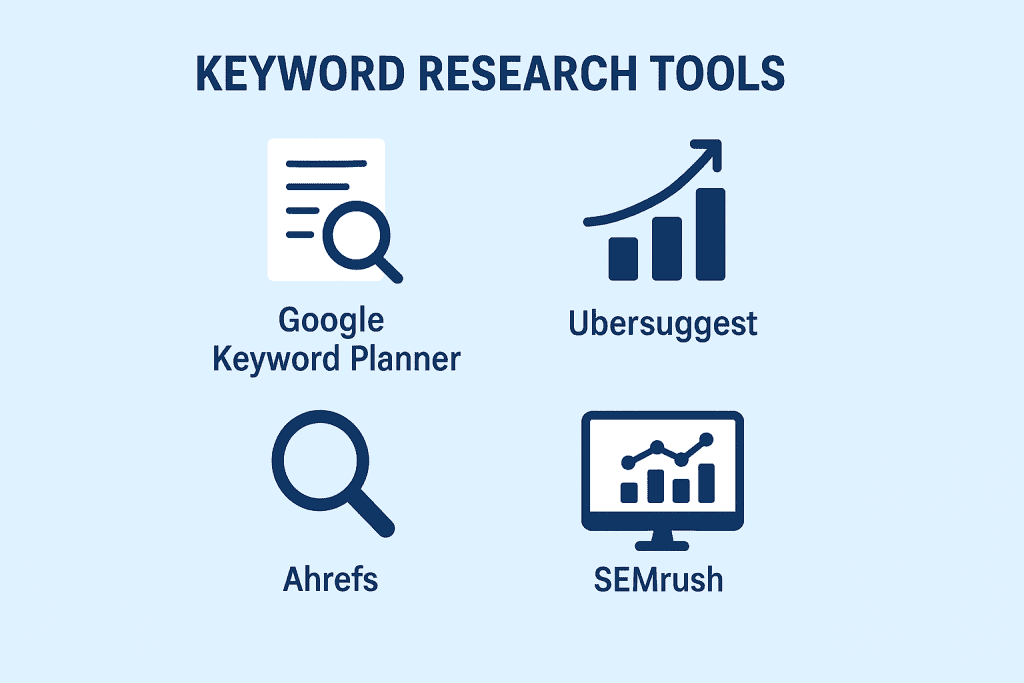
Common keyword tools:
- Google Keyword Planner
- Ubersuggest
- Ahrefs
- SEMrush
- AnswerThePublic
Keyword types include short-tail keywords, long-tail keywords, LSI keywords, and intent-based keywords.
On-Page SEO Checklist
- Use an SEO-friendly title
- Add the main keyword within the first paragraph
- Write a clear meta description
- Use proper headings
- Optimize URLs
- Add internal links
- Use image alt text
- Maintain readability
- Include keywords naturally
- Write long, detailed content
Off-Page SEO Checklist
- Build high-quality backlinks
- Promote content on social media
- Get listed in directories
- Publish guest posts
- Engage in communities and forums
- Build brand presence
- Collect reviews and citations
Technical SEO Checklist
- Improve website loading speed
- Use a mobile-responsive design
- Submit an XML sitemap
- Use Robots.txt
- Add HTTPS with SSL
- Fix broken internal and external links
- Avoid duplicate pages
- Add schema markup for rich results
Mobile SEO and Why It Matters
Most users browse on mobile devices.
Google uses mobile-first indexing, which means:
- Your site must load quickly
- Text must be easy to read
- Buttons should be clickable
- Layout must be responsive
- Images must be compressed
If your site performs poorly on mobile, rankings drop.
Common SEO Mistakes Beginners Should Avoid
Many beginners make simple mistakes that stop their website from ranking.
Avoid these issues for better results:
- Using too many keywords in a single article
- Publishing thin or low-quality content
- Not optimizing images
- Skipping internal linking
- Ignoring mobile responsiveness
- Not updating old content
- Building low-quality or spam backlinks
- Writing content only for search engines instead of users
Correcting these mistakes immediately improves performance.
Importance of Content Quality for SEO
Search engines now prioritize content that is:
- Helpful
- Clear
- Well-researched
- User-focused
- Updated regularly
- Easy to read and understand
Content that answers real questions and solves real problems ranks higher.
Frequently Asked Questions
1. What is the main purpose of SEO?
The main purpose of SEO is to improve the visibility of a website on search engines. When your website ranks higher on Google, more users visit your site, which increases traffic, leads, and sales without spending money on ads.
2. How long does SEO take to show results?
SEO is a long-term process. Most websites start seeing improvements within two to three months, but strong and stable results usually appear in four to six months. The actual time depends on your content quality, competition, and consistency.
3. What keywords should beginners start with?
Beginners should start with long-tail keywords because they are easier to rank and match user intent better. Long-tail keywords have lower competition and attract more relevant traffic.
4. What is the difference between On-Page SEO and Off-Page SEO?
On-Page SEO includes everything you optimize inside your website, such as keywords, headings, titles, and content. Off-Page SEO refers to the strategies done outside your website, such as building backlinks, social signals, and guest posts.
5. Do I need both Technical SEO and content for ranking?
Yes. High-quality content tells search engines what your page is about, while Technical SEO helps search engines crawl, understand, and index your site properly. Both are important for stable and long-term rankings.
Final Summary
SEO (Search Engine Optimization) is essential for the growth of any website in 2025. Search engines now focus on high-quality content, user satisfaction, website structure, and trust signals. By following On-Page, Off-Page, and Technical SEO practices, you can improve your website’s visibility and attract long-term, organic traffic.
Learning and applying SEO(Search Engine Optimization) helps you grow your blog, strengthen your digital marketing portfolio, and increase your career opportunities.